The Aferiy Nomad1800 Pro (P180 Pro) is a compact 1 kWh portable power station that’s surprisingly capable for its competitive price.
I’ll put it through my usual tests and a few real-world scenarios to show you what it can do, how it performs, and whether it really deserves that “Pro” name.
Overview
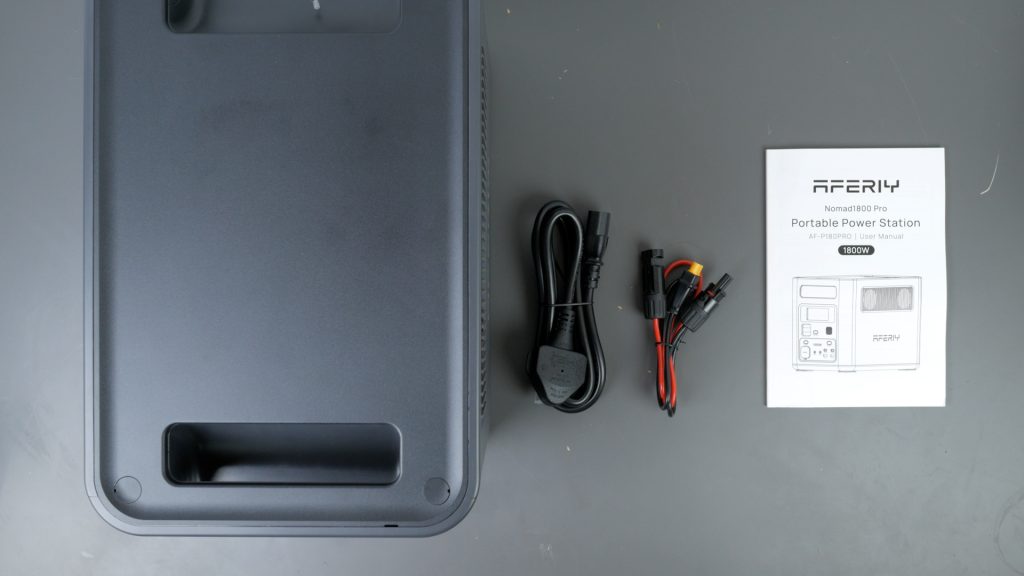
The power station comes with a mains charging cable, a solar charging cable and a user manual.
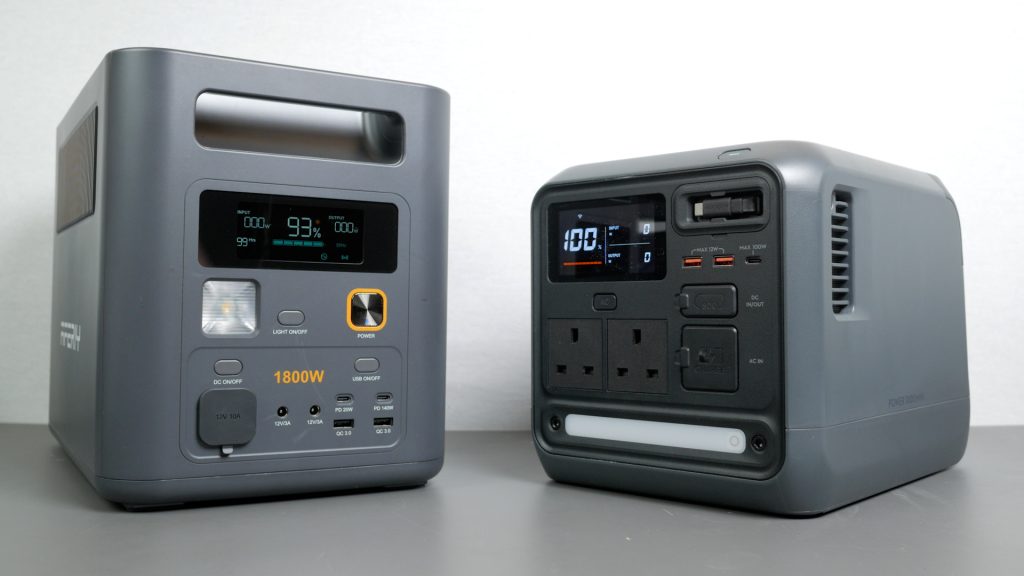
It weighs 11.5 kg, which is comparable with several other 1 kWh power stations I’ve tested. It measures 350 × 220 × 263 mm, giving it a volume of 20.3 litres and putting it on the larger side for a 1 kWh power station. It’s noticeably bulkier than the DJI Power 1000 Mini, for example, but as we’ll see later, some of that extra size brings some useful advantages.
As with Aferiy’s P280 that I reviewed recently, the plastic casing isn’t quite as high quality as that of the more established brands, but it’s not something I think you’d notice unless you were comparing them directly.
Around the front of the unit you’ll find the display, a small LED light, the DC outputs and the USB ports.
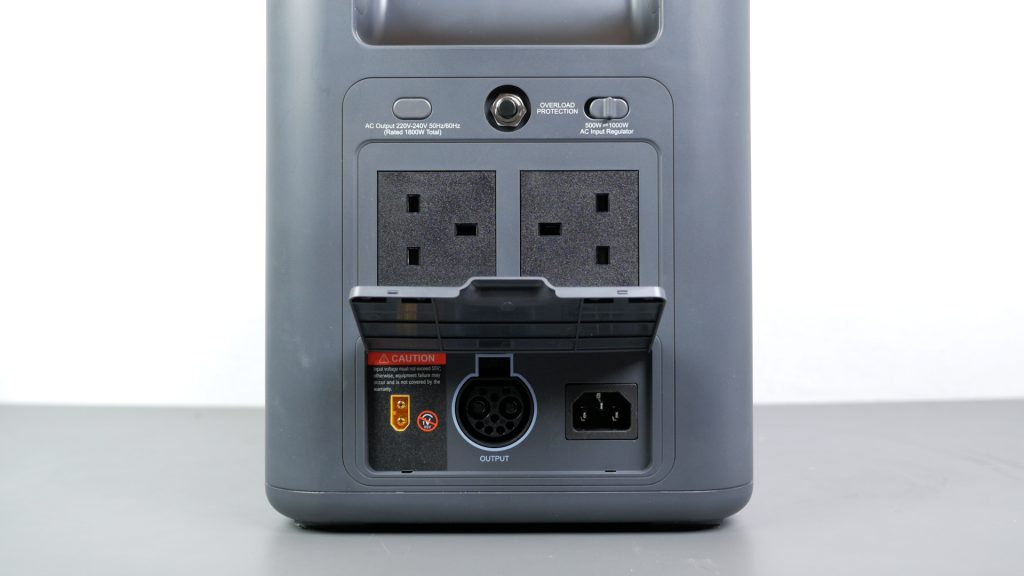
Around the back are the two 1,800 W AC outlets, the XT60 solar and car charging input, the mains charging input and—unique to the Pro model—the expansion battery connector.
Charging
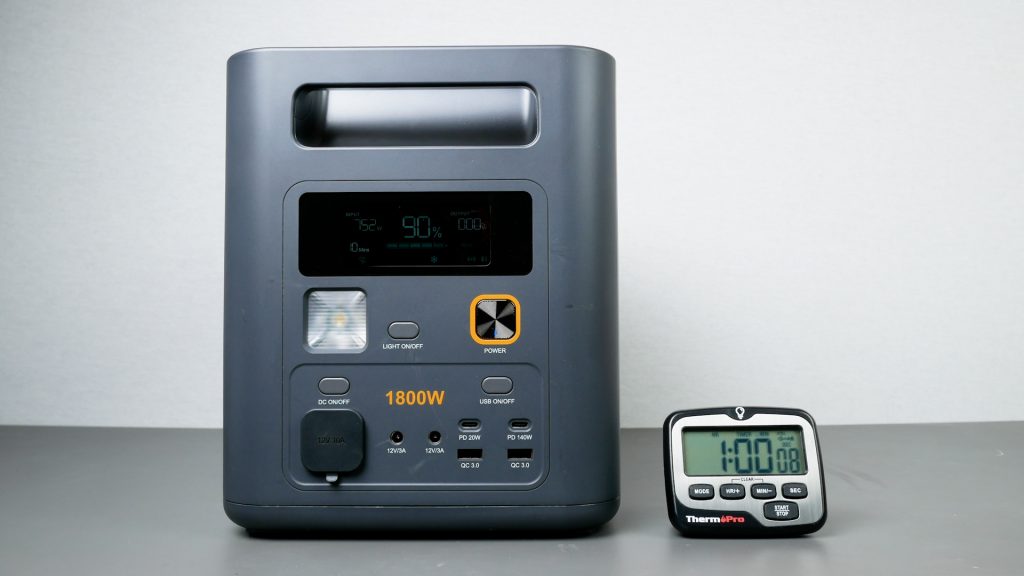
Via mains, the P180 Pro charges at up to 1000 W. Aferiy claims a 0–90% charge in 60 minutes, and that’s exactly what I measured. It reached 80% in 52 minutes, 90% in 60 minutes, and a full charge took 90 minutes.
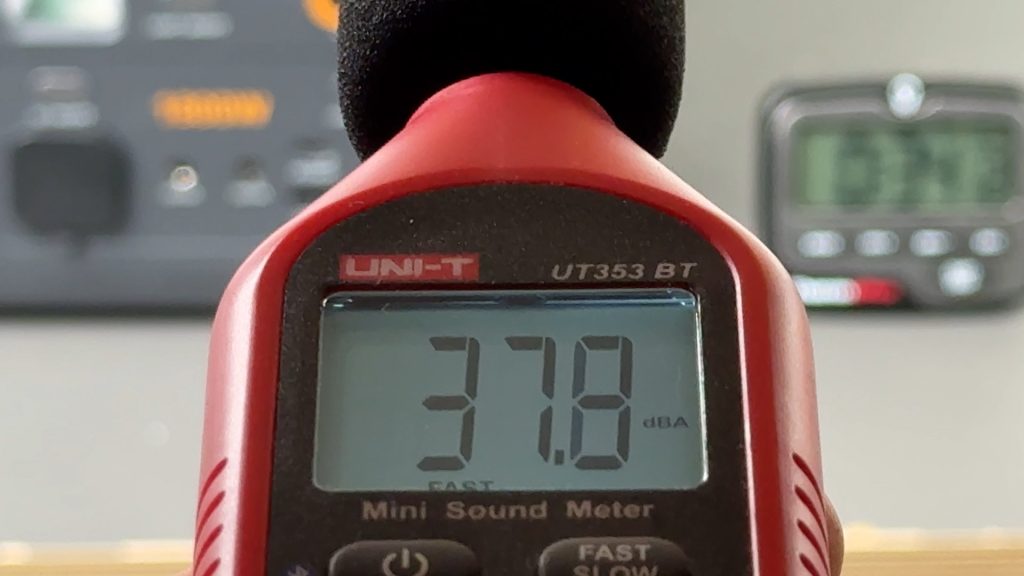
Even charging at full speed, noise levels are low. I measured under 40 dB one metre away, which is barely audible over normal room noise.
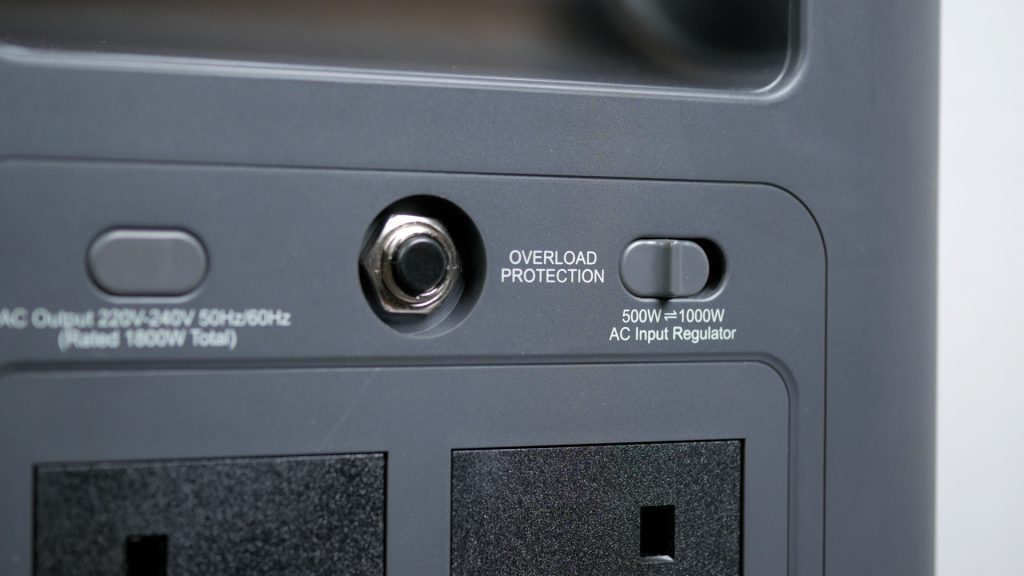
And if you want even less noise, you can slide the charging switch to 500 W, which is also a little better for your battery if you’re not in a rush.
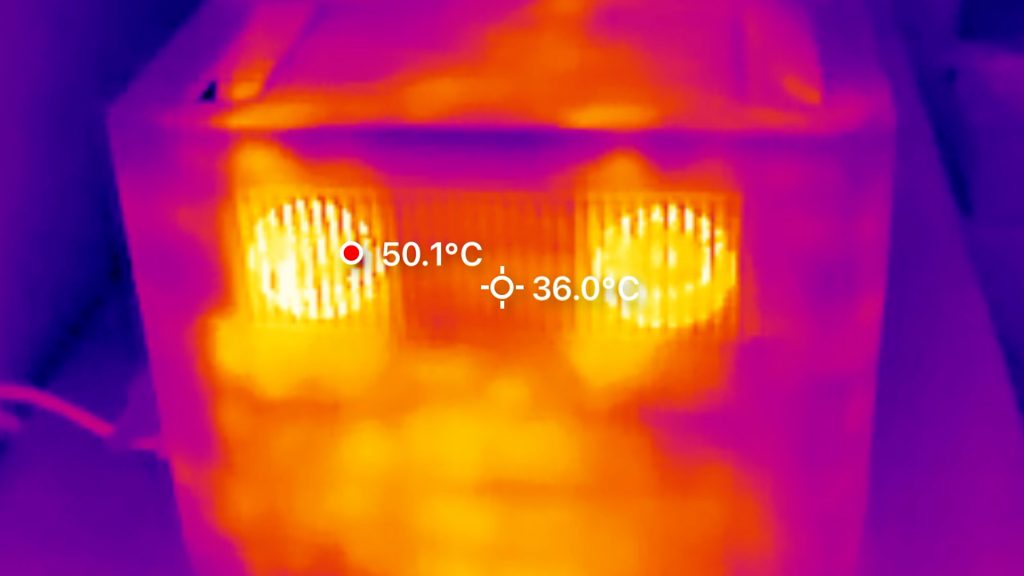
I measured the temperature at the exhaust vent at around 50°C. That’s fairly warm, but nothing out of the ordinary for a power station charging at full speed.
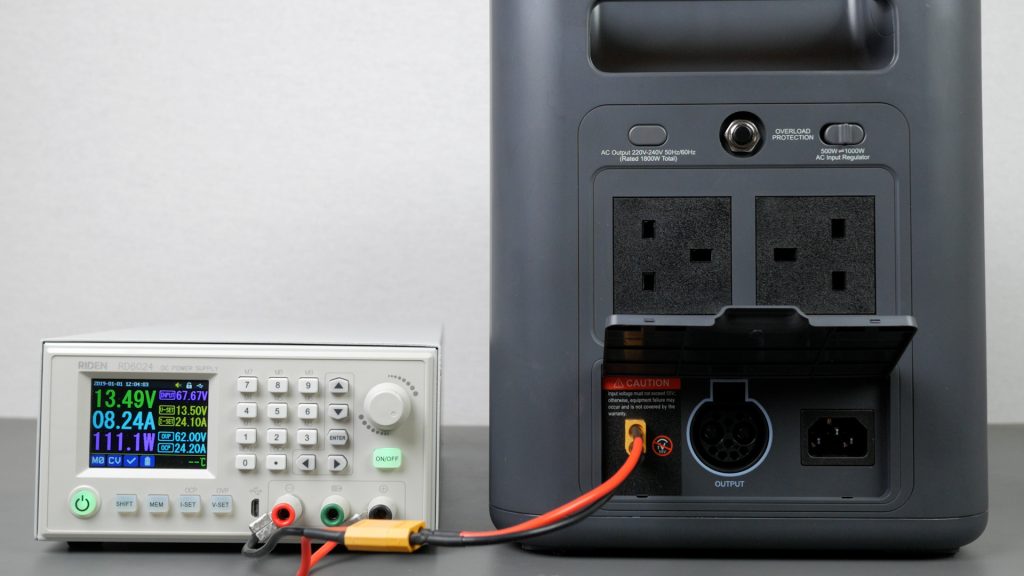
The XT60 input lets you charge the unit from your car or solar panels. It has a respectable input range of 11.5 V to 55 V, with a maximum of 500 W. There’s no car charging cable supplied, but I used my bench power supply to check charging speeds at a typical 12 V and 24 V. I got around 110 W and 210 W respectively.
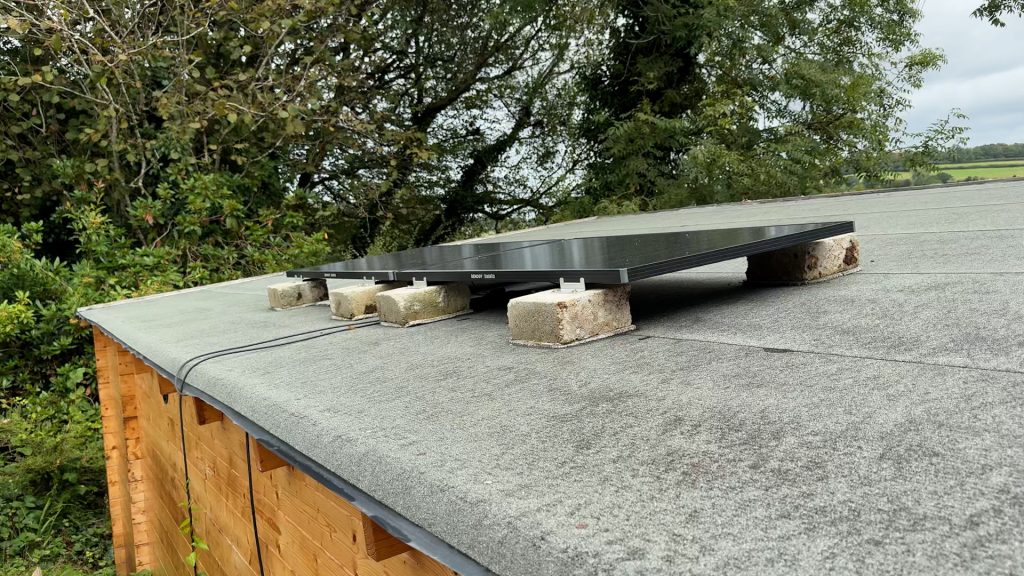
To test solar, I plugged in my two Renogy solar panels on my home office roof. These are connected in parallel — series would exceed the power station’s input voltage.
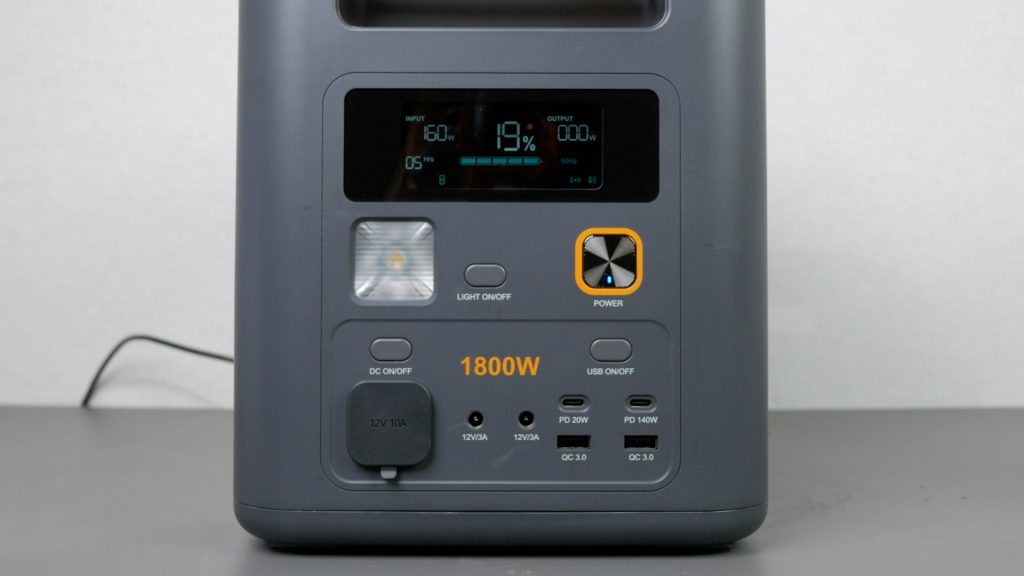
On a bright but overcast day, I got around 160 W.
I also used my bench power supply to test the input to its limits. At 30 V and below, you’re limited to 8 A, which is fairly typical to avoid overloading a car’s 12 V output. At 31 V and above, I got up to 15 A, with the 500 W maximum becoming the limiting factor.
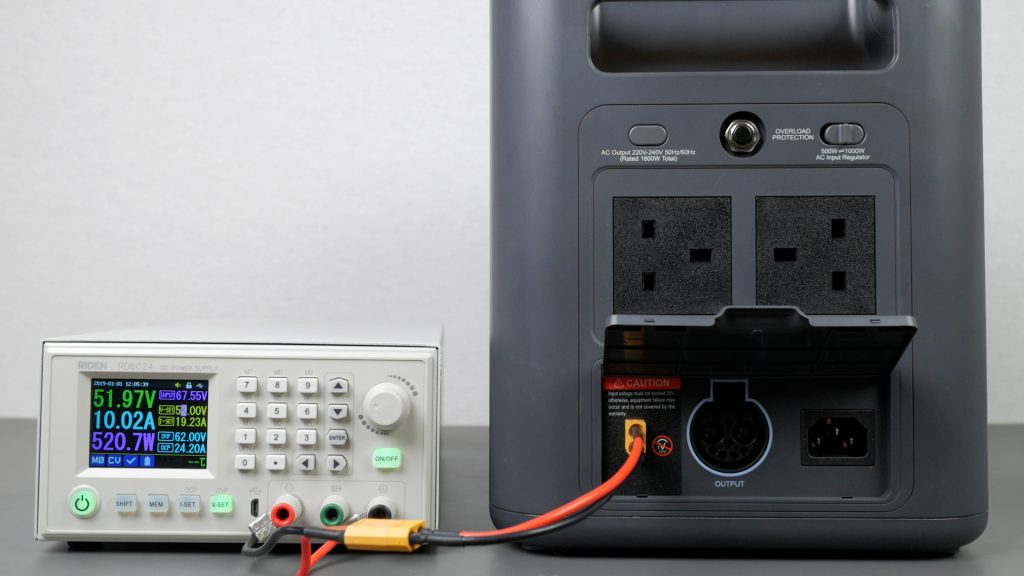
The power station maxed out at 54 V — not quite reaching the specified 55 V, but still enough to charge from a 48 V battery.
Performance
The P180 Pro has two 1800 W pure sine wave AC outlets. That’s about average for a 1 kWh power station and enough to run most household appliances. But like the P280, there is one quirk: with higher-powered appliances it will lower the output voltage to keep the power at around 1800 W.
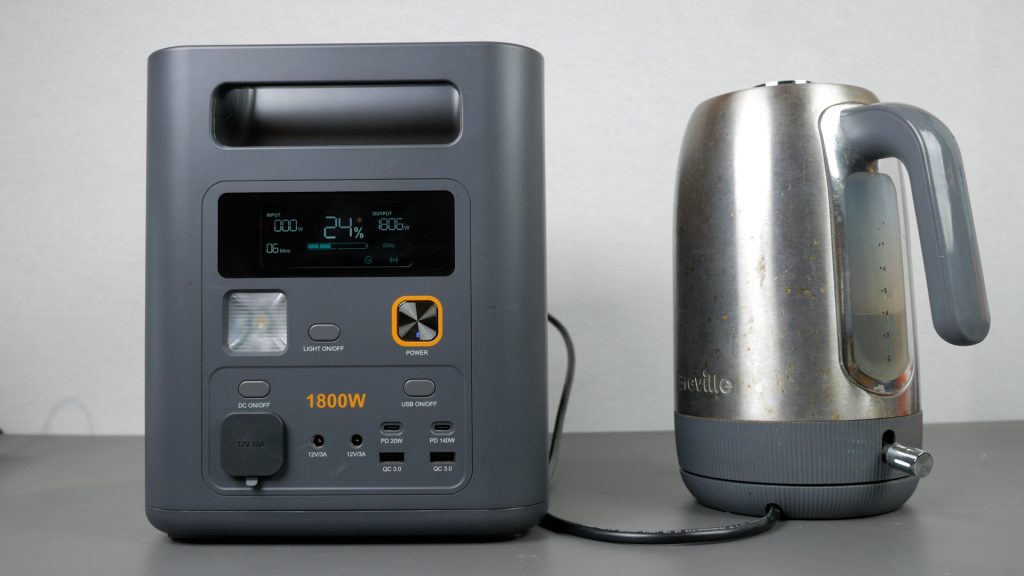
For example, this 3000 W kettle doesn’t overload the power station — it happily runs at around 1800 W.
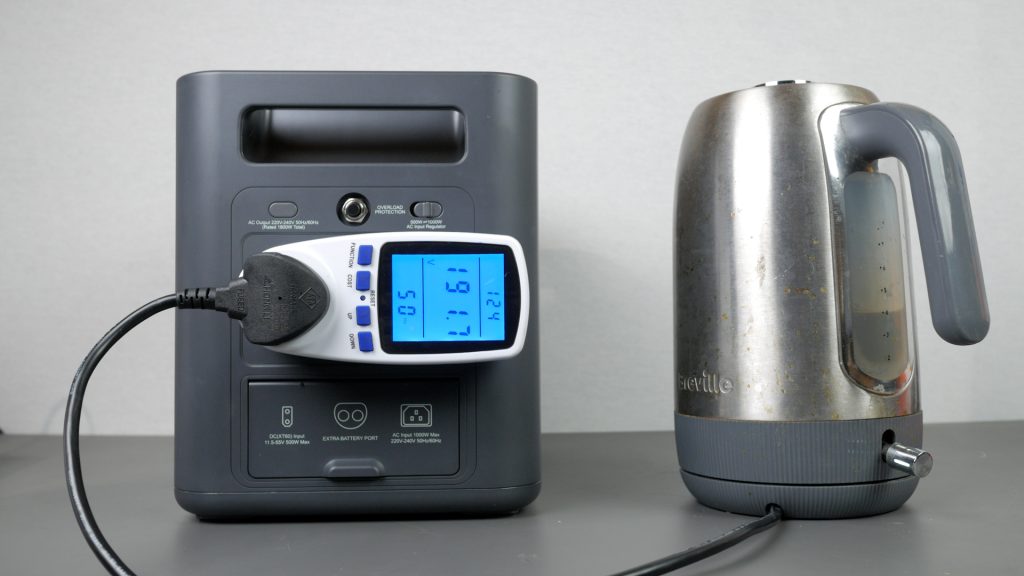
But if I check the output voltage, you can see how it’s achieved this: by dropping the voltage.
That’s fine for purely resistive loads like kettles and hair dryers, but it could be a concern with more sensitive electronics. And disappointingly, there’s no way to disable this feature, as you can on many other power stations. Hopefully Aferiy can add an option to disable it in the companion app in a future update.
I didn’t do my usual machinery tests with this power station. The 1800 W inverter is a little underpowered for some of the larger tools I normally test, and since there’s no way to disable the voltage-reduction feature, I didn’t want to risk damaging anything.
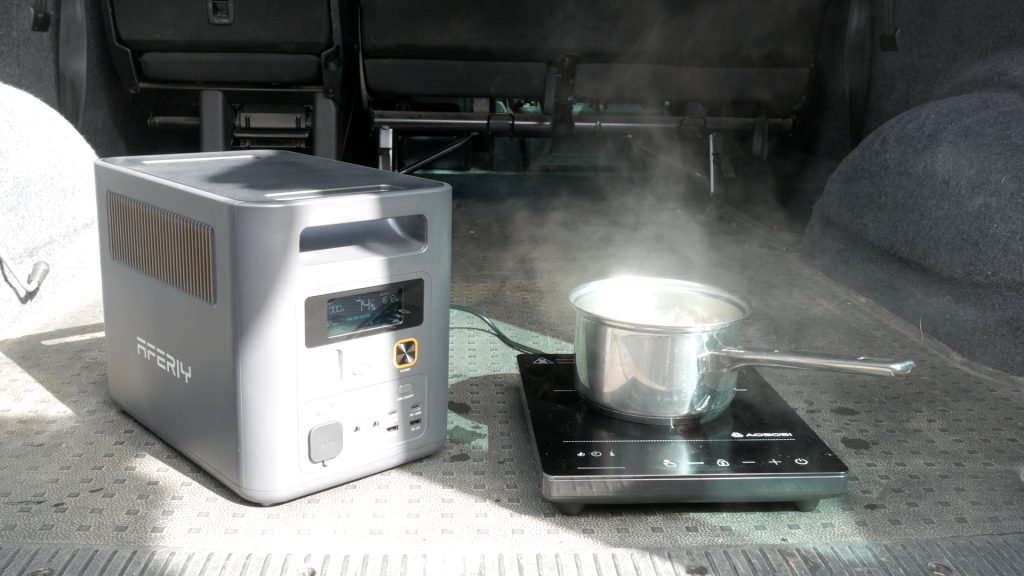
But it can still run plenty of devices — just check they’re within the 1800 W limit.
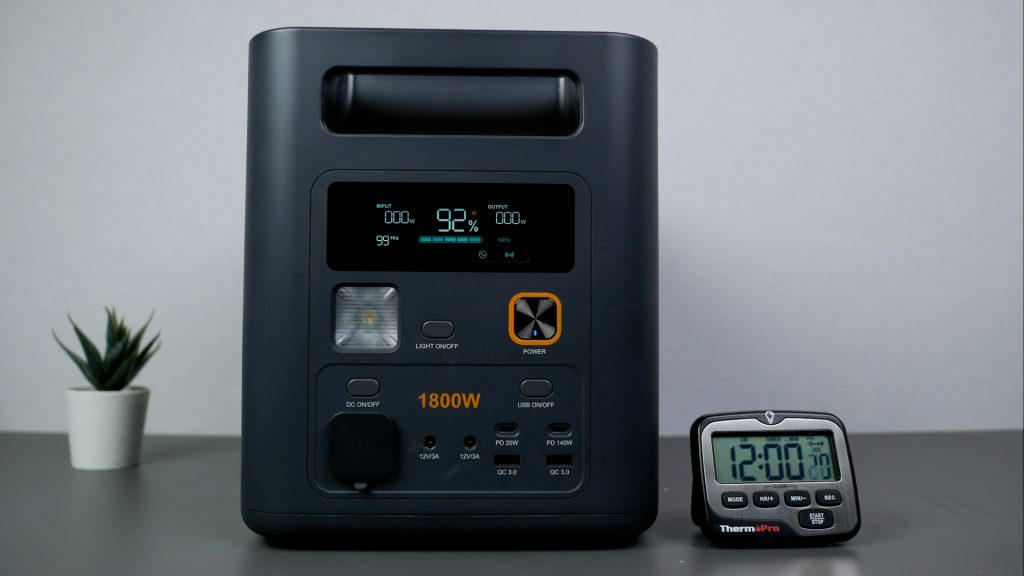
AC inverters can draw a surprising amount of power even with nothing connected. I left the AC output on overnight for 12 hours with Standby disabled, and the battery dropped from 100% to 84% on the first run, but only to 92% on the second. That difference does make me question the accuracy of the battery level indicator. I’ll try running this test until the battery is completely depleted for a more accurate result, and update the written article accordingly.
But even based on the worse result, that’s equivalent to around 14 W of idle draw, which is still the best result I’ve measured from a 1 kWh power station — even better than the DJI Power 1000 Mini with its smaller inverter.
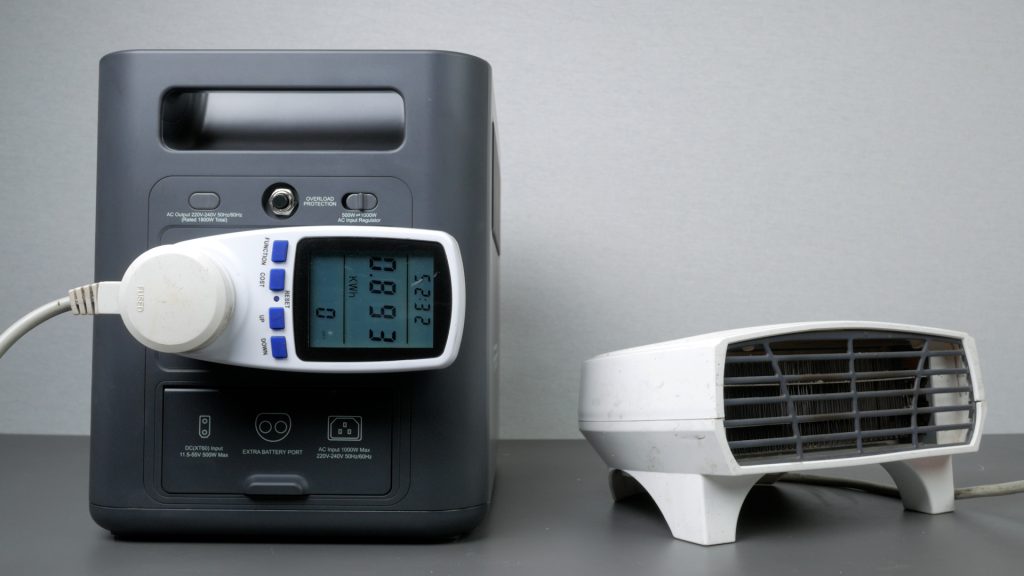
To measure usable capacity, I used an energy monitoring plug and ran a constant 1 kW resistive load using an electric heater. The power station ran for over 52 minutes and delivered 893 Wh from its 1024 Wh battery. That’s 87% efficiency, which is a good result.
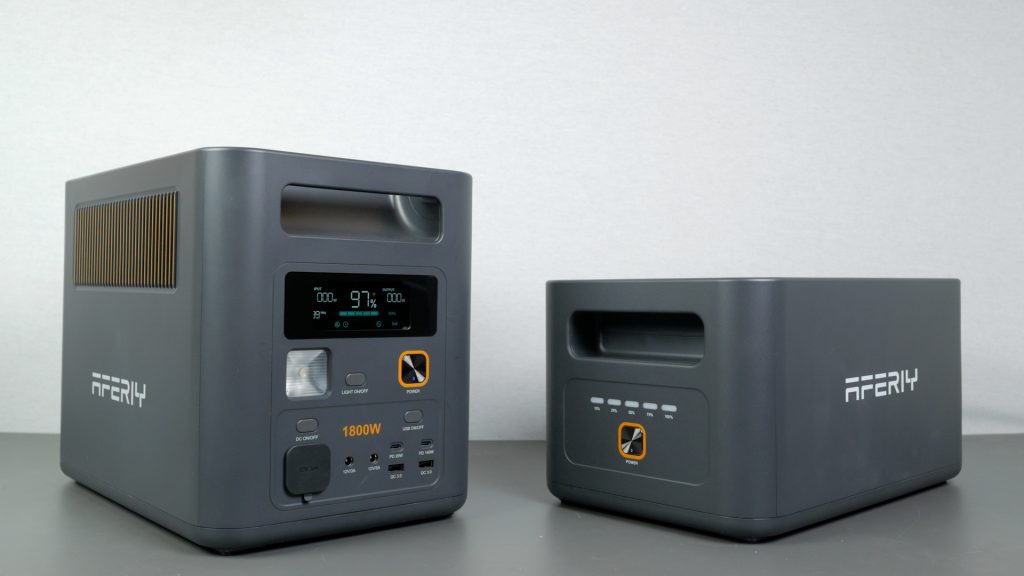
If you need additional capacity, you can add up to four 1024 Wh expansion batteries, taking the total capacity to 5120 Wh. That expandability is what gives the P180 Pro its “Pro” name — there’s also a non-Pro version without the expansion battery support.
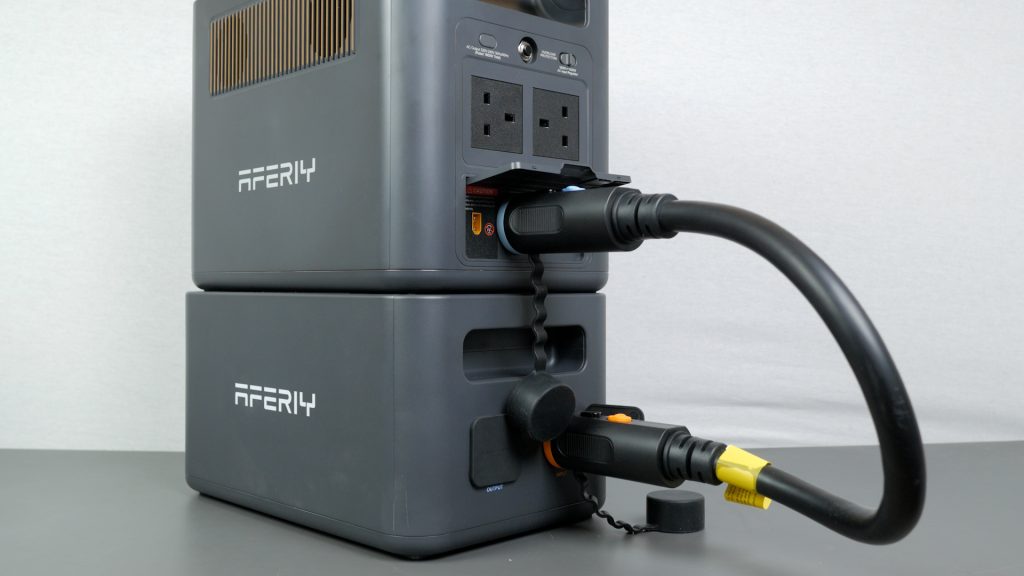
I have one of their smart battery packs here. It plugs into the expansion port on the back, and you can daisy-chain additional batteries if you need even more capacity.
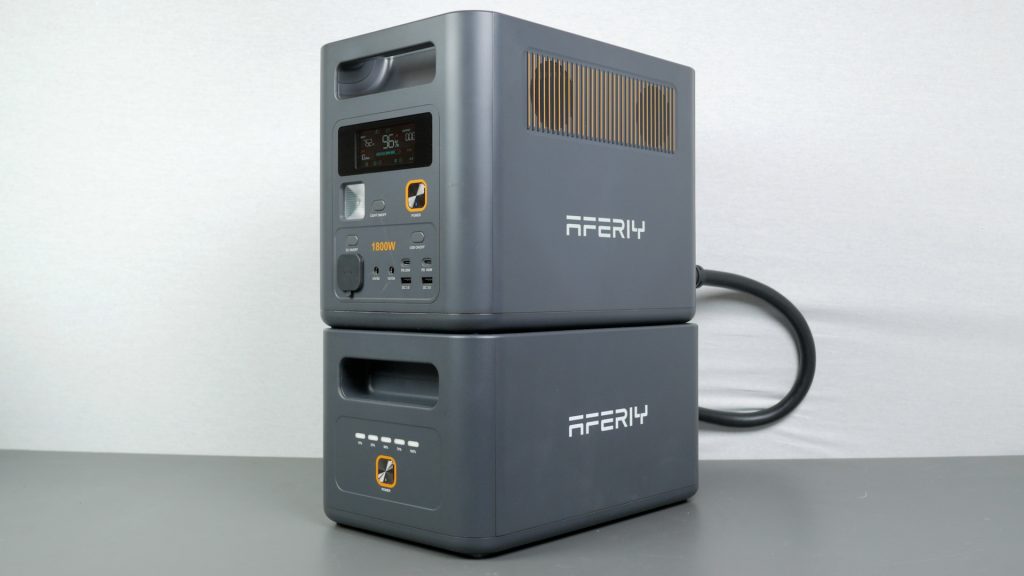
With one connected, you’ve doubled the capacity to 2048 Wh, but charging is still limited to the same 1000 W maximum, so a full charge takes roughly twice as long.
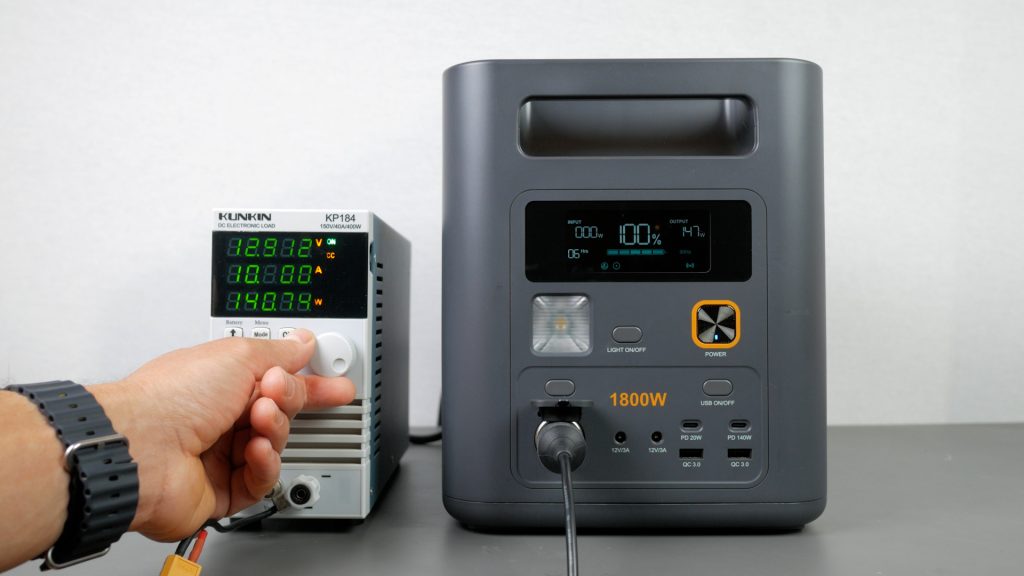
Moving on to the DC outputs, there’s a standard 12 V 10 A car outlet and two less common DC5521 12 V 3 A outputs. I tested the 12 V car outlet up to its limit, and it overloaded at around 11 A.
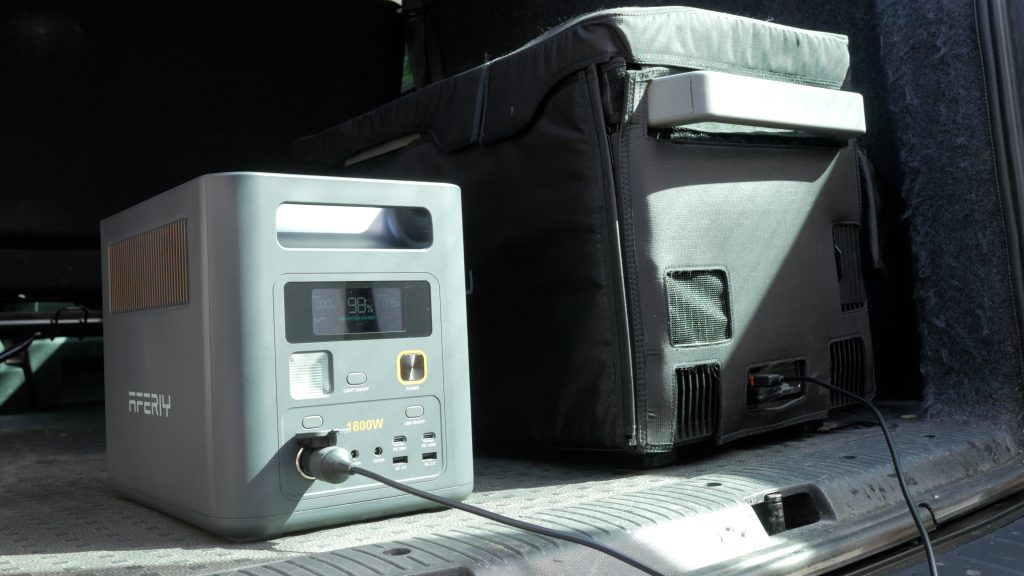
I also checked the idle drain of the DC outputs, and it wasn’t measurable even after leaving them switched on for 24 hours. That makes them ideal for running something like this portable fridge freezer, where the compressor cycles on and off throughout the day.
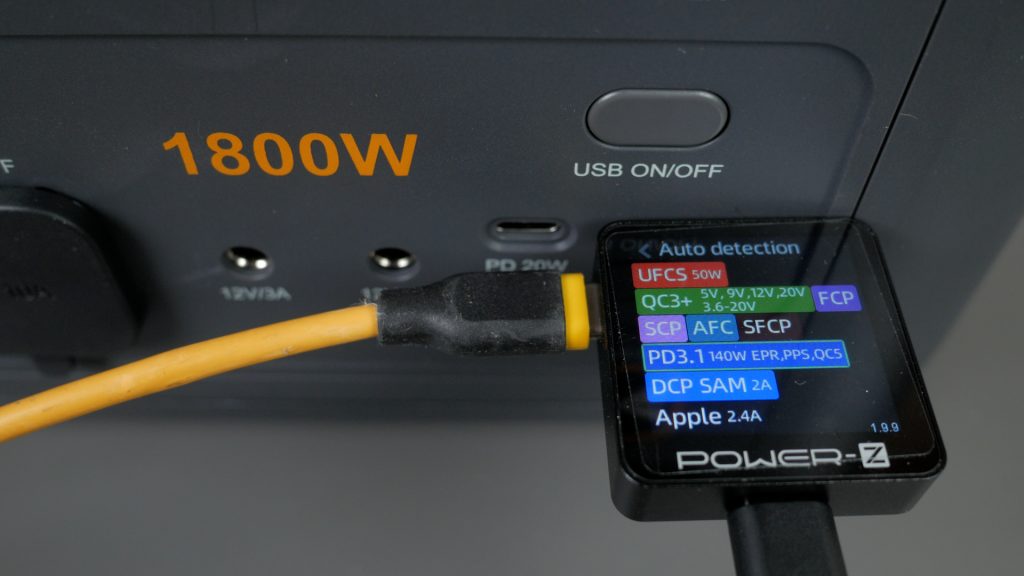
There’s a useful selection of USB ports: one 140 W USB-C port, one 20 W USB-C port and two 18 W QC 3.0 USB-A ports. I checked the supported charging protocols across all the ports, and they’re pretty capable.
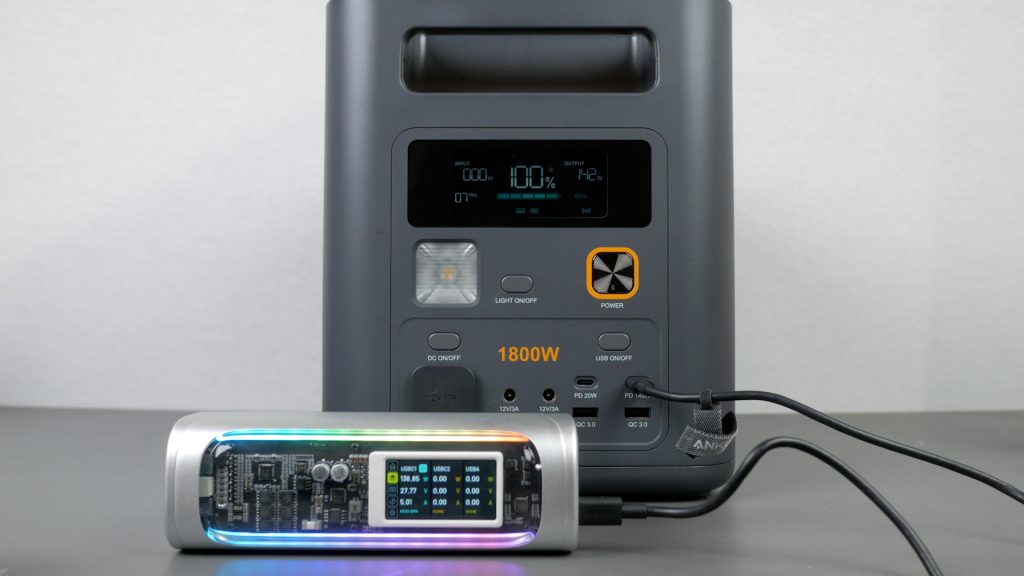
I particularly like the 140 W USB-C port, which could charge my portable power bank at the full 140 W.
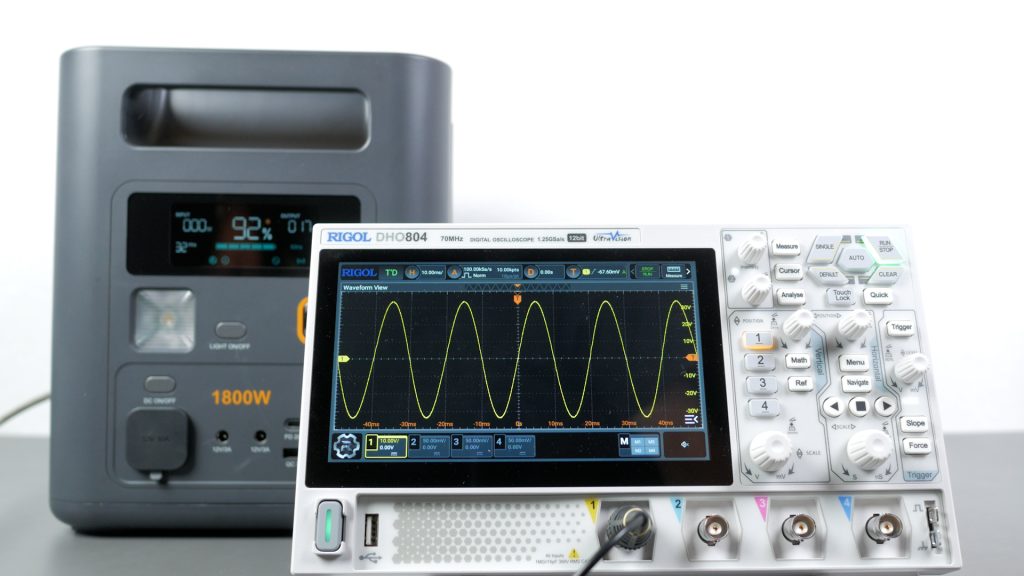
Like most power stations, the Aferiy includes a UPS, or uninterruptible power supply mode. When it’s plugged into mains power, connected devices run directly from the mains rather than the battery. In the event of a power cut, Aferiy claims a switchover time of less than 10 ms.
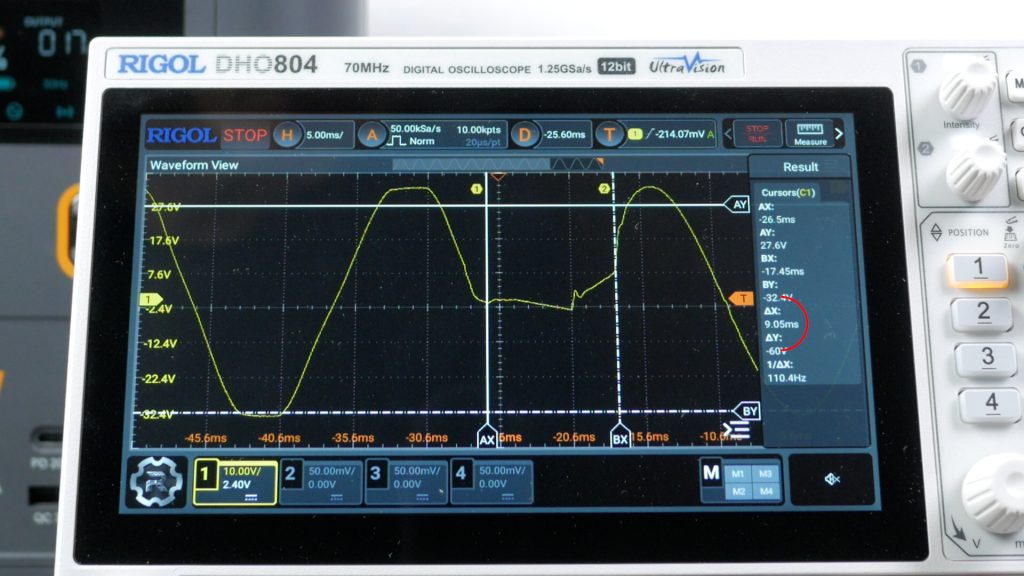
I confirmed that with my oscilloscope and also tested it in real-world use with my desktop PC running an intensive graphics benchmark.
It handled the transition flawlessly.
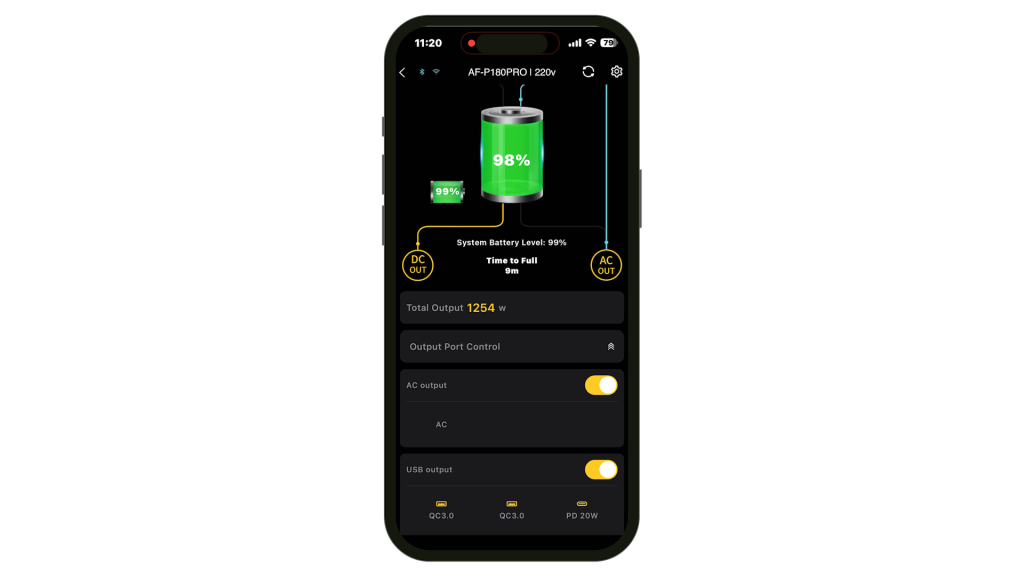
The P180 Pro has a third-party app that connects over Bluetooth and Wi-Fi. It’s not the best feature of the power station — the app is quite laggy and nowhere near as slick as its competitors.
However, if you do need to use it, it has most of the options you’ll probably need. This includes scheduled charging, which is useful if you want to charge the power station when electricity is cheap.
Conclusions
The P180 Pro is another good-value power station from Aferiy. If you’re not sure exactly what you’re after, a 1 kWh power station is a pretty safe bet. It’s enough capacity for many use cases, while still being light enough to carry around easily in one hand.
But with reasonably priced expansion batteries, the P180 Pro makes that choice even easier — you can start with 1 kWh and simply add more capacity if and when you need it. And separate expansion batteries are much more manageable to carry around than one large, heavy power station with the same overall capacity.
And for me, that expandable capacity is probably the feature that does most to justify the “Pro” name.
There aren’t many 1 kWh power stations at this price that offer expandable capacity. There are alternatives from DJI and EcoFlow with their own advantages, but if price and portability are your main concerns, the Aferiy is hard to beat.
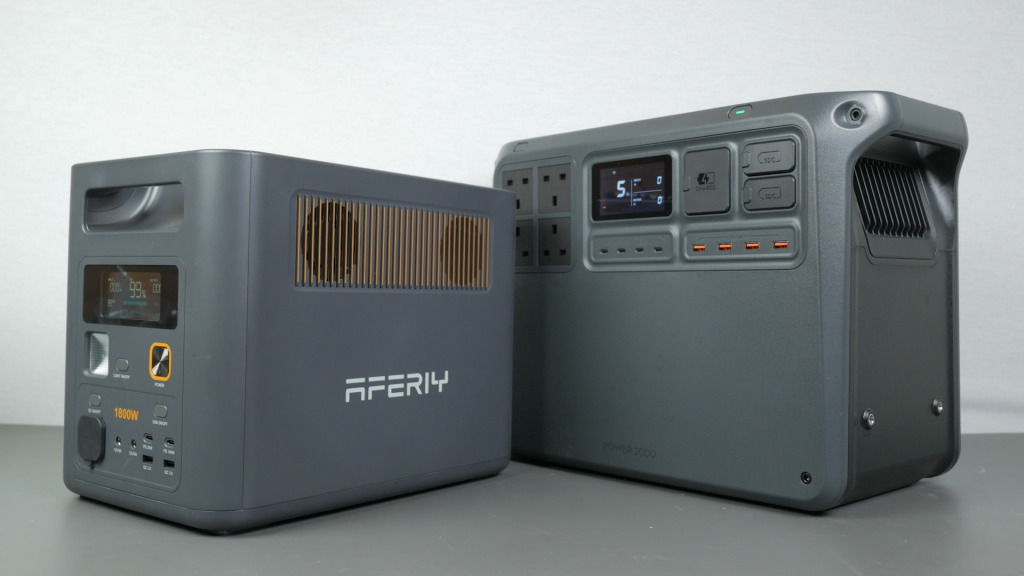
One thing you do lose compared to a bigger unit is a larger inverter. Some 2 kWh power stations, like this DJI Power 2000, have a 3000 W inverter. But 1800 W is probably enough for most people.
And there are a couple of other nice-to-have features for the price. I’d prefer a floodlight, but any built-in light is useful and they’re becoming less common on power stations. And the 140 W USB-C output is great for future-proofing as USB-C devices demand more and more power.
My only two real complaints are the way it limits higher-powered appliances by lowering the output voltage, and the disappointingly laggy smartphone app. But neither of those would be a showstopper for me.
Don’t forget to take a look at my YouTube video at the top of the page, and again please subscribe to my YouTube channel where I’m releasing videos every week on the latest technology and how to get the most out of it. If you tap the bell icon when you subscribe you’ll get a notification as soon as I release a video, and there’ll be a link to my site here for the written article. YouTube is also the best place to leave a comment. I read all of them and respond to as many as I can!
AFERIY Nomad1800 Pro (P180 Pro) Portable Power Station – 1800W Output, 1024Wh Capacity
Discount code: TM18P
Discounted price: £429
AFERIY Nomad1800 Pro (P180 Pro) with Expansion Battery – 1800W Output, 2048Wh Total Capacity
Discount code: TM18PB1
Discounted price: £748
AFERIY 6th Anniversary Sale – September 1–14
See all AFERIY Anniversary Sale deals
If you prefer to buy from Amazon, you can use this link:
https://geni.us/9MwTm5k
Leave a Reply