The Aferiy P280 is a 2 kWh portable power station with a 2800 W inverter, 1800 W mains charging, and up to 1200 W of solar input. It has six USB ports, including two 140 W USB-C, a 12 V 25 A DC output, support for expansion up to 10 kWh, and a 7-year warranty. As a lesser-known brand, it comes in at a very competitive price as well.
I’ve put it through a full set of real-world and controlled tests to uncover any issues and see how it really performs – to help you decide if it’s the right power station for you.
So let’s take a closer look.
Overview
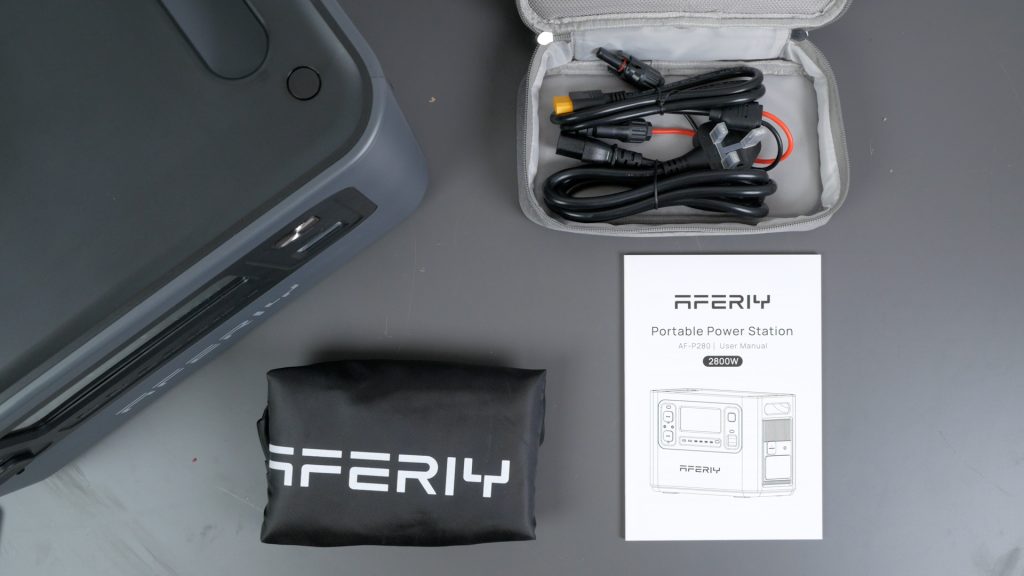
The power station comes with a soft case containing the mains charging cable and solar charging cable, a dust cover and the user manual.
This is one of the lightest 2 kWh power stations I’ve tested at 21.6 kg – even the DJI Power 2000 is almost half a kilogram heavier. It’s not quite as compact as the DJI but it’s very portable for a 2 kWh unit.

The build quality doesn’t feel as premium as the more established brands, but I’ve not had any issues so far, and considering it has no waterproof or dust proof rating like most power stations, I do like that Aferiy includes a dust cover in the box for at least some protection.
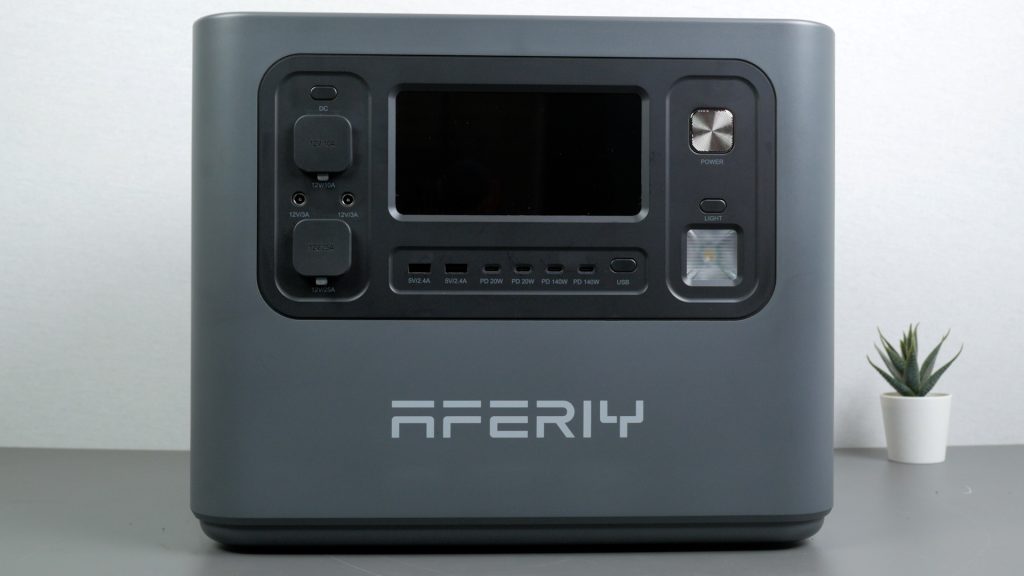
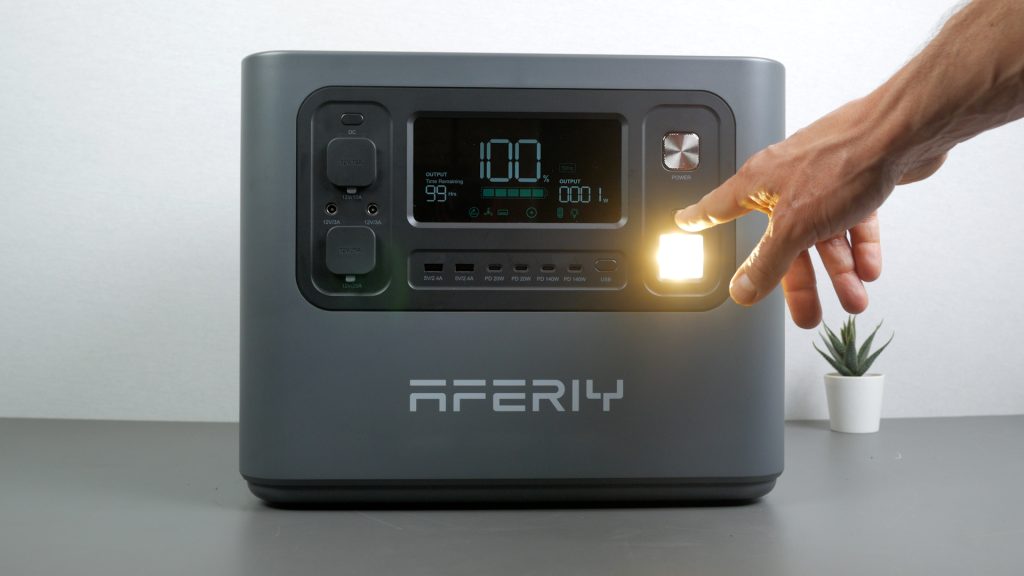
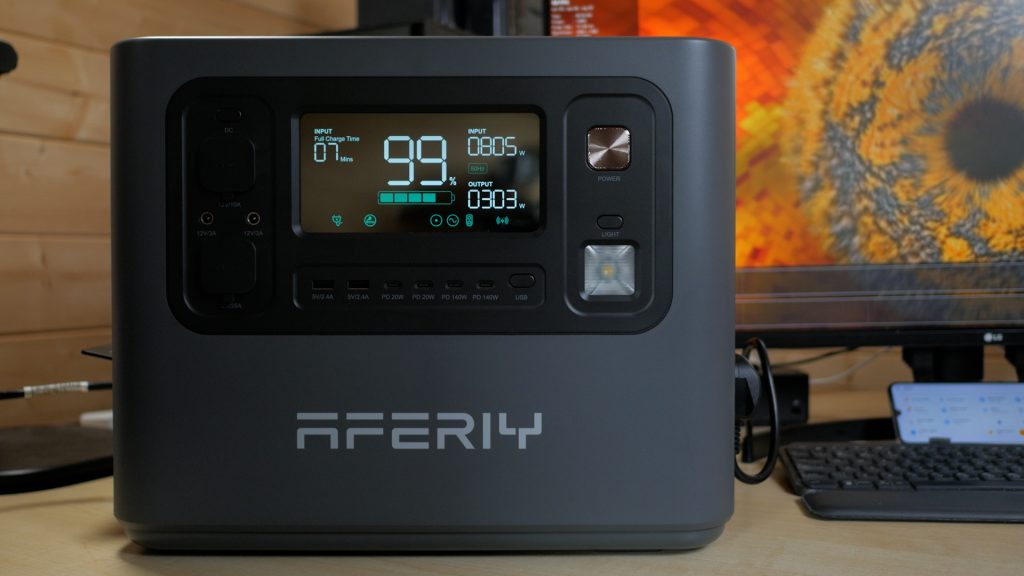
Around the front you’ve got the large display, 6 USB ports including 2 140 W USB-C ports, the 4 DC outputs and a spotlight.
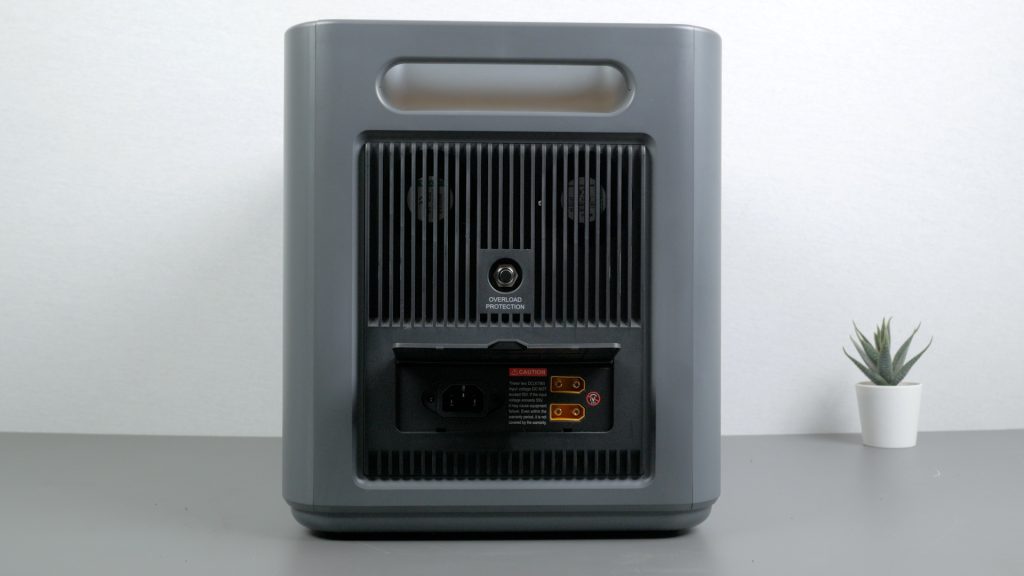
Around one side are the AC and DC charging inputs and around the other side are the 3 AC outlets and the expansion battery port.
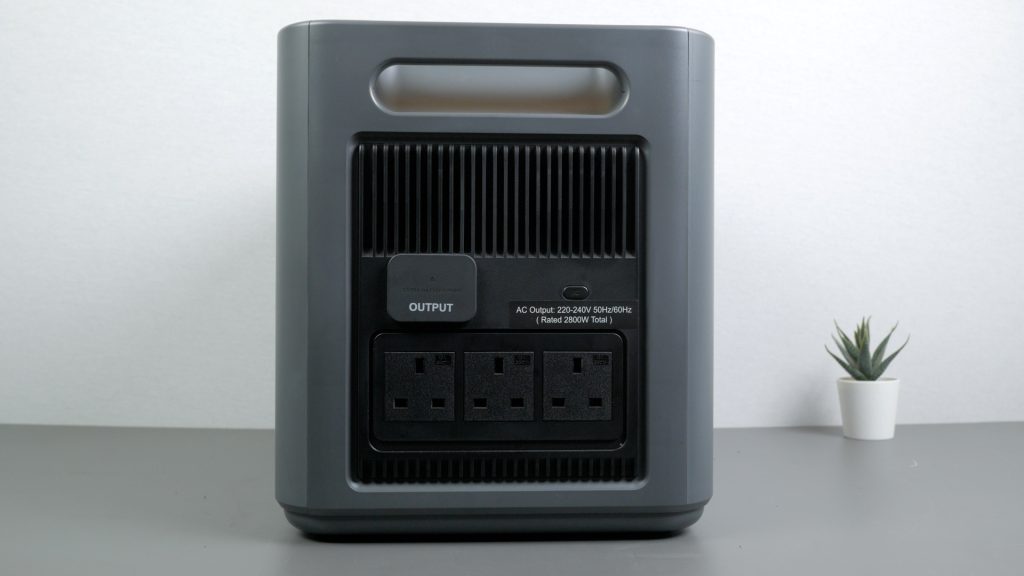
A long press of the power button turns the unit on and off and there are power buttons to toggle the DC and the USB ports, and to cycle the spot light modes around the front. There’s also a button to toggle the AC outputs around the side.
Charging
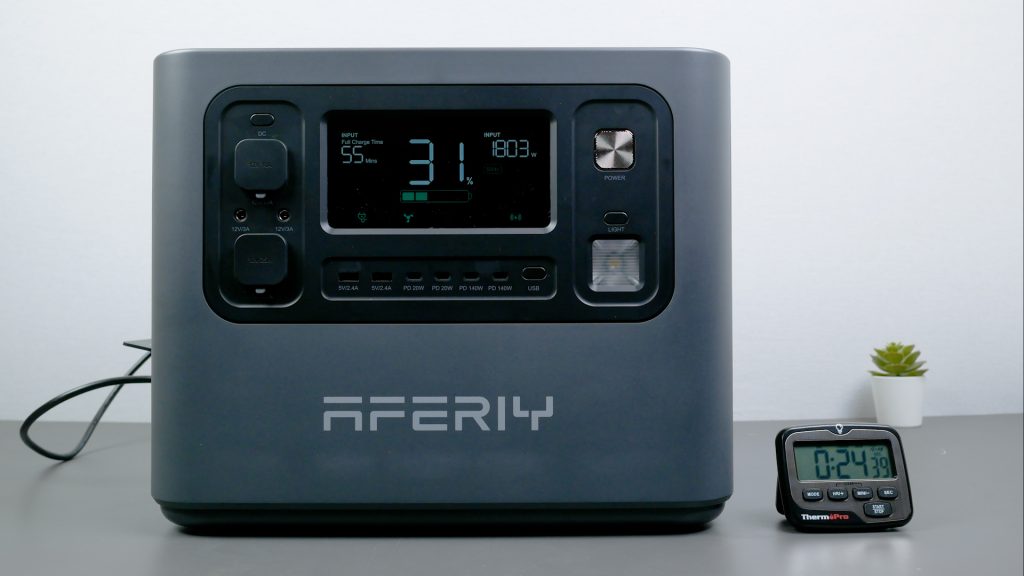
The power station can charge from mains power, solar panels, or your car.
Here in the UK the unit charges at 1800 W off mains. I charged the unit from completely flat to 80% in under 70 minutes and a full charge took 1 hour 53 minutes. A bit slower than its competitors – and a little slower than Aferiy’s claim of 55 minutes to 80%. But still perfectly acceptable results.
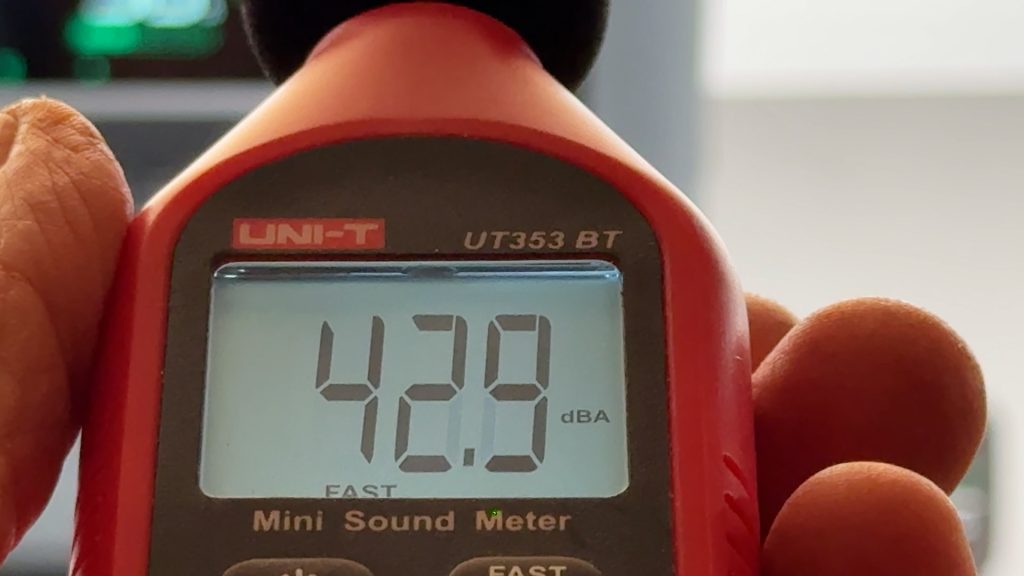
You can hear the fans – I measured around 43 dB charging at full speeds which is about average for a power station this size.
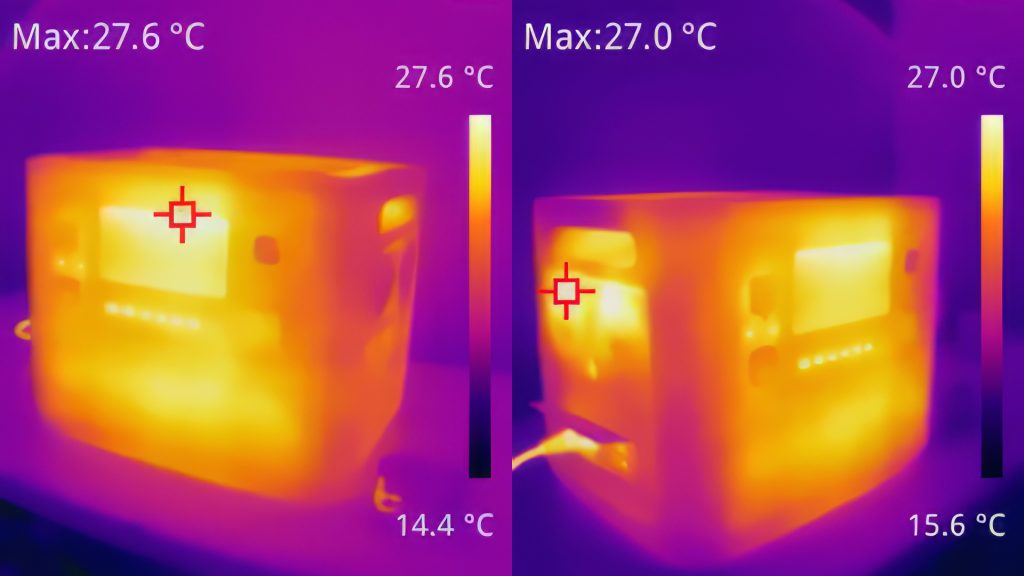
And they keep the unit cool as you can see from my thermal camera images.
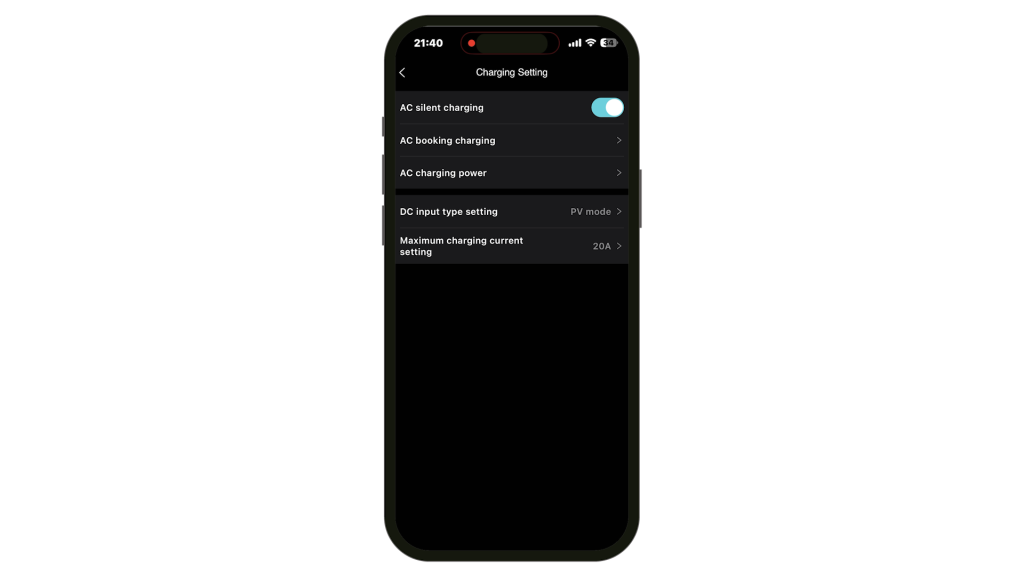
You can drop the charging speed in the app and there’s also a Silent changing mode which charges at 500 W – but the fans still come on intermittently and at a similar volume – I’m unsure how Aferiy gets the 25 dB silent charging. Ambient conditions will make a difference but room temperature in my office was around 18°C so it wasn’t hot.
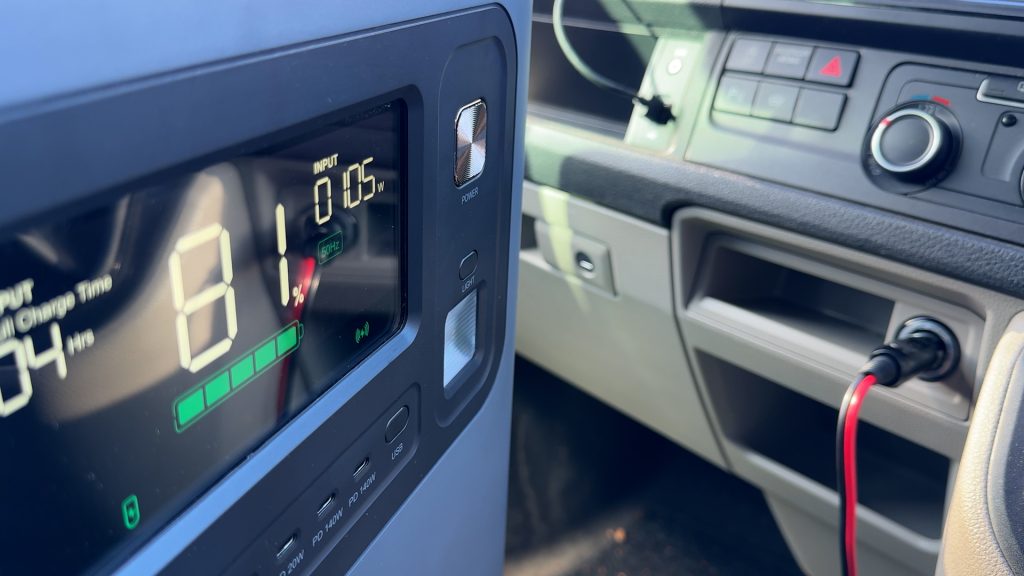
With the optional car charging cable, you can charge from your car’s 12 V outlet at around 105 W. Aferiy has two larger XT90 ports – not the usual XT60.
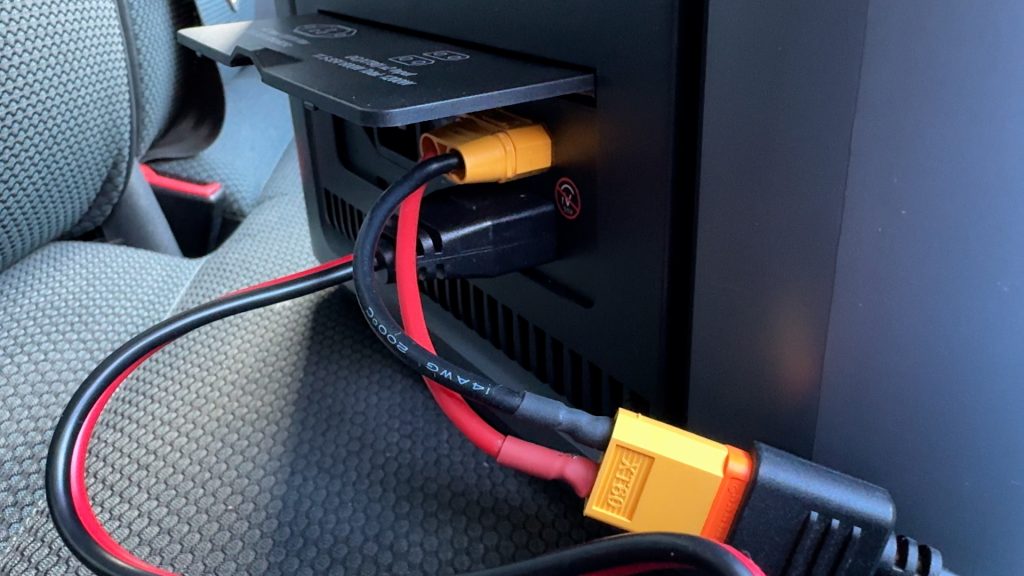
Since there are two ports, if you have another car outlet in your car you can charge at a more useful 215 W.
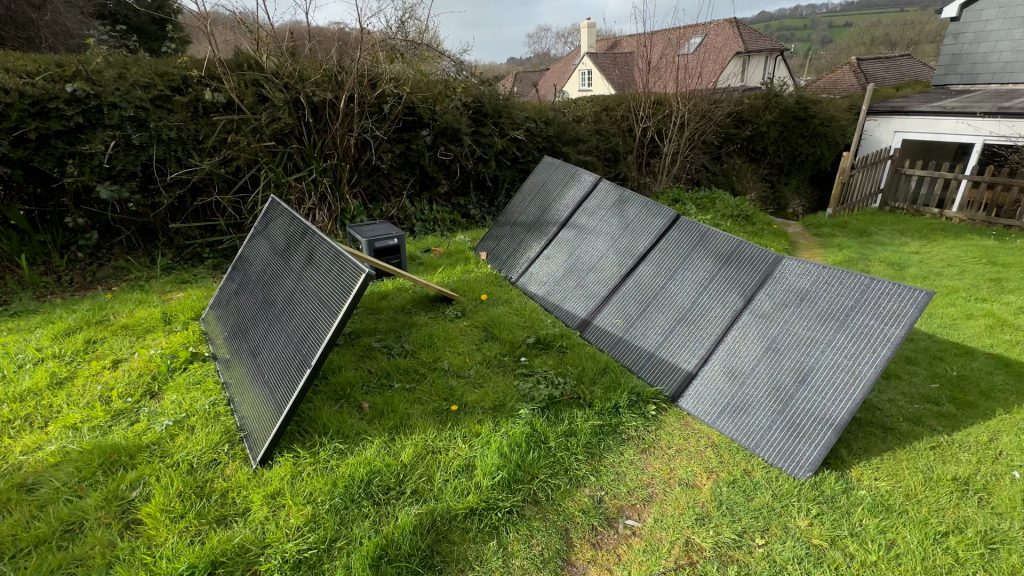
The two ports are particularly flexible when it comes to solar charging with the power station’s built-in MPPT controller. Each port supports up to 600 W – so 1200 W in total. I didn’t have the sunniest day to test solar charging but plugging my Bluetti PV350 350 W panel into one port and a Renogy 200 W into the other port, I did get 250 W – albeit briefly.
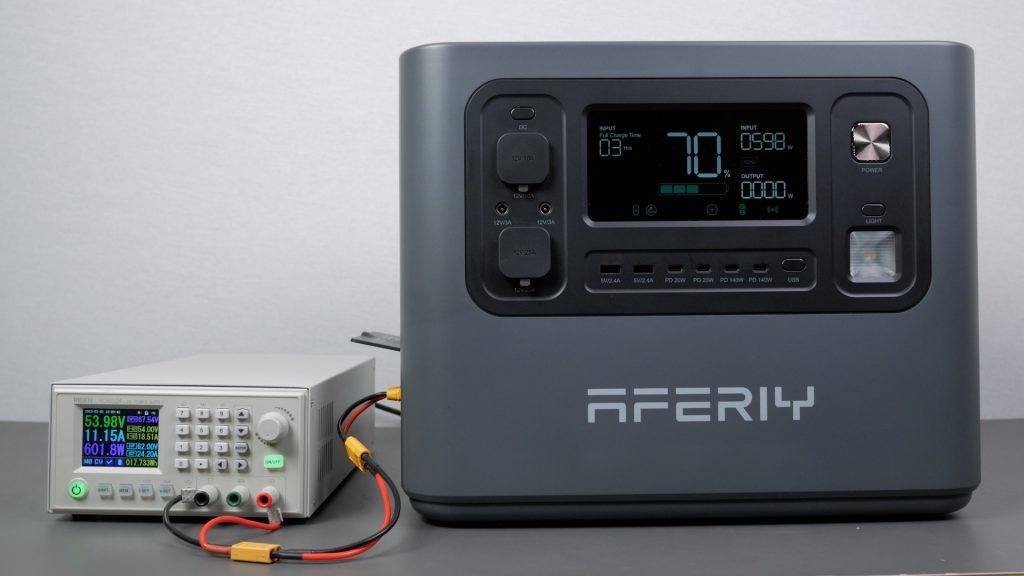
Each solar input is 11.5 V to 55 V at up to 20 A – both with the 600 W maximum, which I confirmed with my bench power supply. I do like that you can get the full 20 A even at the lower voltages – often you’re limited to lower current at voltages under 30 V or so.
So you could connect several cheaper lower voltage panels in parallel to try and max out each port. The 55 V upper limit is too low for connecting most panels in series though.
Performance
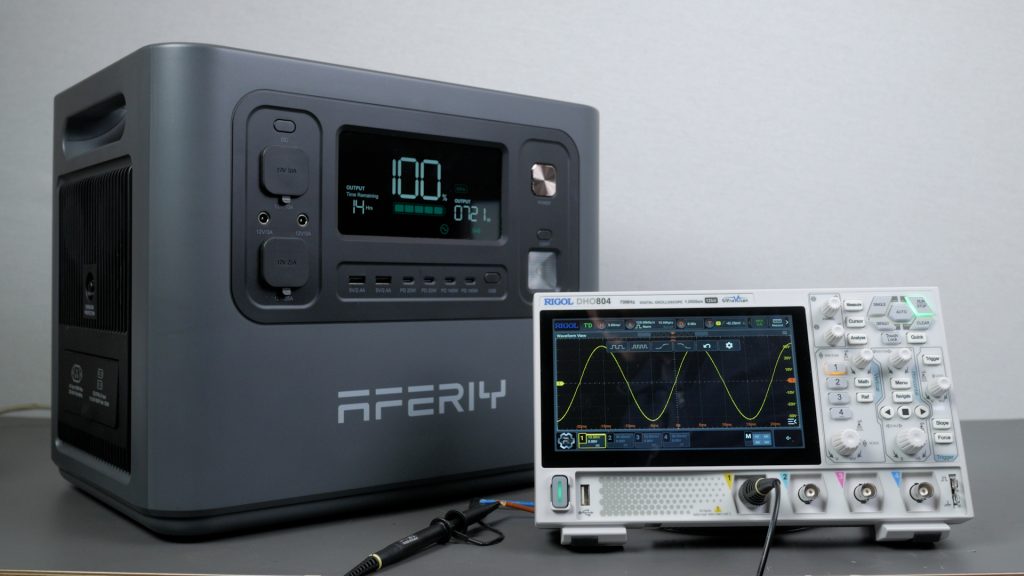
The P280 has three 2800 W pure sine wave AC outlets. That’s a higher output than the Elite 300 I just looked at but lower than DJI and EcoFlow’s equivalent models.
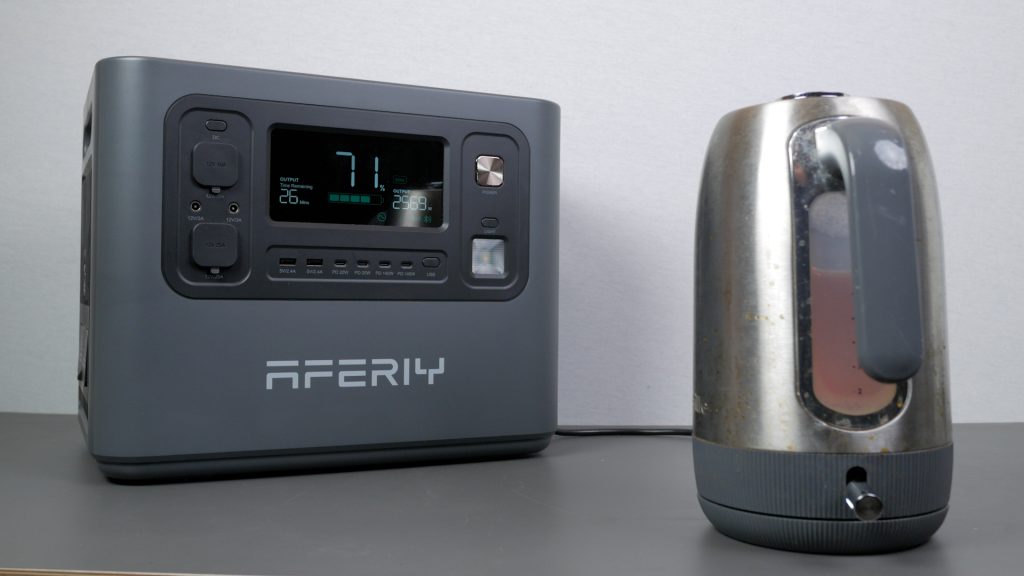
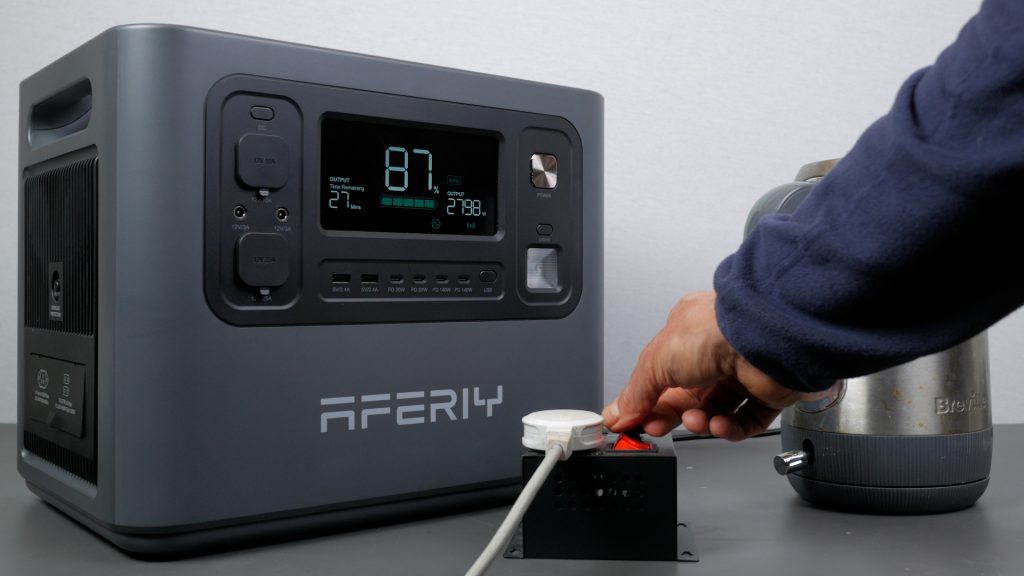
I tested the AC outlets to their limits starting off with a kettle which it could run continuously at just under 2600 W.
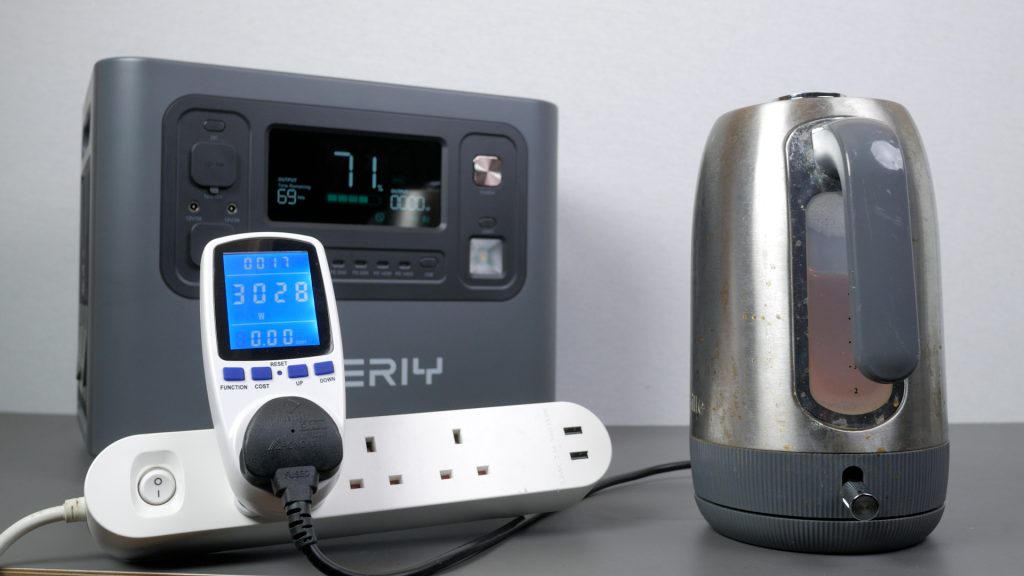
However, checking with my energy monitoring plug, this kettle runs at 3000 W off household mains. The P280 is lowering the output voltage to keep the output under 2600 W. A lot of power stations have a mode which does this but you can turn it off – for example Bluetti has its Power Lifting mode. However on the Aferiy, this can’t be disabled.
I tried pushing the output further to confirm this, adding in a 2 kW heater. The output from the P280 was still under 2600 W, and you can see the voltage dropped to below 180 V.
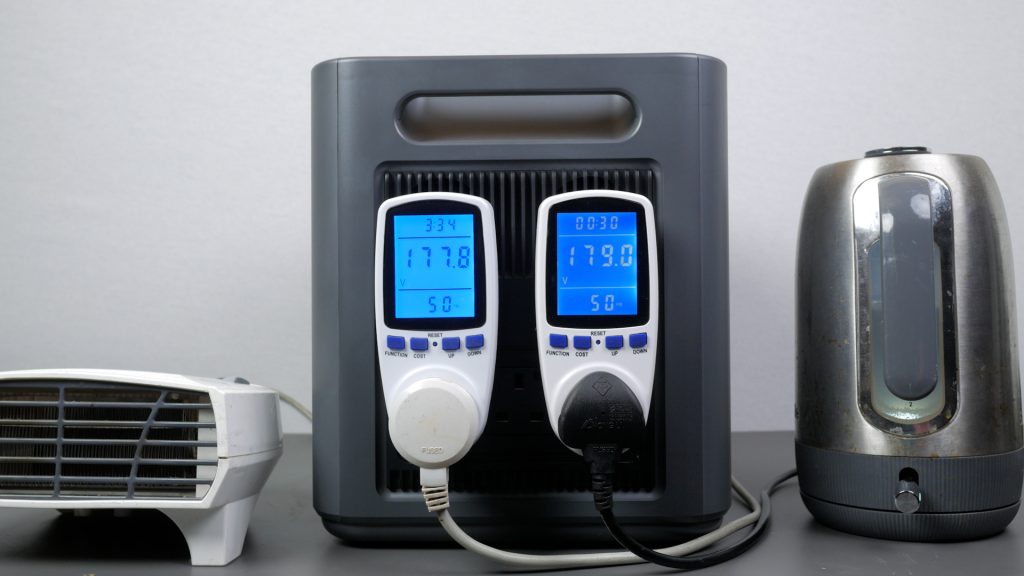
I hope Aferiy can add an option to disable this in the app at some point – you need to be very careful running sensitive electronics when the AC output is near its maximum.
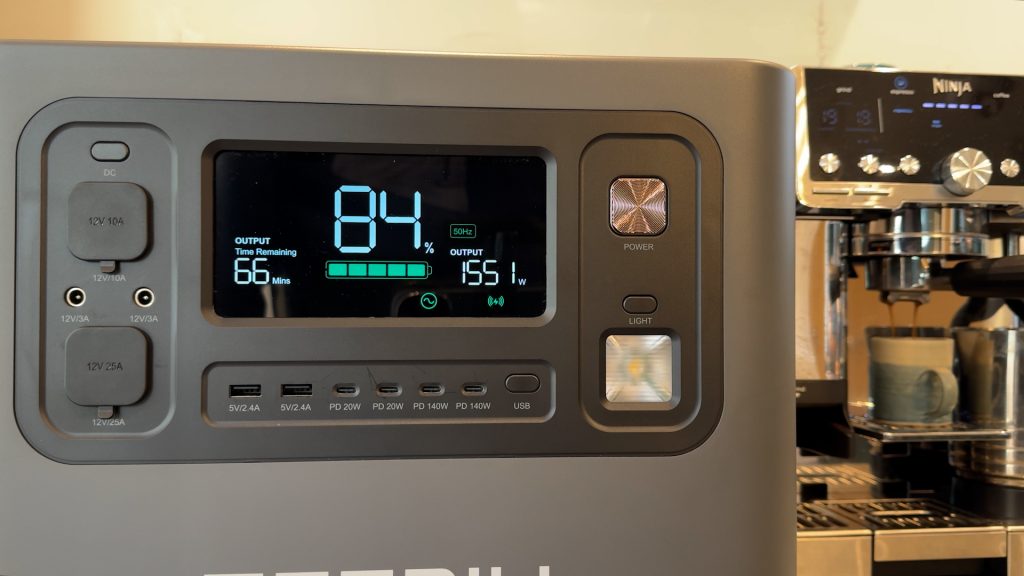
Even with these quirks it’s still a very capable AC inverter. I tried various real-world tests around the house and garage. Around the house it ran my coffee machine that peaked at around 1500W just fine, and could also happily run a two slot toaster.
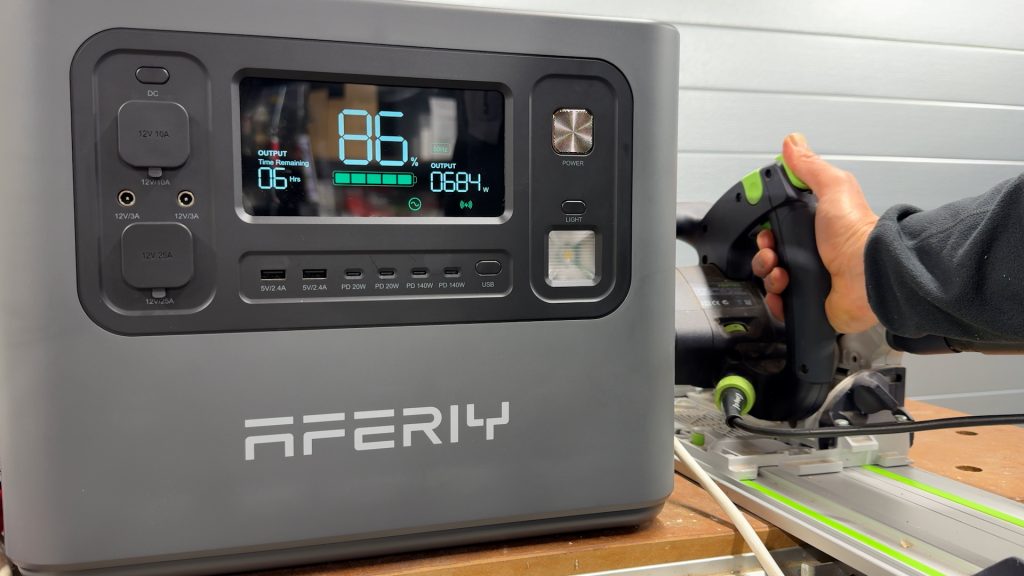
Aferiy doesn’t specify any sort of surge power rating, but in the garage it could run various power tools including my Festool circular saw, but it’s doing this by lowering the output voltage at startup which I wouldn’t want to do on a regular basis. I couldn’t overload the P280- it just failed to run any machinery with a high start up draw. Checking with my clamp meter – you’re limited to under 12 A – it’s running anything with higher demands by lowering the voltage.
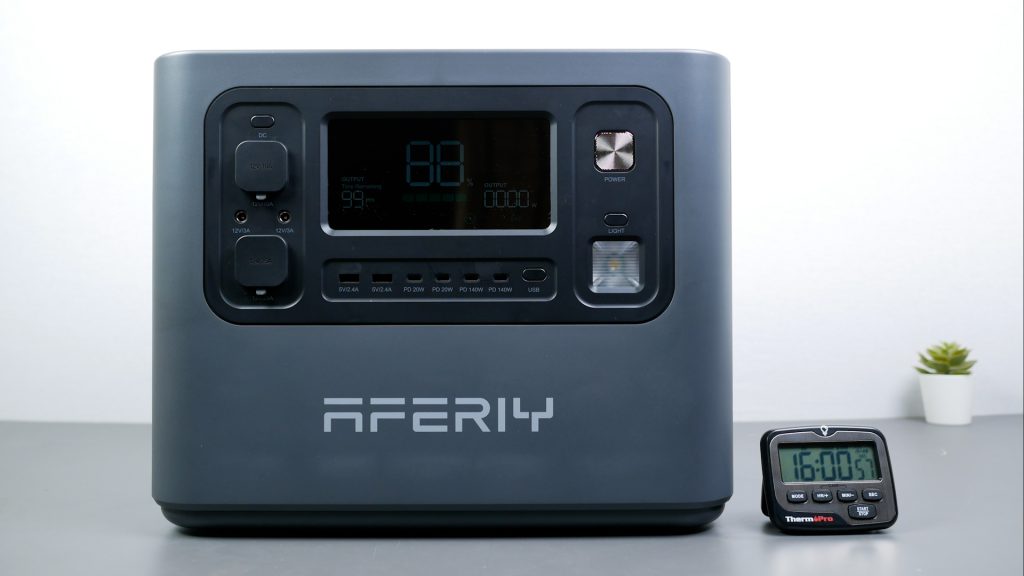
AC inverters can draw a surprising amount of power even with nothing connected. I left AC on overnight for 16 hours with Standby disabled, and the battery dropped from 100% to 88% – that’s around 15 W of idle draw which is one of the best results I’ve seen.
One minor point: there is a slight ticking noise with AC on and no load. It disappears once you connect a device, and in practice you wouldn’t normally leave AC on anyway.
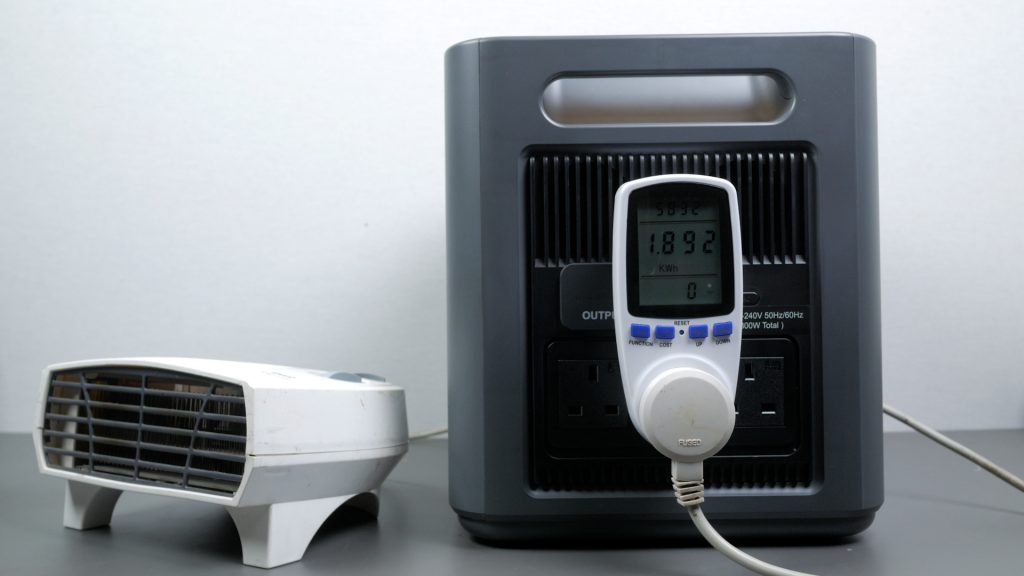
To measure usable capacity, I used an energy monitoring plug and ran a constant 2 kW resistive load using an electric heater. The power station ran for 58 minutes and delivered 1892 Wh from its 2048 Wh battery. That’s 92% efficiency, which is a very good result for a unit of this size.
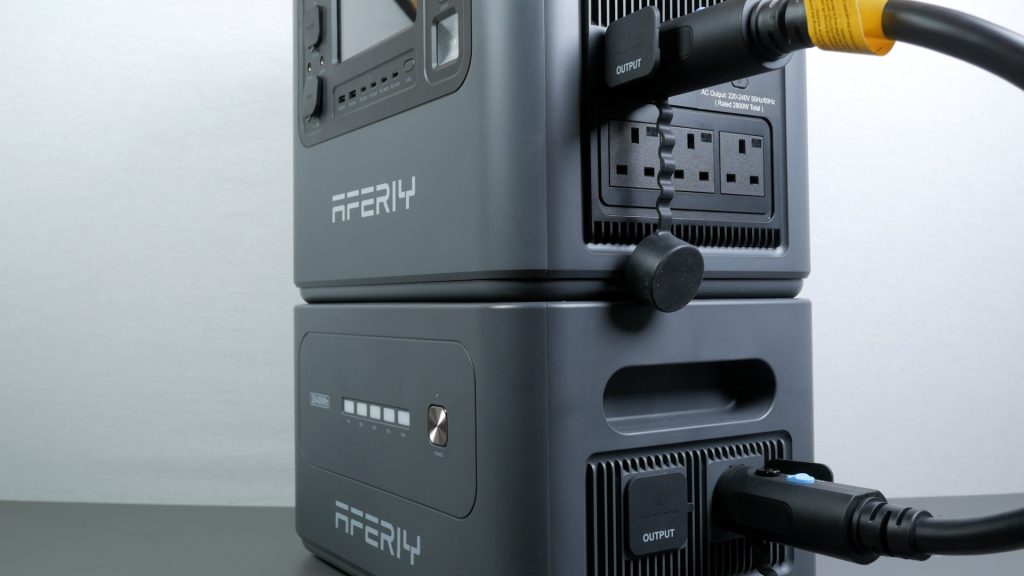
If you need additional capacity, the Aferiy is expandable up to 10 kWh via its expansion port. I’ve got one extra 2048 Wh battery which provides a total of 4096 Wh used together with the P280. This connects via the output port on the P280 into the input port on the expansion battery. You need to have both the power station and battery turned off before connecting them together.
You can daisy chain further batteries via the output port on this extra battery. The substantial battery cable that comes with the extra battery clicks into place and has a lock slider for extra security.
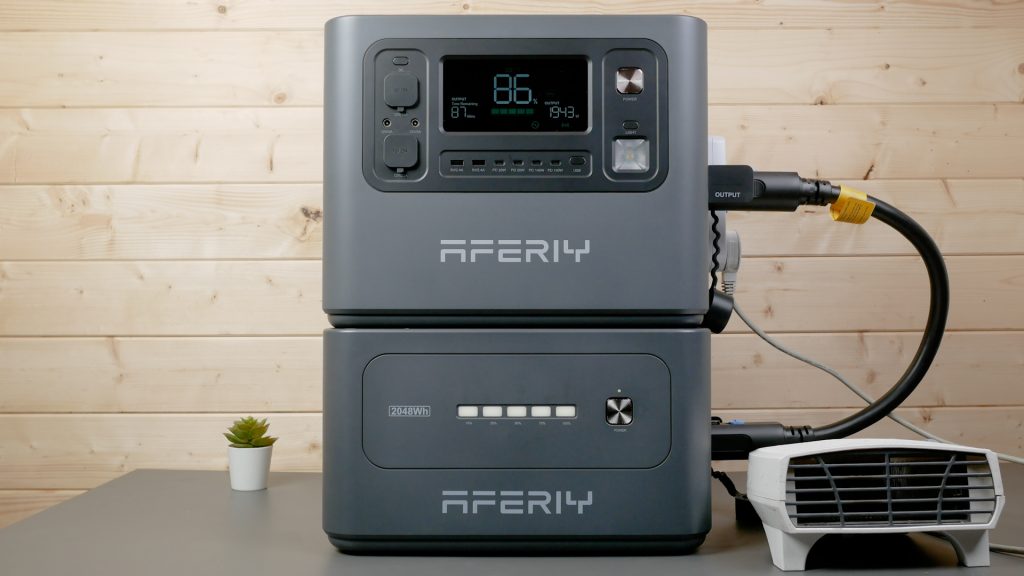
The power station and app show the connected battery capacity. With the P280 and expansion battery completely flat, a full charge, still at 1800W, took 2 hours 40 minutes which is impressive. I also measured usable capacity again using a constant 2 kW load and got 3744 Wh, which works out at 91% efficiency – another very good result.
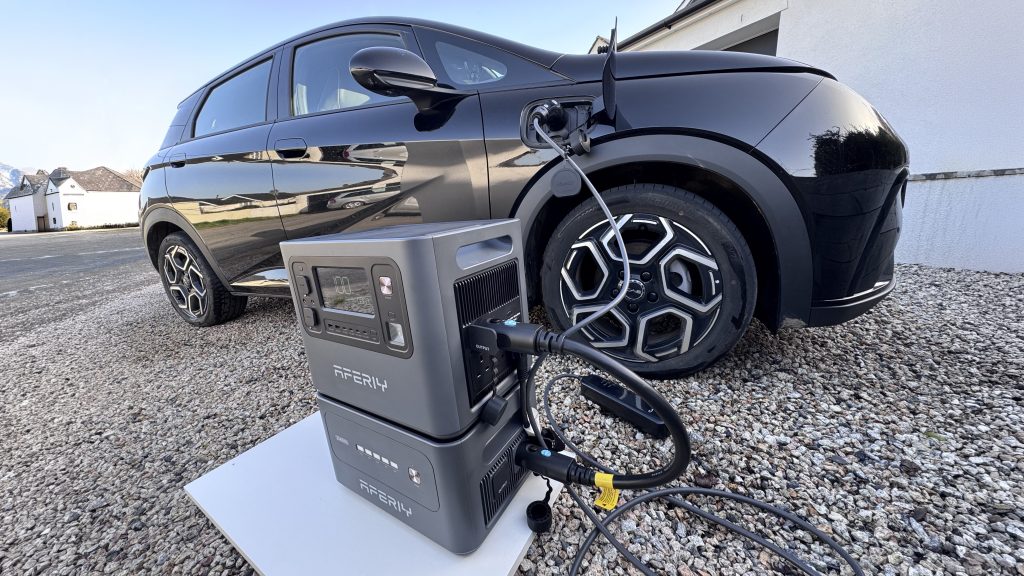
I also tested charging with my BYD 60 kWh BYD Dolphin, as Aferiy does advertise EV charging – although they probably are referring to electric bikes. Unfortunately the P280 failed to run my BYD 10A charging cable – I got a fault on the charger which is surprising since it never pulls more than 11A. Even if it worked, you’d only get 15 to 20 miles so it’d really be more of an emergency option if you even had the space to carry it.
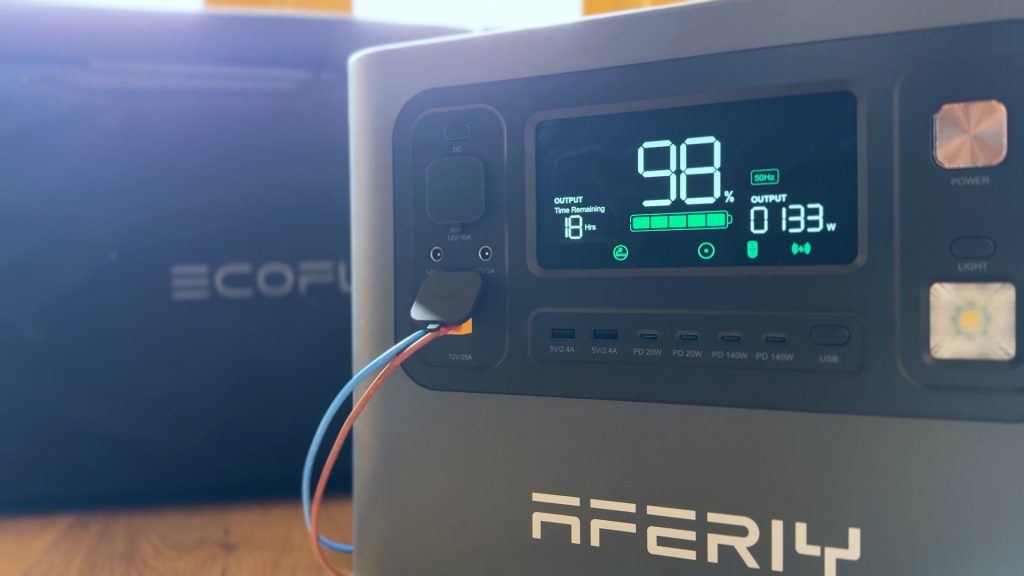
The P280 has a great selection of DC outputs, most notably a 12 V 25 A XT60 output. Not quite the 30 A output on the Elite 300 and EcoFlow Delta 3 Max Plus but still plenty to run higher demand devices like some fridges and diesel heaters that often spike over 10 A. It also allows you to run multiple DC loads at the same time, for example in a campervan.
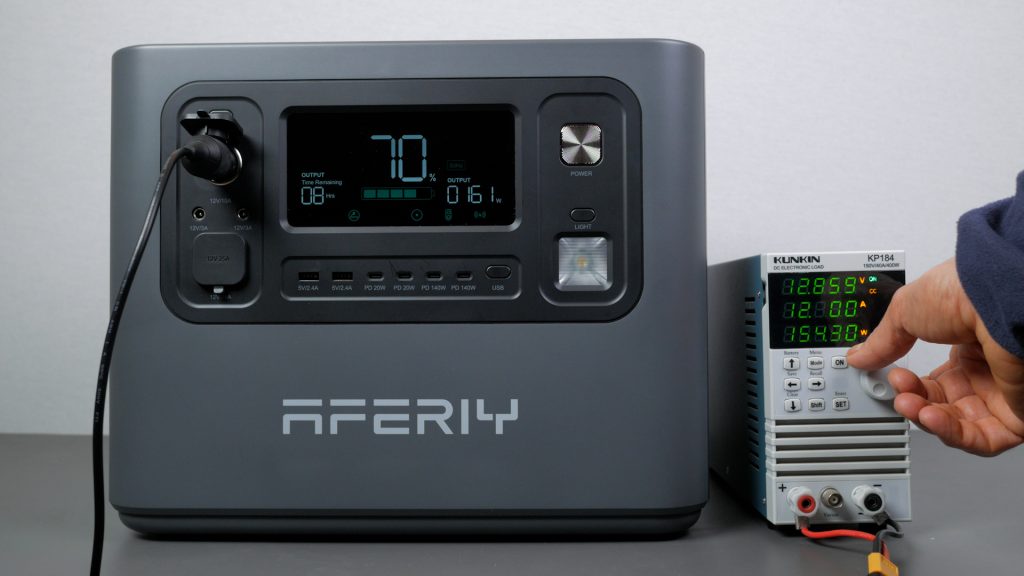
There’s also a standard 12 V 10 A car socket for more typical accessories and two barrel jack DC5521 12V, 3A outputs which are getting less common but are useful for lighting for example.
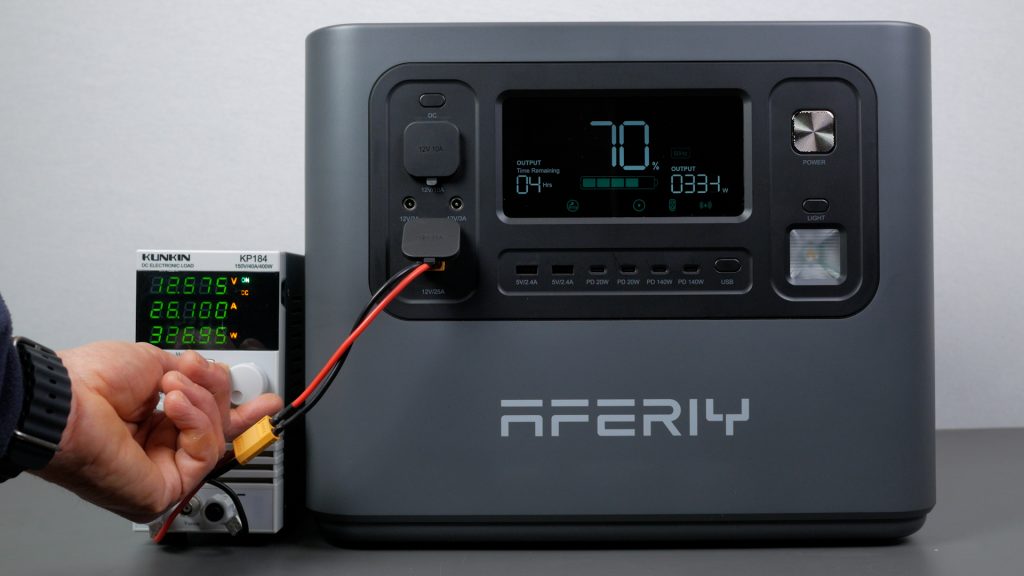
I tested the two main DC outputs to their limits using a load tester. The 10 A output got to 12 A and the 25 A output reached 26.1 A before overloading the power station.
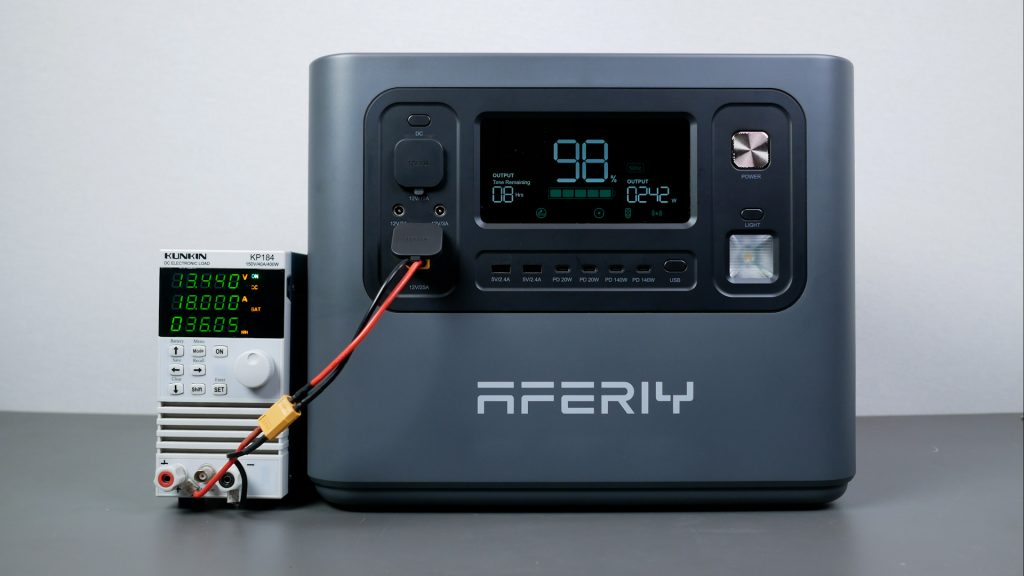
Next I measured DC efficiency using the XT60 output with a 18 A load. The usable energy came out at 1864 Wh, which is around 91% efficiency – slightly lower than AC, but still a good result. I also measured DC idle drain with DC enabled, no load attached, and Standby turned off. Over 16 hours the battery dropped from 100% to 97%, which works out at less than 4 W of idle draw which is an excellent result. So both AC and DC efficiency are very good, and idle consumption is excellent.
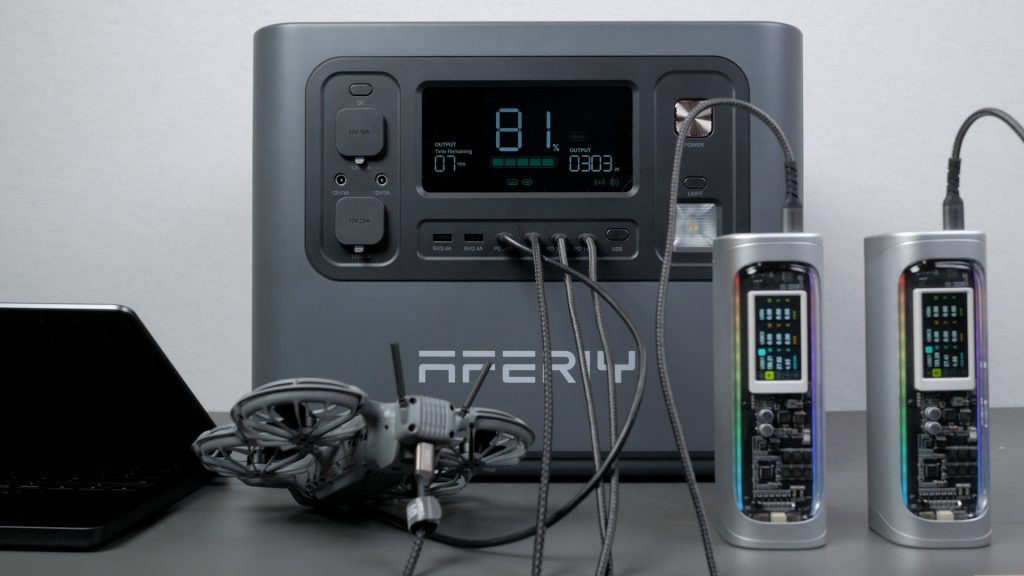
The P280 offers a good selection of USB ports. There are two 140 W USB-C ports, two 20 W USB-C ports, and two 12 W USB-A ports.
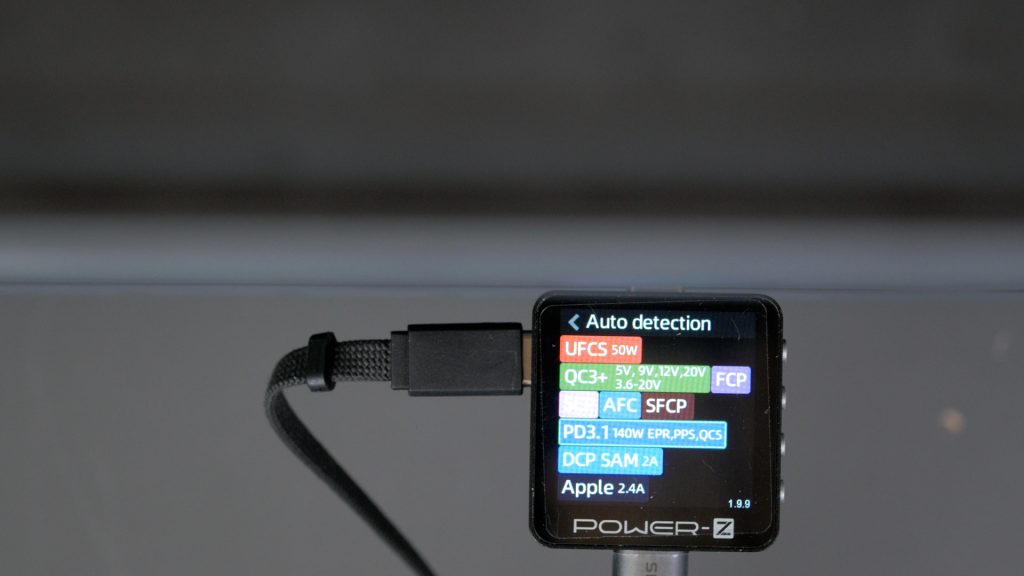
I tested all ports at full speed and checked their supported charging standards. The USB-A ports don’t support fast charging — just standard 5 V output.
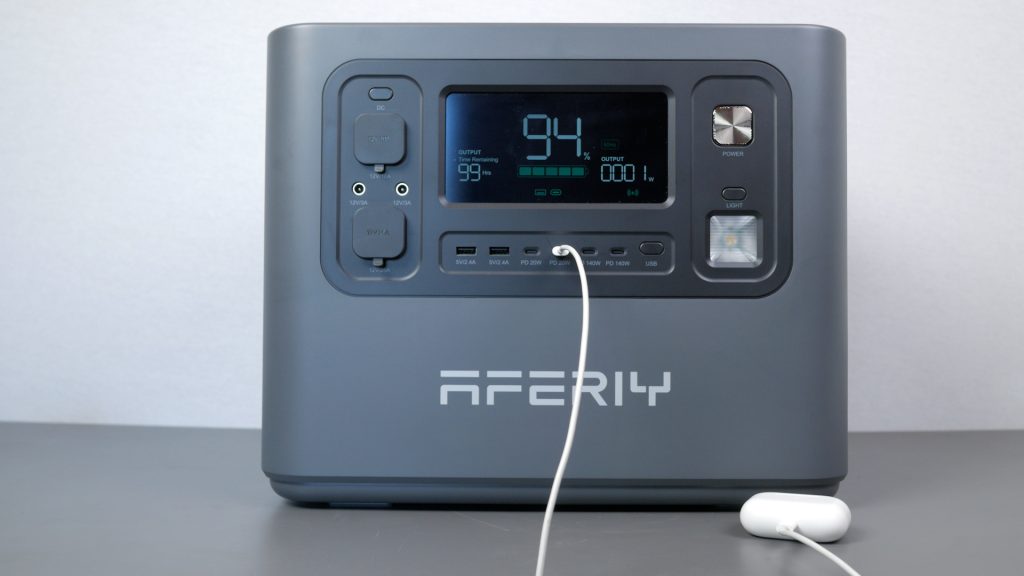
I also tested charging very low power items like my AirPods Pro which only draw around 1W. Even off the 140 W USB-C port they kept charging for more than 30 minutes so the power station doesn’t cut off very low-power devices, at least with Standby mode turned off. And the power station supports passthrough charging, so you can charge the power station and power devices at the same time.
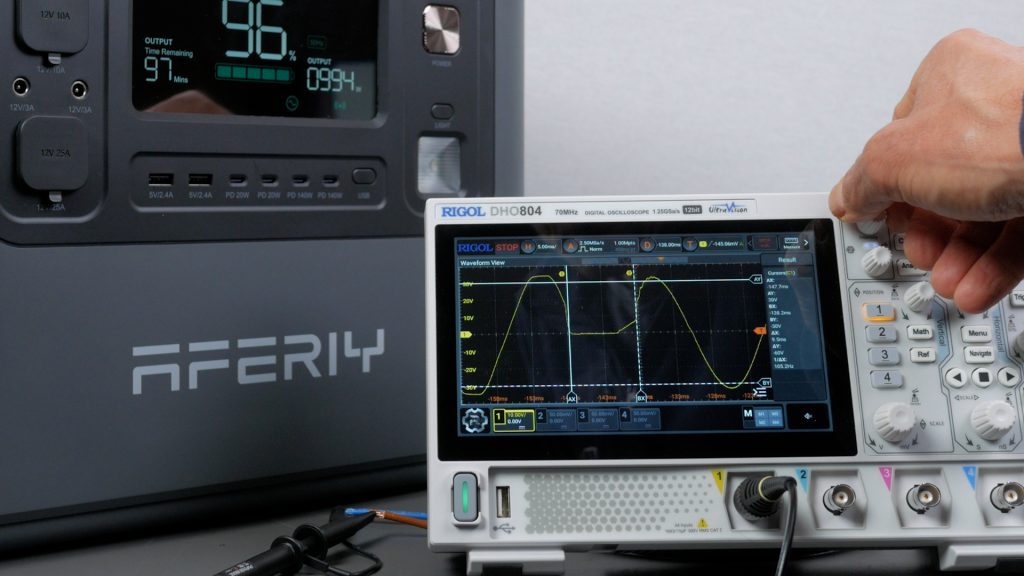
Like most power stations, the Aferiy includes a UPS, or uninterruptible power supply mode. When the unit is plugged into mains power, connected devices run directly off mains rather than the battery. In the event of a power cut, the switch‑over to battery happens almost instantly – in less than 10 ms according to Aferity.
I confirmed their claims with my oscilloscope, measuring the transfer time at just 9.5 ms and tested this in real-world use with my desktop PC running an intensive graphics benchmark – it handled the transition flawlessly.
Aferiy uses a third party generic smartphone app which connects over Bluetooth and WiFi. It has most features you’ll need and there’s even scheduled charging so you can charge the power station when electricity is cheap, which is useful.
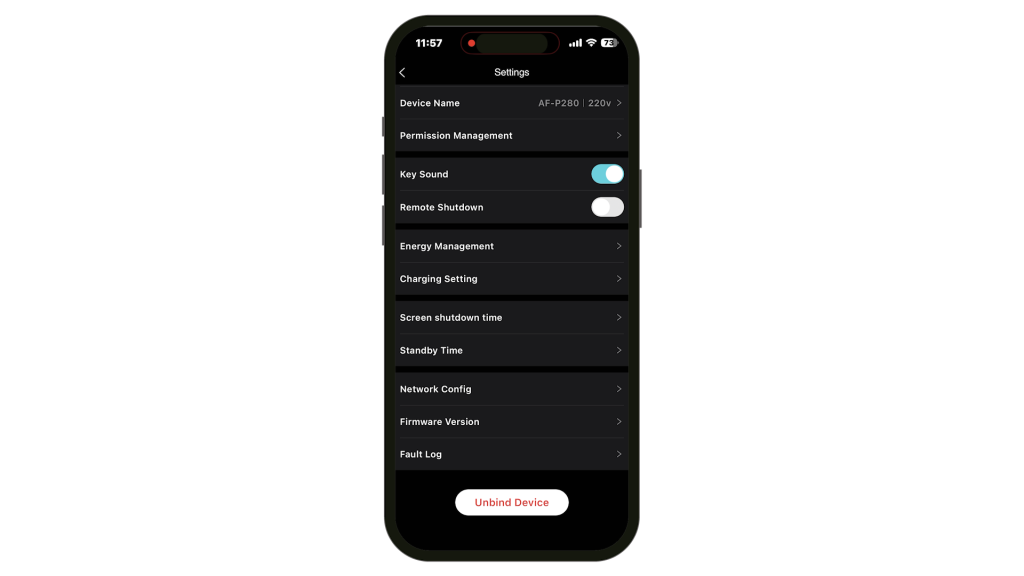
The app has become a little more reliable recently, but it still often fails to connect and is nowhere near as slick as the competition’s.
Conclusions
Overall, the Aferiy P280 gets a lot right.
AC efficiency and idle power draw are very good, there’s a generous range of USB outputs, including two 140 W USB-C ports, plus the 25 A DC output — and the dual DC inputs together with the expansion options add a lot of flexibility.
But there are a few things to be aware of. The way it handles higher loads — effectively capping output by dropping voltage — isn’t ideal, although it’s something Aferiy could potentially improve with firmware. The overall build is solid, but it doesn’t feel quite as refined as some of the more established brands, and the app experience could also do with some polish. And of course, only time will tell how Aferiy supports that 7-year warranty.
At its current discounted price, it does offer good value – especially if it does what you need it to.
If you decide to pick one up, you’ll find links down below – it helps support this website and my YouTube channel and the time that goes into these reviews, at no extra cost to you.
Don’t forget to take a look at my YouTube video at the top of the page, and again please subscribe to my YouTube channel where I’m releasing videos every week on the latest technology and how to get the most out of it. If you tap the bell icon when you subscribe you’ll get a notification as soon as I release a video, and there’ll be a link to my site here for the written article. YouTube is also the best place to leave a comment. I read all of them and respond to as many as I can!
Affiliate links (please consider using if this article or accompanying video helped you out – thank you!)
Product: Aferiy P280 2800W Portable Power Station – 2048Wh
Link: https://uk.aferiy.com/products/aferiy-p280-2800w-2048wh-portable-power-station?ref=GIDONREID
Code: TM28
Discounted price: £729
Product: Aferiy P280 2800W Portable Power Station with Expansion Battery – 4096Wh
Link: https://uk.aferiy.com/products/aferiy-p280-2800w-2048wh-portable-power-station?ref=GIDONREID&variant=51300489822521
Code: TM28E
Discounted price: £1308
Product: ALL
Link: https://uk.aferiy.com/?ref=GIDONREID
Code: THETECHNOLOGYMA
Leave a Reply