The DJI Power Auro 2000 Elite is the lightest and most compact 2 kWh power station I’ve tested. It has a 2000 W AC output, a retractable 140 W USB-C cable, and built-in solar and even alternator charging via relatively inexpensive adapters.
I’ve put it through my usual thorough measurements and real-world tests to see how it performs, what compromises there might be, and whether it could be the right power station for you. So let’s take a closer look.
Overview
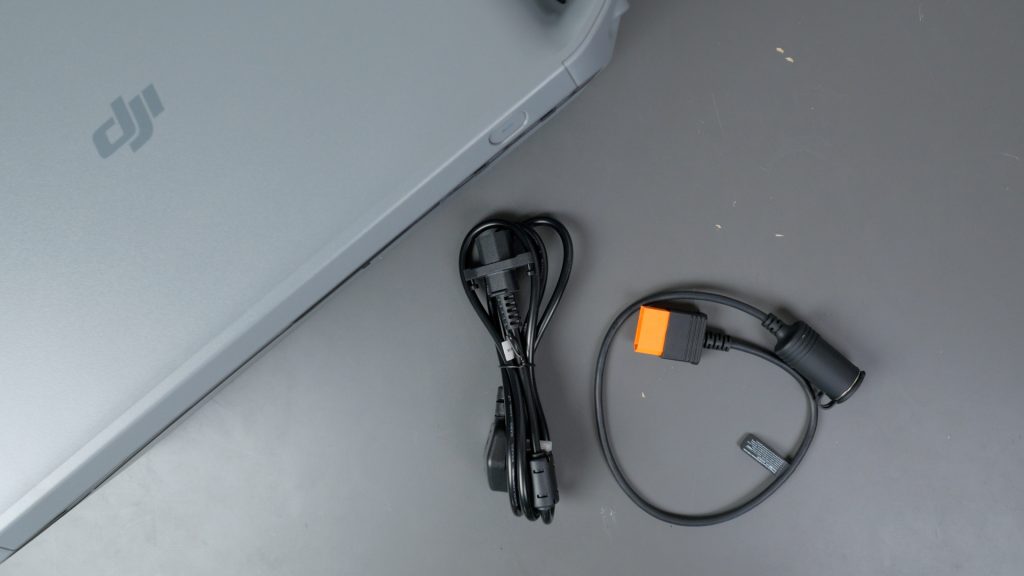
The power station comes with a mains charging cable and an SDC adapter for powering devices with a car-style plug.

Like all the DJI power stations I’ve tested, the build quality is excellent. As with their drones, the plastics feel particularly robust and durable, more so than most other power stations I’ve tested. DJI has also gone for a slightly lighter shade of grey than on its other power stations.
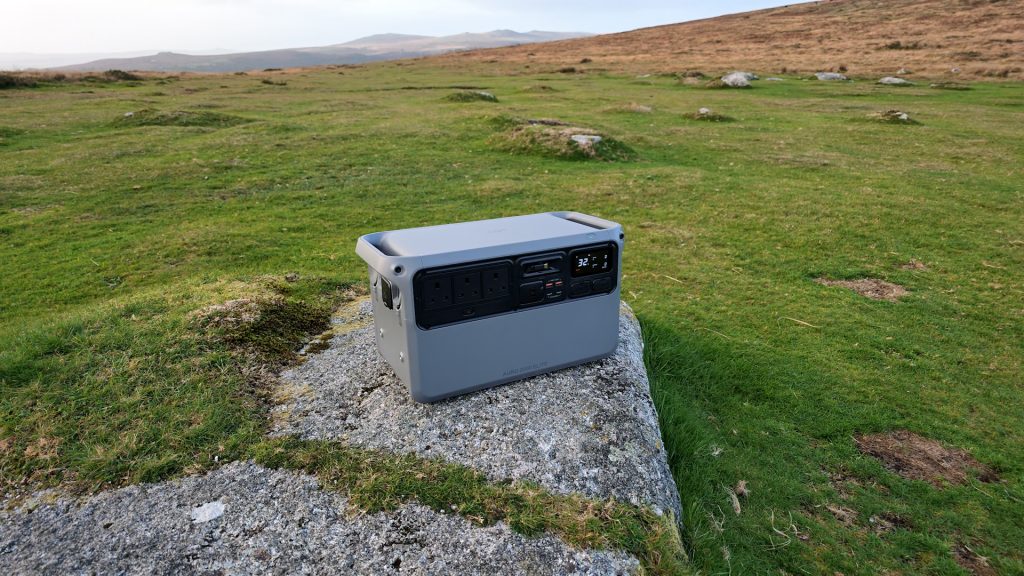
There’s no formal weatherproof rating though, which is typical for power stations, so you do need to take care when using it outdoors.
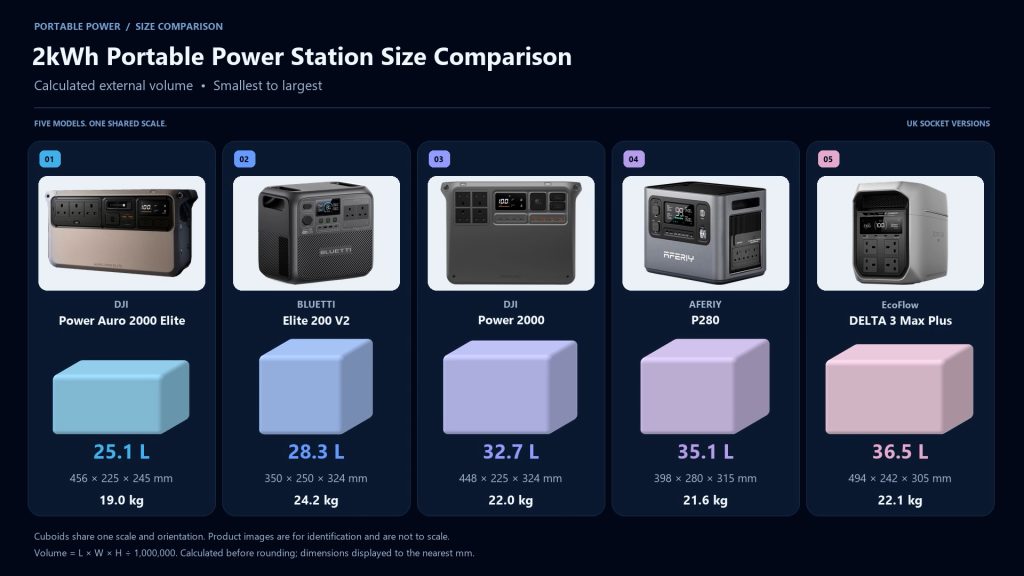
A big selling point of the Auro is its size. It’s the lightest and most compact complete 2 kWh portable power station I’ve tested so far, weighing just 19 kg with a volume of 25 litres.
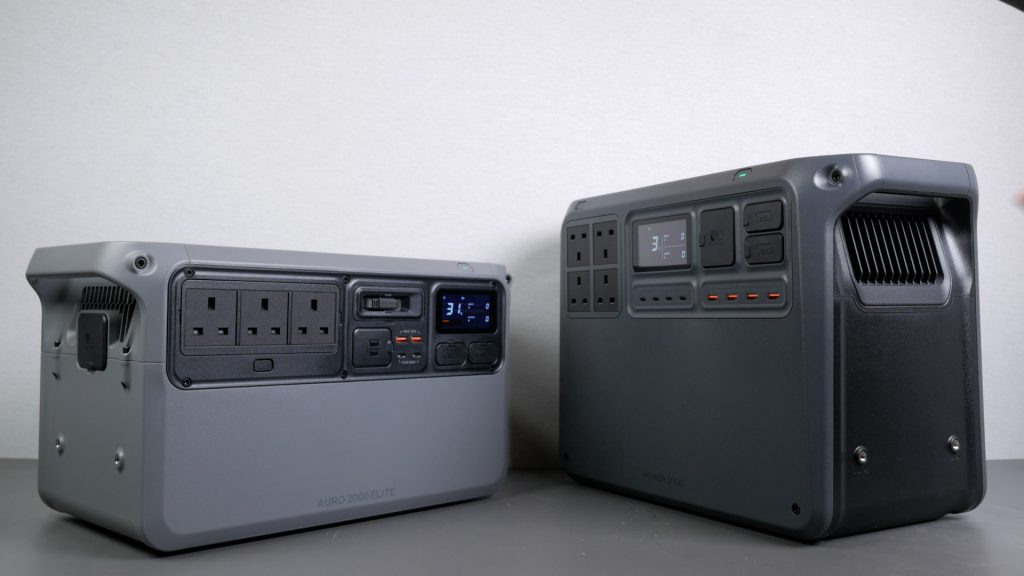
That’s around 3 kg lighter than many competing models, including its more powerful sibling, the DJI Power 2000.

It does make a difference. I can fairly easily carry this one-handed if needed, which is impressive for a 2 kWh power station. The first 2 kWh power station I ever tested was barely portable, weighing just under 30 kg!
There are, of course, a few compromises to achieve these reductions in weight and size, which I’ll come back to.
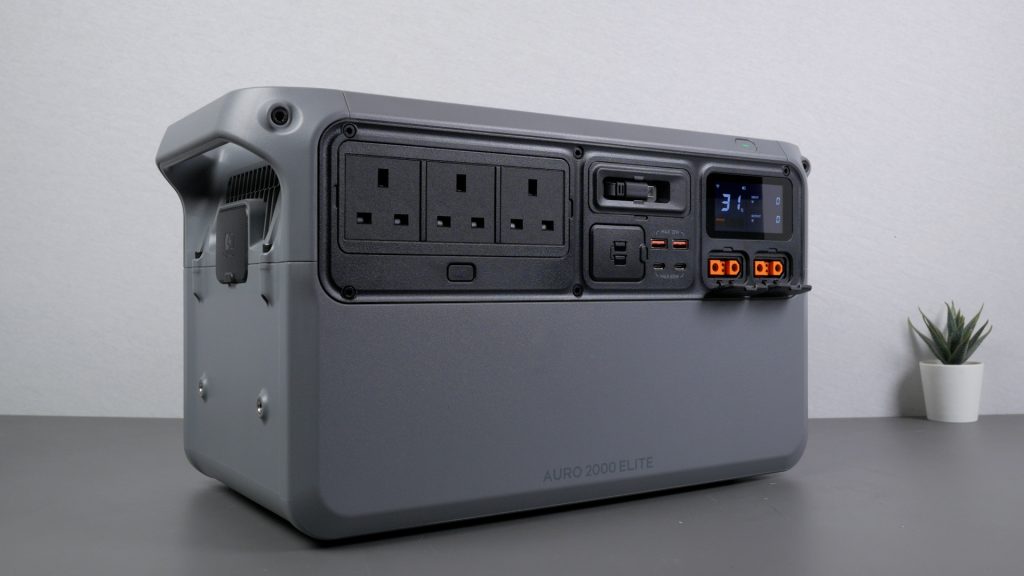
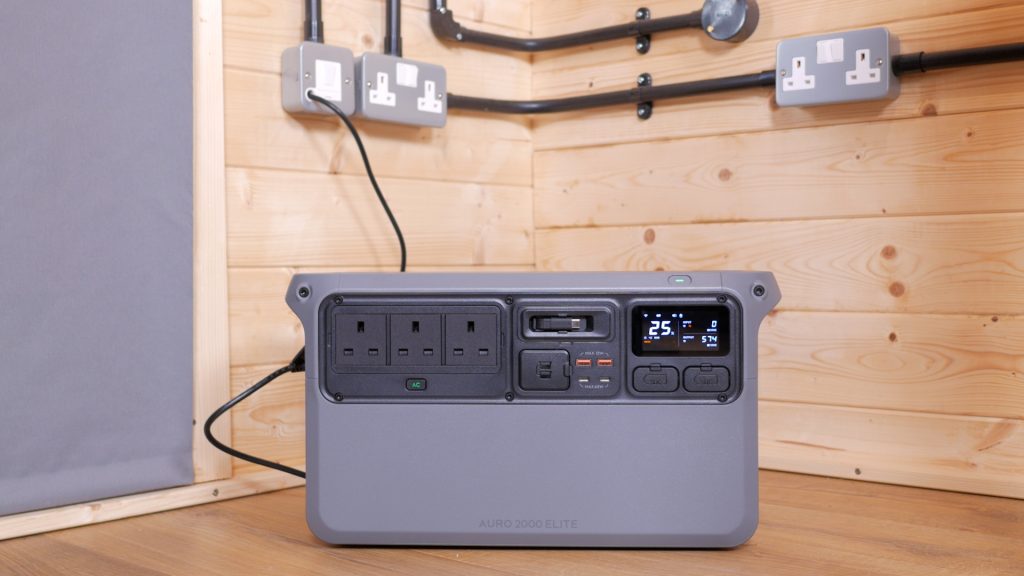
The display and all inputs and outputs are positioned on the front, apart from the mains charging port around the side. There are three UK mains sockets on the left, with a retractable USB-C cable, two USB-A ports, two USB-C ports and a covered expansion battery connection in the centre. The display sits on the right, above two DJI SDC ports.
A long press of the main power button turns the unit on or off, while a short press toggles the display. The AC button switches the mains outputs on or off. Holding it down enables continuous mode, with the button’s light changing from pulsing to steadily lit. This keeps the outputs active for appliances that cycle on and off, such as refrigerators.
Charging
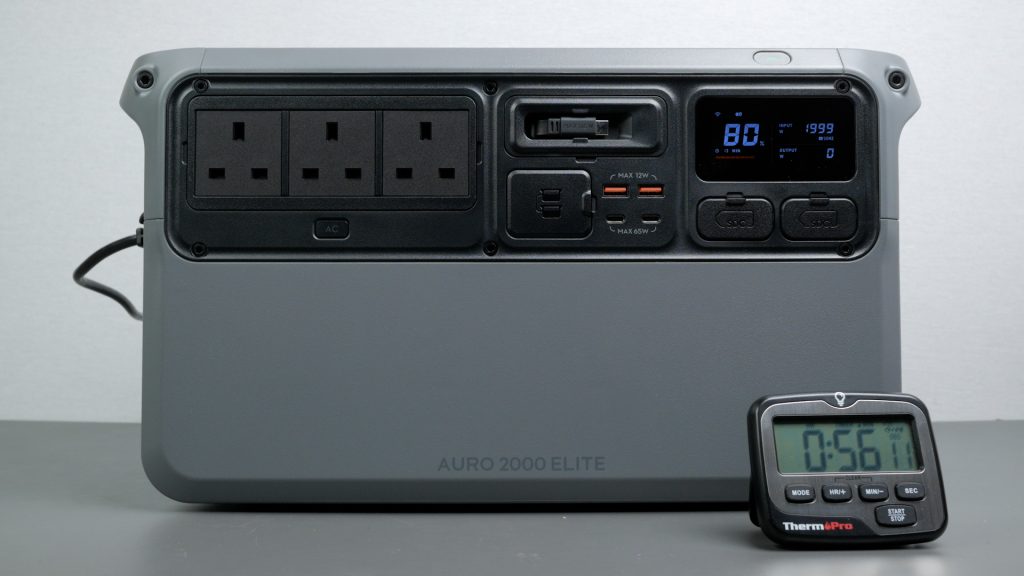
Out of the box, the Auro supports mains charging at up to 2000 W. A major upgrade over the Power 2000 is its built-in solar and alternator charging capability, accessed through relatively inexpensive adapters that I’ll cover shortly.
You can charge it from the mains using the included cable or a suitably rated standard IEC cable. DJI claims 60 minutes to reach 80% and 75 minutes for a full charge. In my tests, it did a little better, reaching 80% in 56 minutes and 100% in 67 minutes.
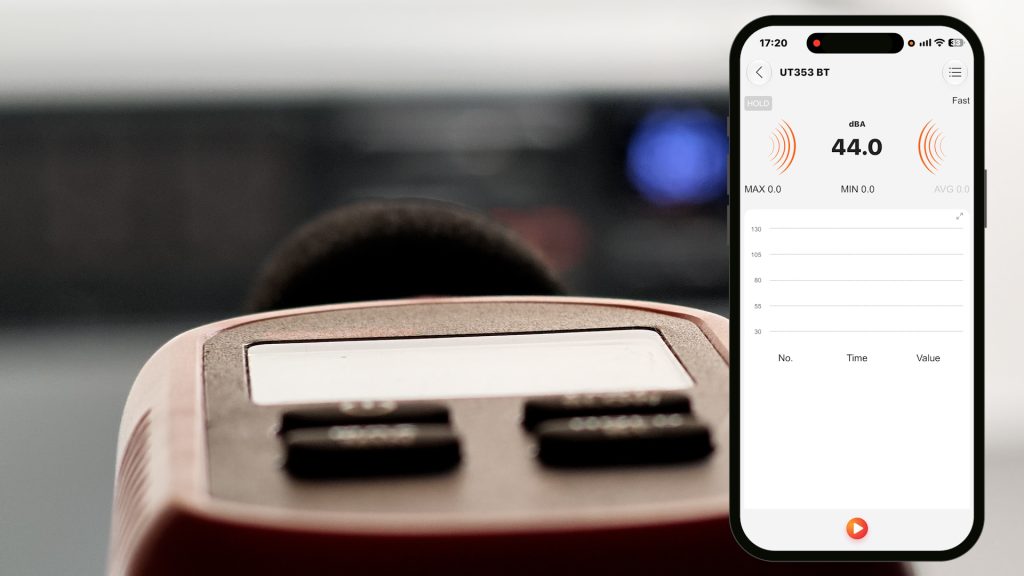
At full charging speed, the fans are audible, but I measured only 44 dB from one metre away, which is pretty quiet. My thermal imaging camera showed temperatures of around 60 °C at the exhaust vents.

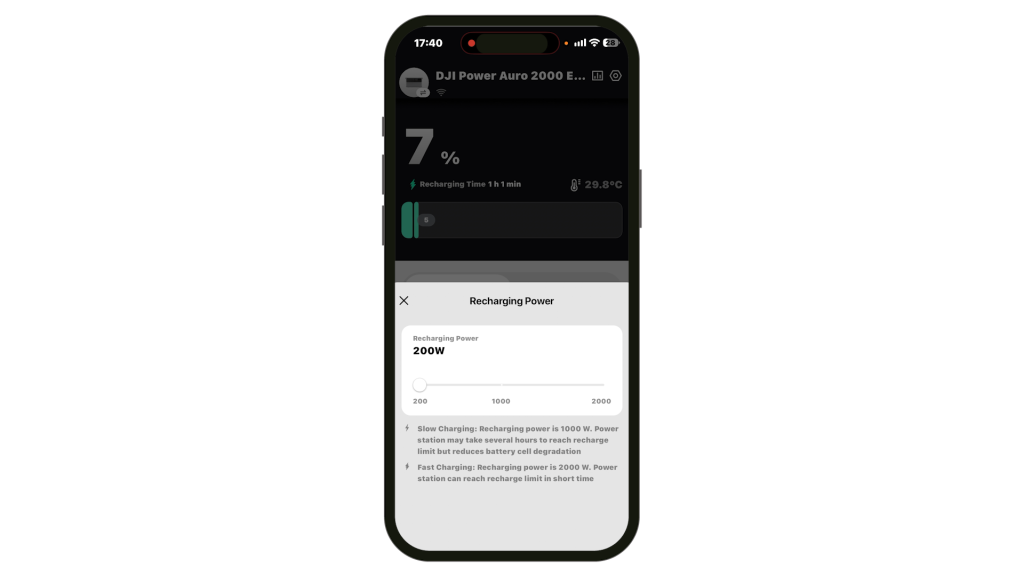
You can reduce the charging power to as little as 200 W, and at lower settings the fans are barely audible. Slower charging may also help extend the lifespan of the cells.
Like the DJI Power 1000 Mini, there’s now solar, car and alternator charging built in via the two proprietary SDC ports. You still need adapters which aren’t included, but these are relatively cheap.
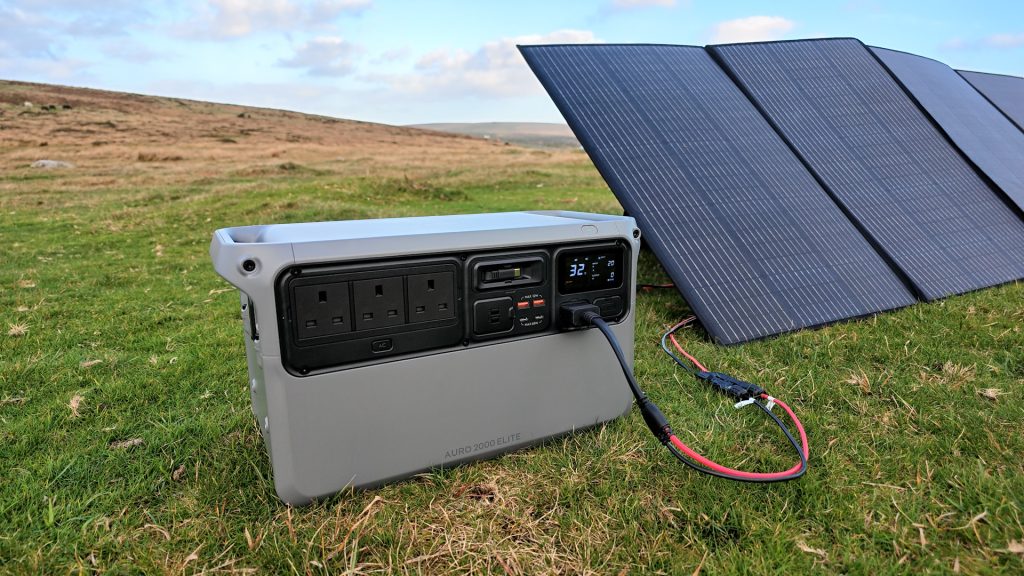
There was very little sun when I tested the solar charging, but I connected a foldable 350 W solar panel via the SDC to MC4 adapter, which worked fine. Each SDC port has a pretty flexible voltage input range from 9 V to 60 V, and more impressively, supports up to 30 A across this range, with a maximum of 600 W per port.
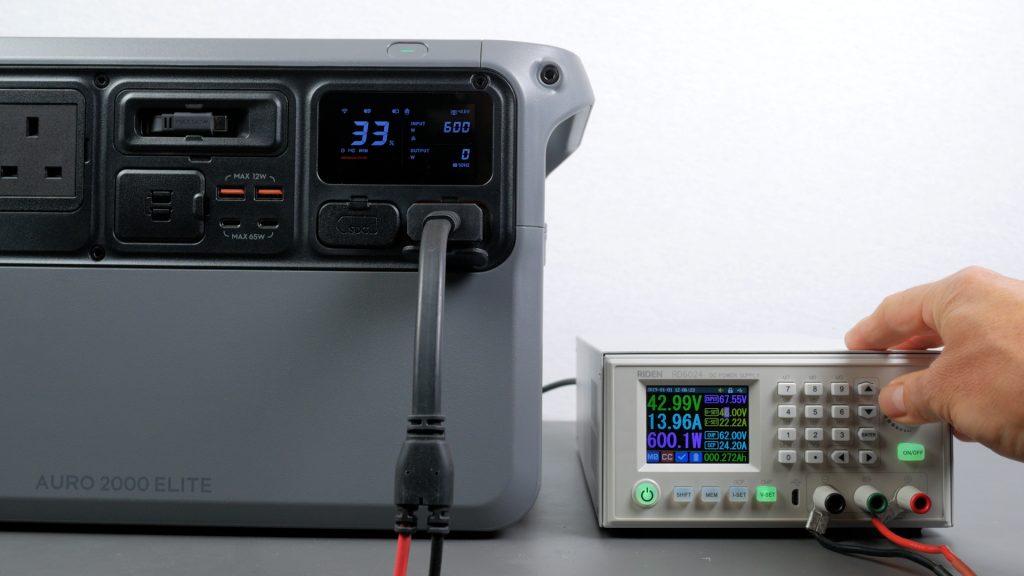
With our limited UK sun, I also tested the SDC input with my bench power supply. My power supply maxes out at 24 A, so at lower voltages I couldn’t get the full 600 W. But above 25 V, I could reach the full 600 W input limit.
To get the full 1200 W solar input, you’d need two SDC to MC4 adapters, each connected to enough solar panels to supply 600 W. You can connect compatible panels in series or parallel, provided you stay within the 60 V and 30 A limits of each port.
Built-in solar charging is pretty standard with most portable power stations, but built-in alternator charging is not. You’ll need this SDC to car battery charging cable, but this is far less expensive than typical alternator chargers.
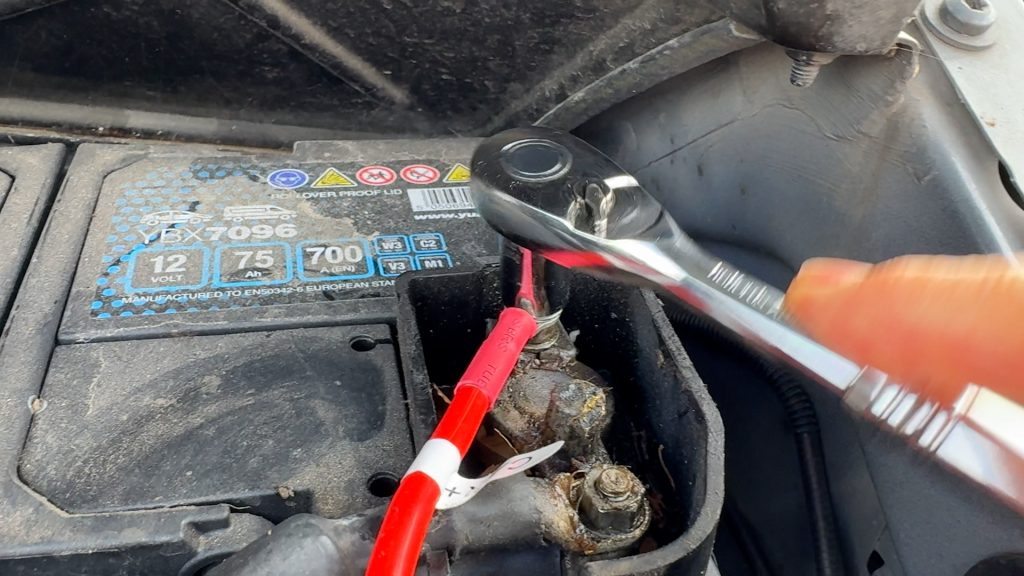
Connect the 5 metre cable to your car’s battery – red cable first, then black. Plug the other end into the SDC port. The cable already has a fuse fitted for protection.
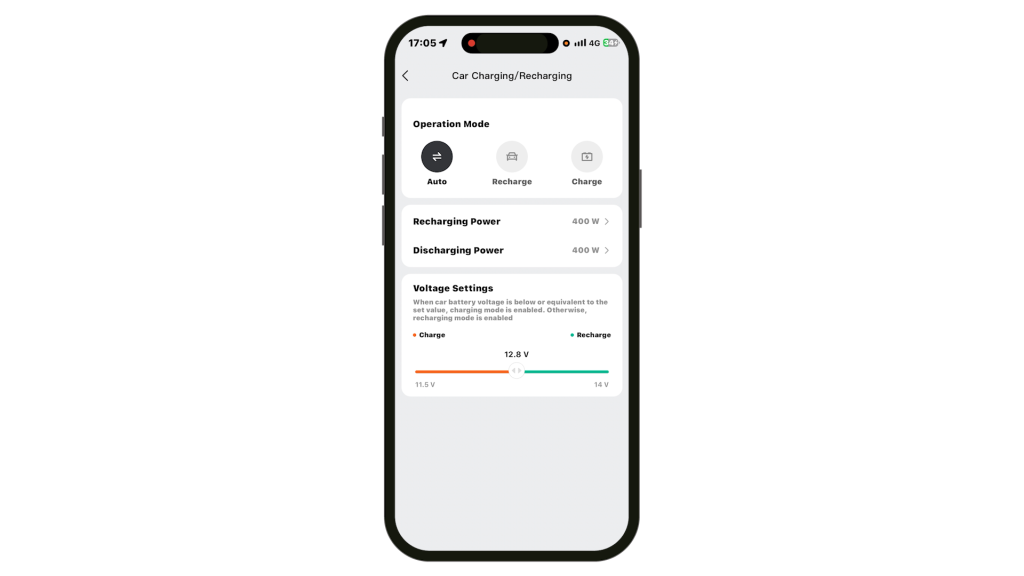
You now get a new Car Charging / Car Recharging configuration in the app. In Auto mode, the connection works both ways – so the power station can also top up your battery if it’s below a certain voltage, 12.8 V by default, at up to 400 W.
Or you can manually set the mode to Recharge to charge the power station, or Charge to charge the car’s battery.
There are voltage thresholds to protect the car’s battery from being excessively discharged, so you could have this as a permanent setup if you wanted to. In either mode, you can adjust the Recharge or Charge power as you wish.

DJI specifies up to 360 W for a 12 V system and 600 W for a 24 V or 48 V system. But a typical car battery is actually around 13.8 to 14.4 V with the engine running, so I was able to get the full 400 W charging the power station. At that rate, you could recharge it from empty in around five hours.
And charging the car’s battery worked as expected too. It’s worth noting that this isn’t a jump starter – it won’t start a dead battery. It’s just a way to maintain or top up a generally healthy battery, but a super useful extra feature, especially if you’re camping and may have lights on or other small loads running off the car.
Also, the alternator charger won’t work with most EVs or hybrids – their 12 V system isn’t usually held at a high enough voltage to trigger charging, which in my tests needed around 14 V.
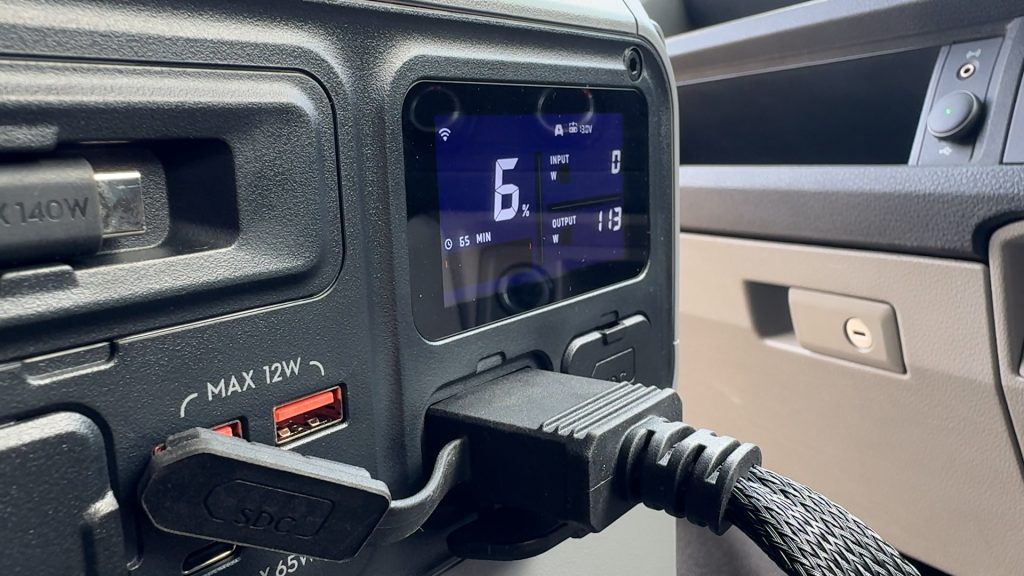
You can also charge using this optional SDC to cigarette lighter adapter, although it’s limited to 120 W, so at 12 V it’ll take around 20 hours for a full charge.
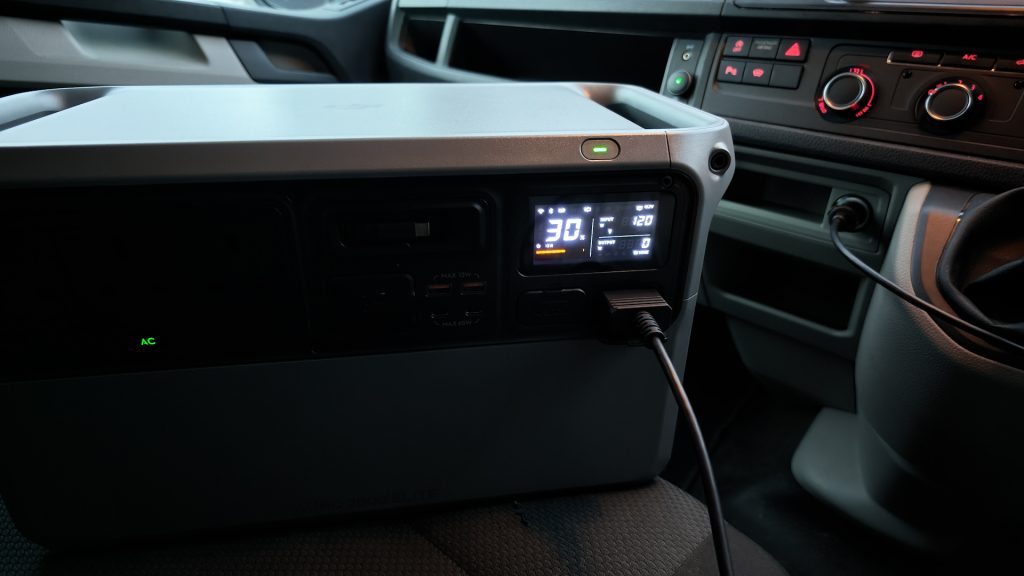
With the two SDC ports, you can use solar charging alongside either alternator charging or charging from your car’s accessory socket—particularly useful in a campervan with solar panels on the roof.
Performance
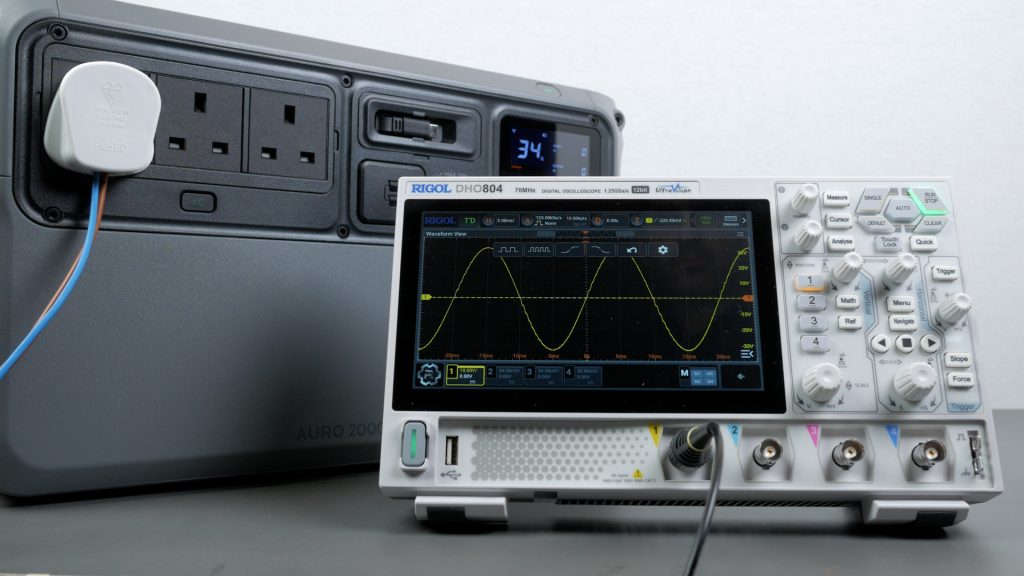
The Auro has three AC outlets with a combined 2000 W pure sine wave output. That’s a little less than other 2 kWh units I’ve tested, but it will still run most devices you’re likely to use with it.
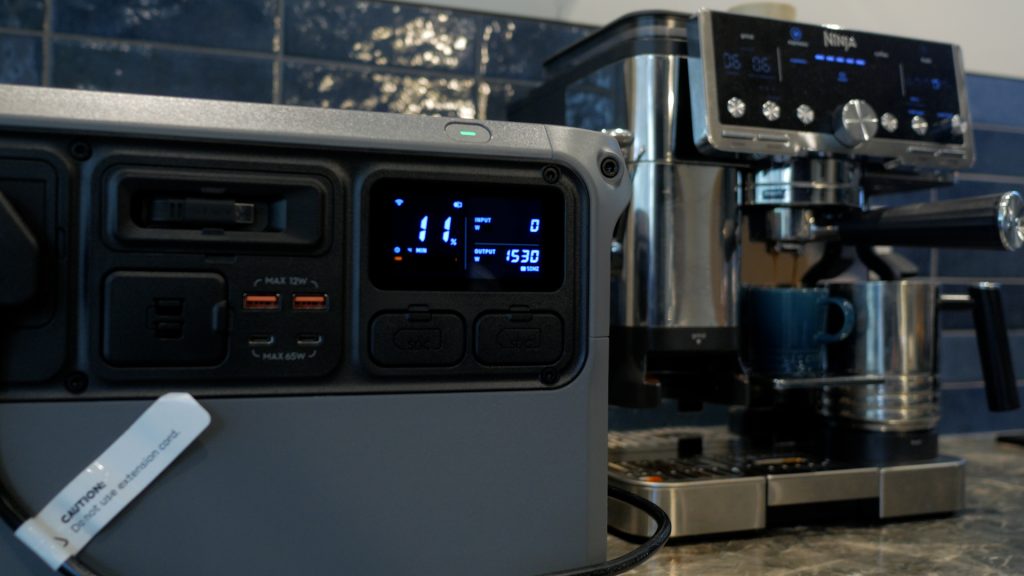
Around the house, it could power my coffee machine, toaster and a 2000 W portable induction hob. And the large 2 kWh battery could run my full-height fridge and freezer during a power outage for up to two days, based on their energy consumption over the last 30 days.

To really put it to the test, I tried various tools and machinery in my garage. It could run most tools, including my track saw and dust extractor together. These had a combined startup draw of over 18 A, or around 4000 W here in the UK.
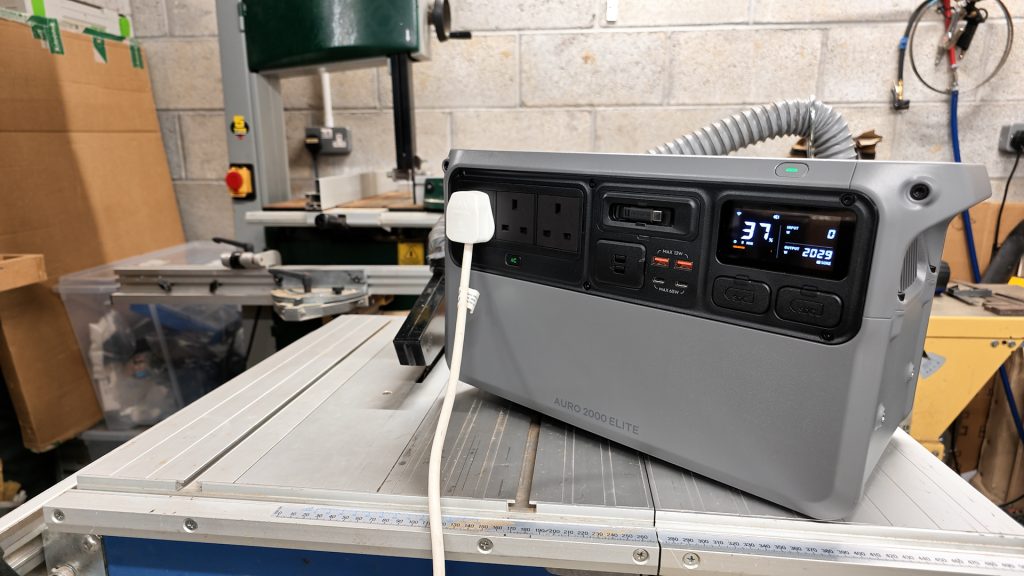
It could just about run my bandsaw, but my table saw was too much for it. Both use induction motors with high startup demands. Their actual running power was well within the power station’s capability—it’s the high startup demands that are a challenge for portable power stations generally. The highest startup current I measured was around 20 A, or 4600 W, although it didn’t always manage this. These tests are deliberately pushing the Auro to its limits, well beyond what most people are likely to ask of it.
I also carried out some more controlled tests, running a 2 kW fan heater and then adding a hairdryer on its low setting, drawing just under 900 W. This combination ran briefly, but the output peaked at around 2300 W.
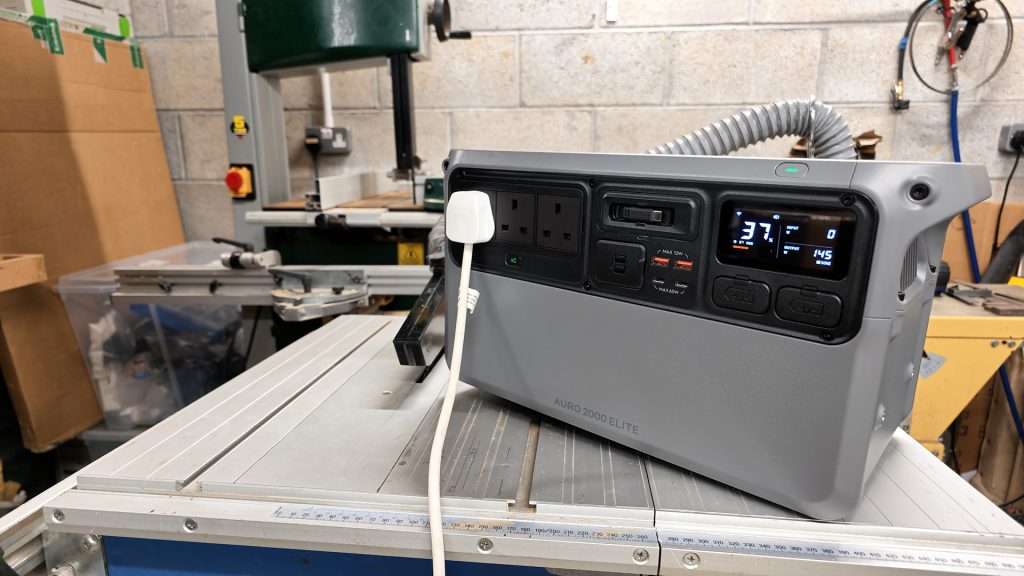
Rather than immediately shutting down when the load exceeds 2000 W, the power station reduces its output voltage. I don’t mind this behaviour, but I’d like the option to disable it in the app. It’s fine for resistive loads like heaters, but I wouldn’t recommend it for more sensitive electronics.
Next, I tested DJI’s claim of sustained 2000 W output by running the 2 kW heater for 10 minutes. The cooling fans did kick in, and I measured temperatures of over 60 °C around the exhaust vents, but the Auro handled the sustained maximum AC load without any problems.
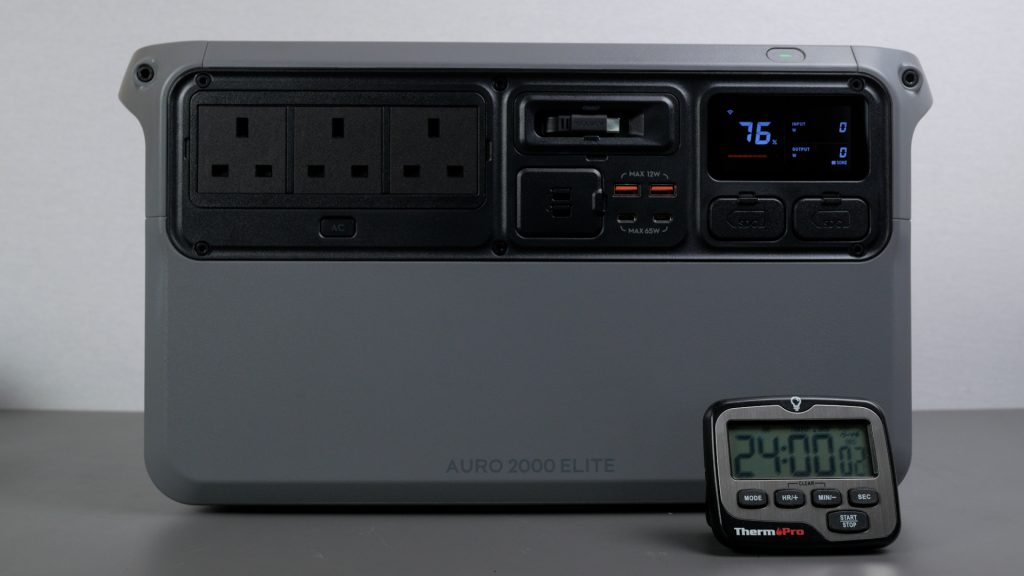
AC inverters can consume a surprising amount of power even with no load attached. By default the AC subsystem will turn off if there’s no load attached, but with Timeouts disabled in the app, I left the unit for 24 hours with no load connected. The battery dropped from 100% to 76% so just having AC turned on uses around 20 W.
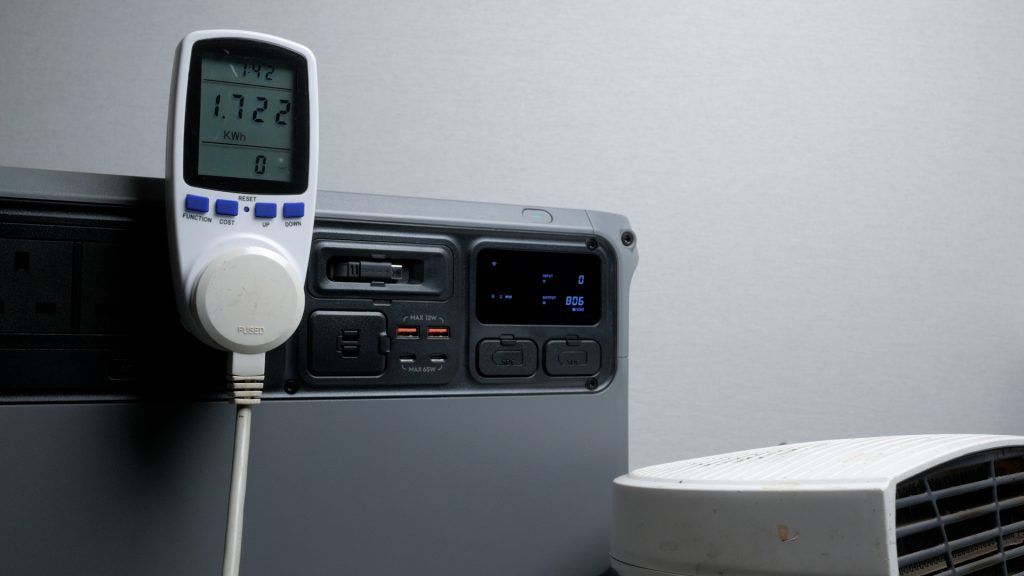
To measure usable capacity, I used an energy monitoring plug and ran a constant 1000 W resistive load using an electric heater. The power station ran for 1 hour 42 minutes and delivered 1722 Wh from its 2016 Wh battery. That’s 85% efficiency, which is a good result.

The Auro is also expandable to 12 kWh via a new 2 kWh expansion battery that connects via its expansion port.
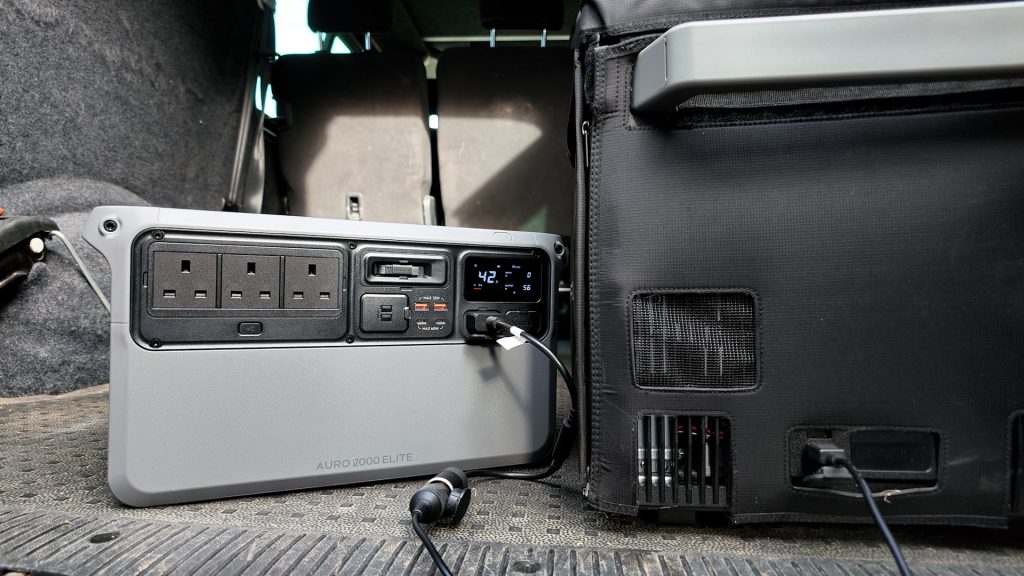
As well as the flexible DC input, the SDC port also provides a versatile DC output with the appropriate adapter. You can use it to fast-charge larger DJI drone batteries, and with the included car charging adapter, I was able to run my portable fridge freezer. There’s also an optional XT60 output cable offering the same features.
A particularly useful feature is the ability to adjust the SDC output voltage from 9 V to 28 V. Normally, this fridge freezer needs its AC adapter to charge its battery or operate the ice maker. But by adjusting the SDC output voltage, I can power these features directly over DC, without needing the AC inverter at all.

I also measured the usable capacity over DC. With an 8 A load and the output set to 25 V, I got 1814 Wh, an impressive 90% efficiency compared to 85% over AC.
And unlike the AC inverter, I measured no detectable parasitic drain with the DC output left switched on. That makes DC particularly useful for something like this fridge freezer, which only draws power intermittently. You’re getting slightly more usable energy from the battery, without wasting power between cooling cycles.
The USB setup consists of a 140 W retractable USB-C cable, two legacy 12 W USB-A ports and two 65 W USB-C ports.

The 80 cm retractable USB-C cable, carried over from the Power 1000 Mini but now even more powerful, is probably one of the features I’ve used most on this power station. It’s incredibly useful, and I’m very pleased to see that again DJI has made the cable user-replaceable.
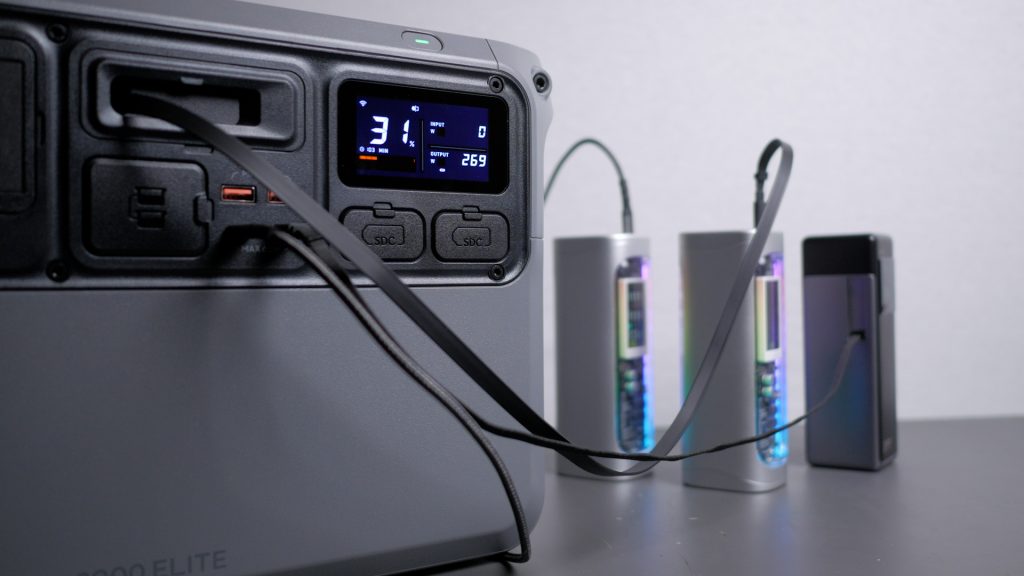
And all three USB-C outputs can deliver their full rated power simultaneously, giving you up to 270 W in total. With 100 W USB-C ports fairly common now, though, I was a little surprised the two additional ports were limited to 65 W each.

The two 12 W USB-A ports don’t support any fast-charging protocols, but they’re still useful for older devices. I also checked the fast-charging protocols supported by the USB-C outputs which you can see on screen.

Like most power stations, the Auro includes a UPS, or uninterruptible power supply mode. When the unit is plugged into mains power, connected devices run directly off the mains rather than the battery. In the event of a power cut, the switch-over to battery happens almost instantly – DJI claims within 10 ms.
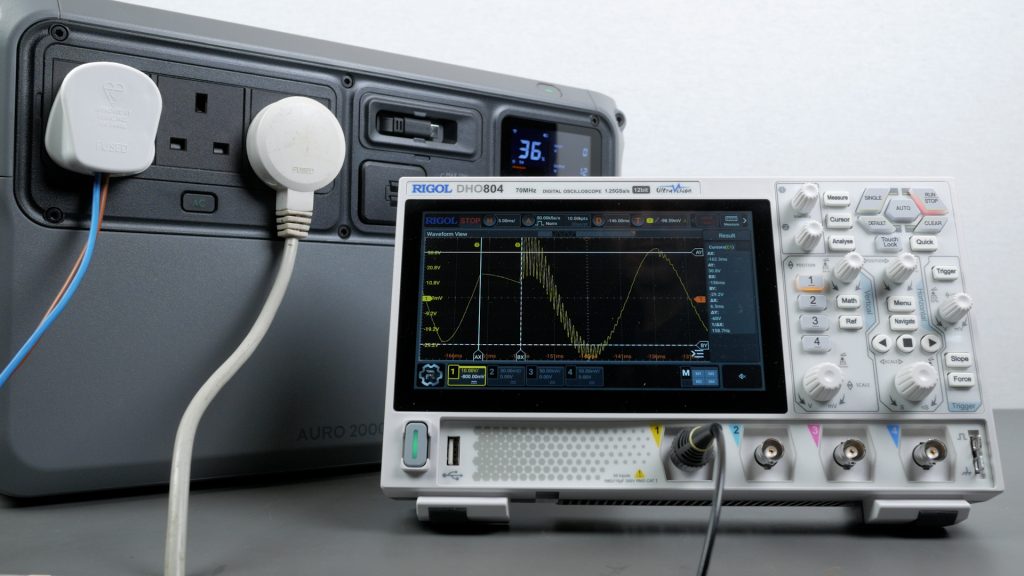
I tested this with my desktop PC running an intensive graphics benchmark, and it handled the transition flawlessly. I also measured the transfer time using an oscilloscope and recorded just over 6 ms, comfortably within DJI’s claimed 10 ms. There was some noticeable distortion in the returning sine wave for a short period, but it didn’t cause any issues during my testing.

Like the Power 2000, the Auro also supports grid-tied operation. In the UK, you need a qualified electrician to install a suitable connection to your home’s electrical system. The power station itself plugs into that connection, so you can still unplug it and take it with you whenever you need it.
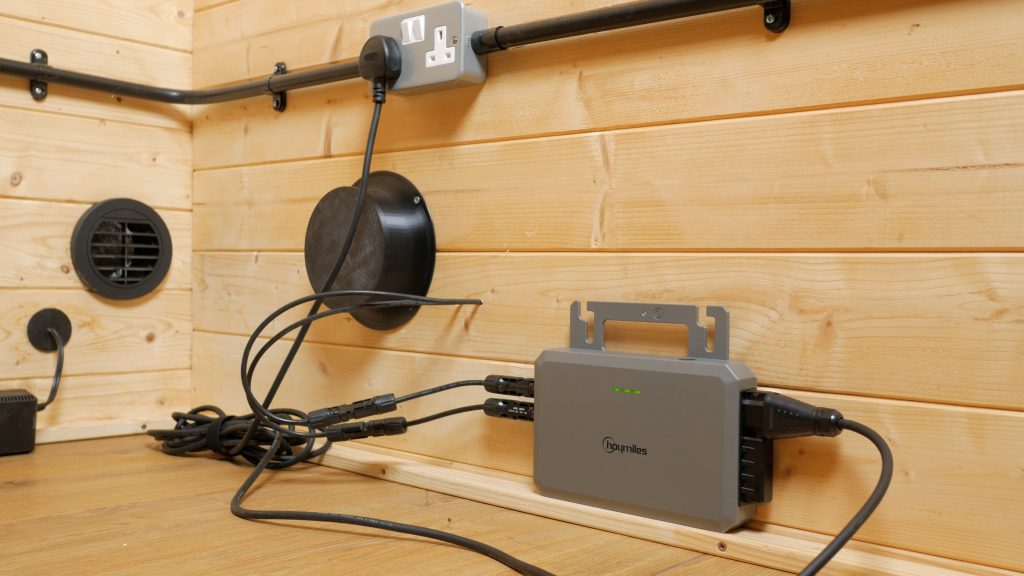
Once connected, it can feed up to 800 W back into your home. I’m using it in my home office, which has its own consumer unit, together with solar panels, a microinverter and a compatible Shelly smart meter.
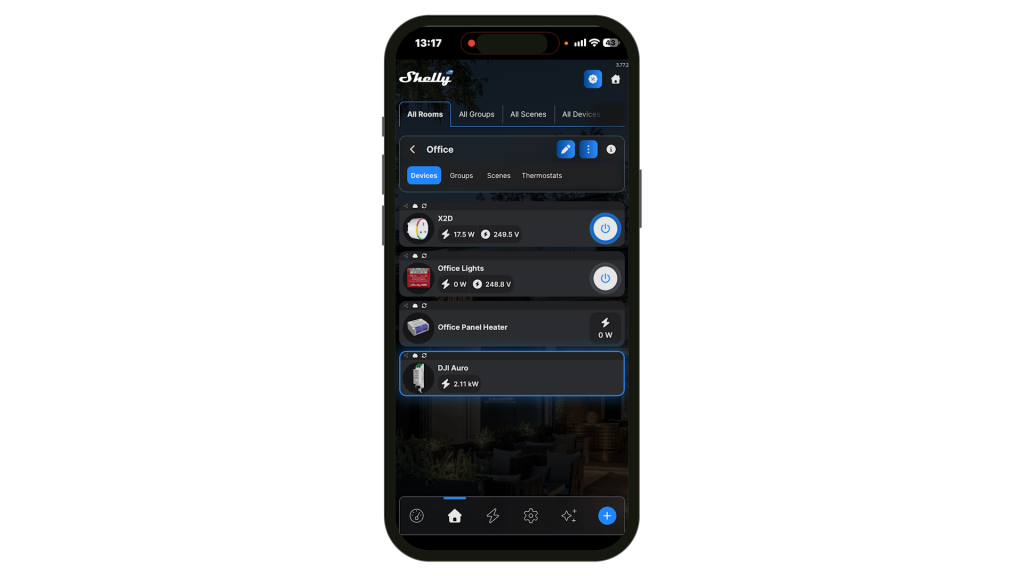
The solar panels generate electricity through the microinverter, while the Shelly smart meter monitors how much power the office is drawing. The Auro can then automatically adjust its output to help cover that demand, or store surplus solar energy for later.
When the solar is enough to cover what I’m using, the Auro doesn’t need to supply anything. If there’s more solar than the office needs, that surplus can charge the battery.

If I now turn on my air conditioning unit, the demand increases and the Auro starts supplying the additional power. Turn it off again, and the Auro reduces its output automatically. So rather than supplying a fixed amount, it responds to what the office actually needs.
There’s still an 800 W limit on its grid-tied output. If I turn on an electric heater as well, anything the solar and Auro can’t cover comes from the grid.
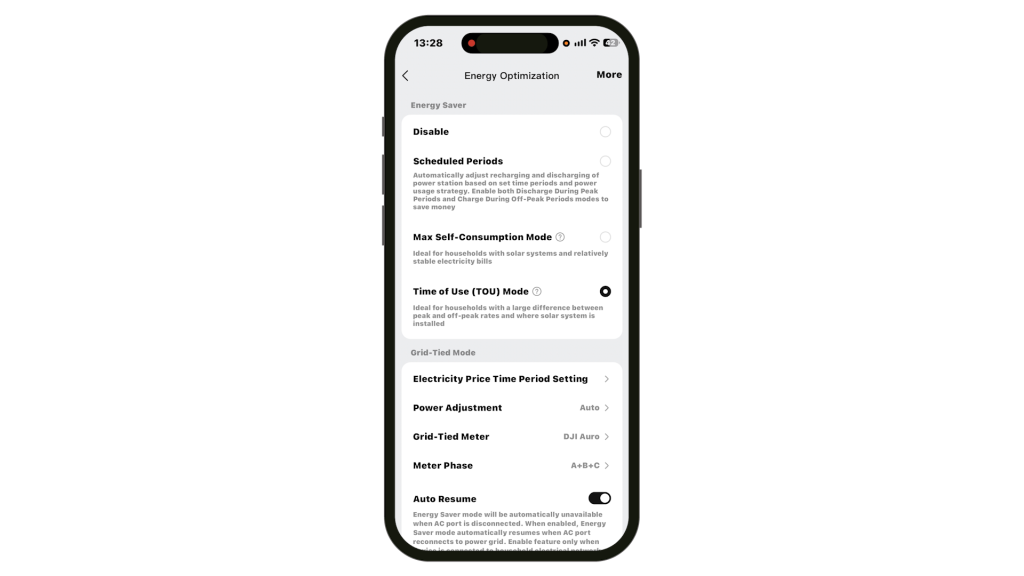
You can also use Time of Use mode to charge the battery when electricity is cheaper, then use that stored energy during more expensive periods. That’s how I’m using it, combining cheap overnight electricity with whatever solar is available during the day.
Once it’s configured, it largely looks after itself. It makes the Auro useful when it would otherwise be sitting unused, while still leaving me free to unplug it and take it away. I’ve published a video covering the installation, app settings and how the system works in more detail which you can find here.
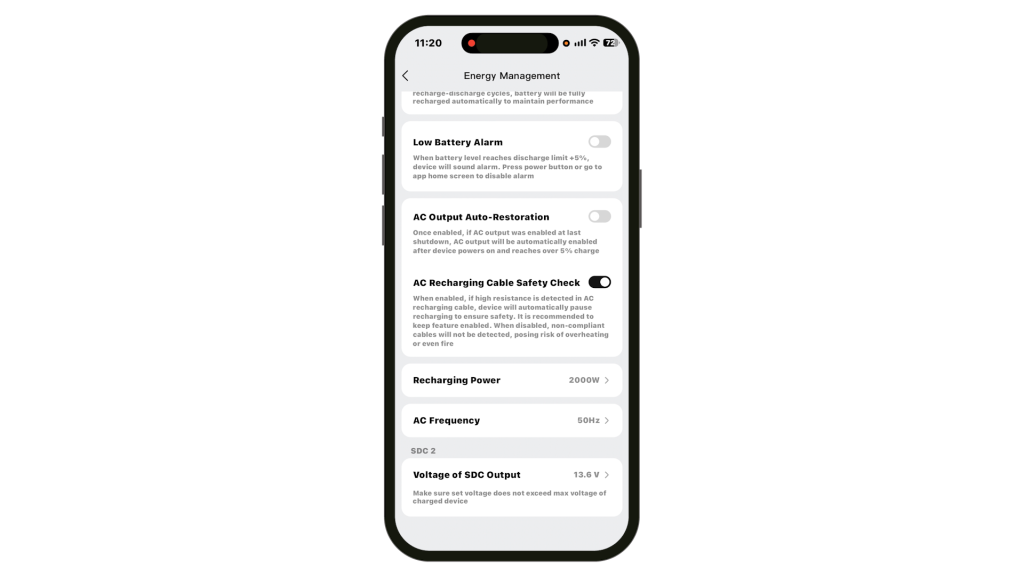
I’ve shown the DJI Home app throughout the video. It connects over Bluetooth and Wi-Fi for configuration, monitoring and remote control. It’s polished, easy to use and has a clean interface. It’s not quite as feature-rich as some competing apps, but most of the settings you need are there.
Conclusions
The Auro’s biggest advantage is its portability. You’re getting a full 2 kWh of capacity in a unit most people would ould be able to carry fairly comfortably with one hand. You wouldn’t want to carry it too far, but it’s noticeably easier to move around than other 2 kWh power stations.
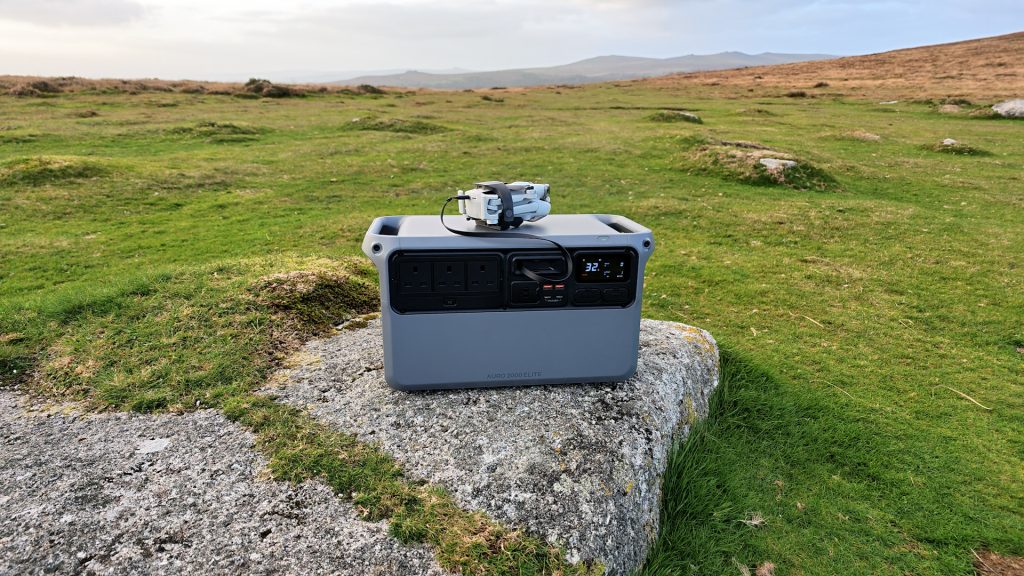
The built-in solar and alternator charging is a significant improvement over the Power 2000, and the retractable 140 W USB-C cable is super useful. Once you start using retractable cables, you wish they were all like that. You also get flexible DC outputs, expandable capacity and a useful smartphone app.
The grid-tied functionality will need an electrician for the installation here in the UK, but after that the power station simply plugs into that connection.
You can easily unplug it and take it with you whenever you need it. In the meantime, it can help power your home rather than sitting unused, making it a much more useful investment.
The 2000 W inverter is a little less powerful than on most 2 kWh power stations I’ve tested, but I think for most people it’ll be plenty, and a worthwhile compromise for the extra portability. You just need to check that it can run what you need. I would still like the option to disable the voltage reduction when it’s overloaded. And although solar and alternator charging are built in, you still need DJI’s proprietary SDC adapters.
But overall, the Auro is a very capable and well-thought-out portable power station. If you’re after a 2 kWh unit, particularly one that is actually portable, it’s definitely worth considering.
Don’t forget to take a look at my YouTube video at the top of the page, and again please subscribe to my YouTube channel where I’m releasing videos every week on the latest technology and how to get the most out of it. If you tap the bell icon when you subscribe you’ll get a notification as soon as I release a video, and there’ll be a link to my site here for the written article. YouTube is also the best place to leave a comment. I read all of them and respond to as many as I can!
Buy the DJI Power Auro Elite 2000:
This is an affiliate link. If you buy through it, it helps support this website and my YouTube channel at no extra cost to you.
Leave a Reply