Heated socks are all over Amazon. This winter has been especially cold and wet so I bought the cheapest pair I could find on Amazon that looked decent, and thoroughly tested them both outdoors and on the test bench.
I’m mainly interested in them for cycling, but they’re advertised for skiing, hunting, hiking and fishing and outdoor work too. I paid less than £22 for mine which is cheaper than a pair of waterproof cycling socks.
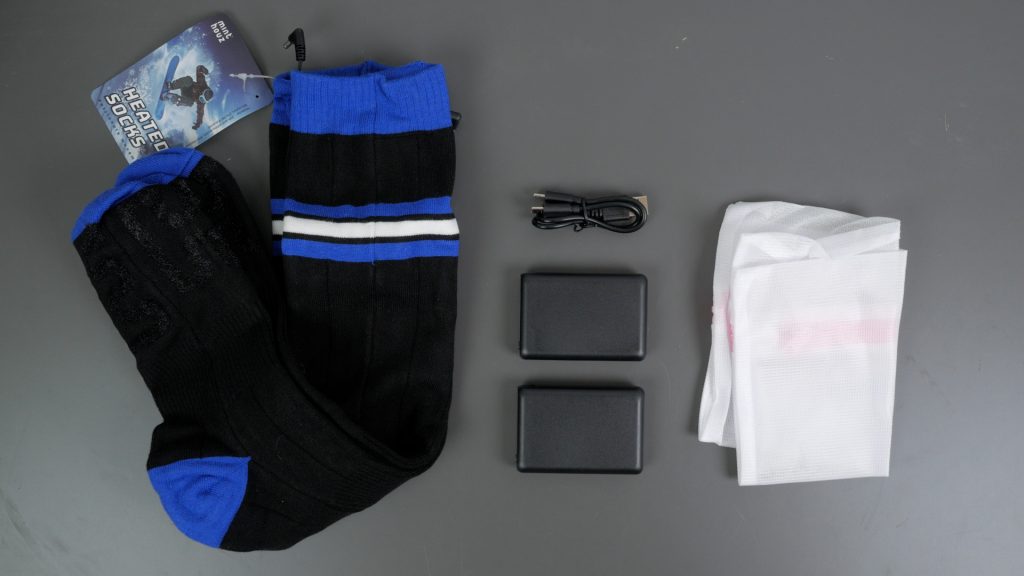
In the box you get the socks themselves, two 6000 mAh batteries, a double USB charging cable and a zipped wash bag. They’re pretty thick socks especially around the heating element, but they still fit ok in my cycling shoes.
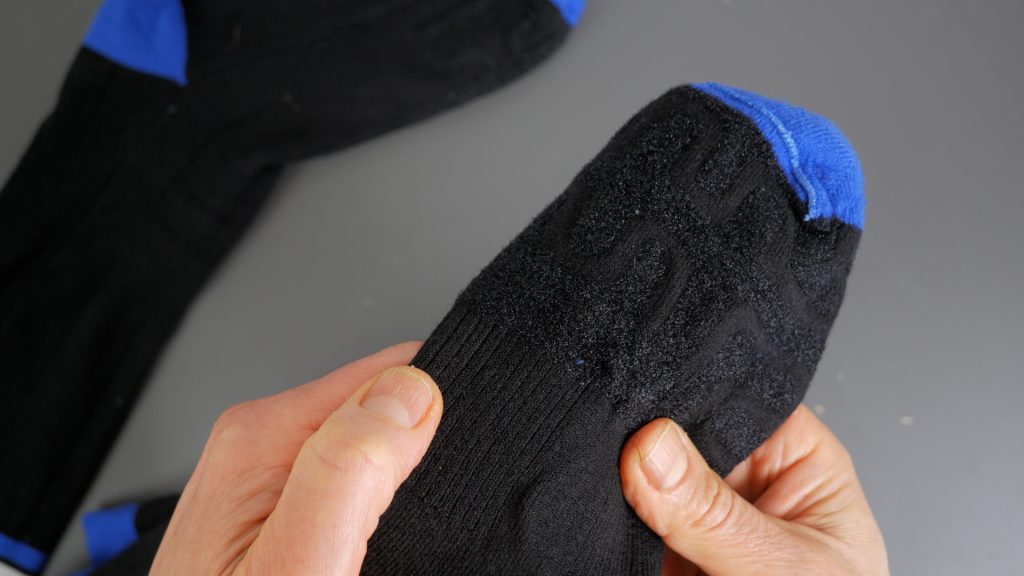
I can sometimes feel the element or wire just slightly but I’ve done long rides and I have had no rubbing.
These specific socks only come in one size so if you’ve got small feet that may be an issue. The seller lists the size as 6-14 which I assume is UK sizing.

They measure around 24 cm from heel to toe. And they’re long – 34 cm from heel to top of cuff. So they could be used in ski boots or Wellington boots. I’ll show how I wear them for cycling shortly.
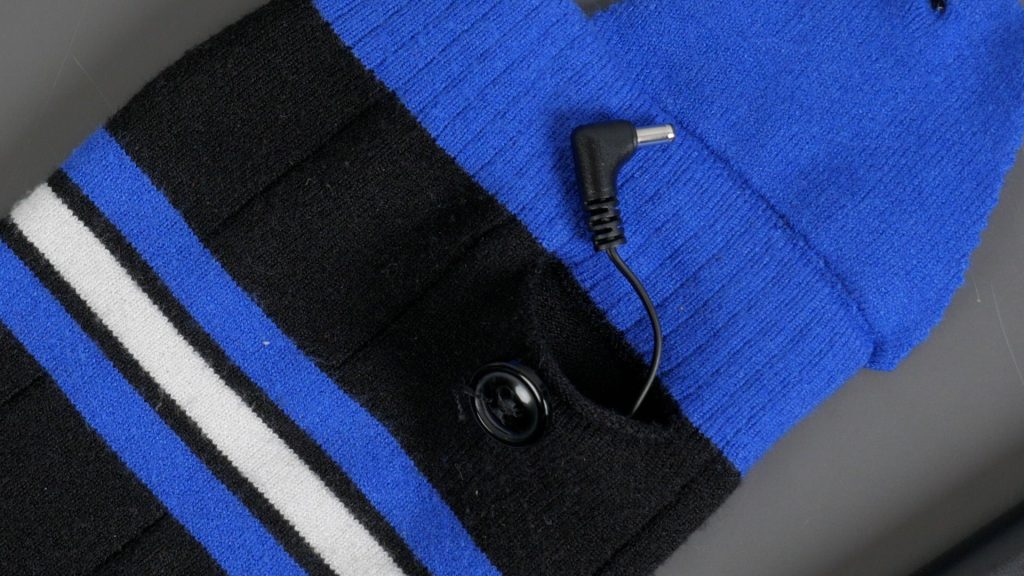
The socks have a little pocket for the battery secured with a button. It’s a little basic but it works ok and if it does eventually break off which it will, it’s easy to replace. Inside is the small DC 35135 barrel jack connector for the batteries.
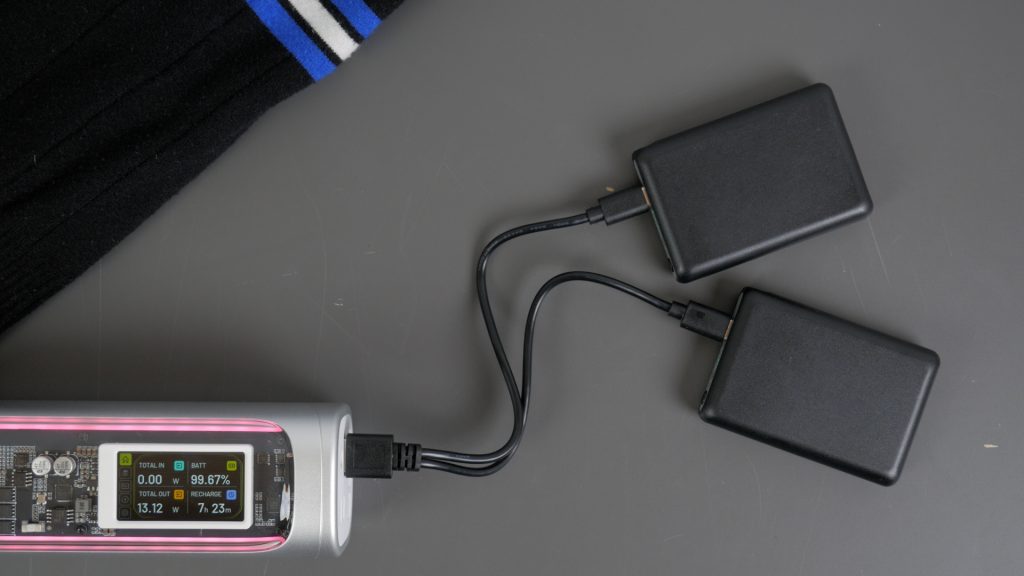
I’ll cover charging in a little more detail shortly but the batteries charge with the included split cable or any USB-C cable you have lying around. After charging, connect the battery and the battery indicator LEDs will turn on to show the battery level.
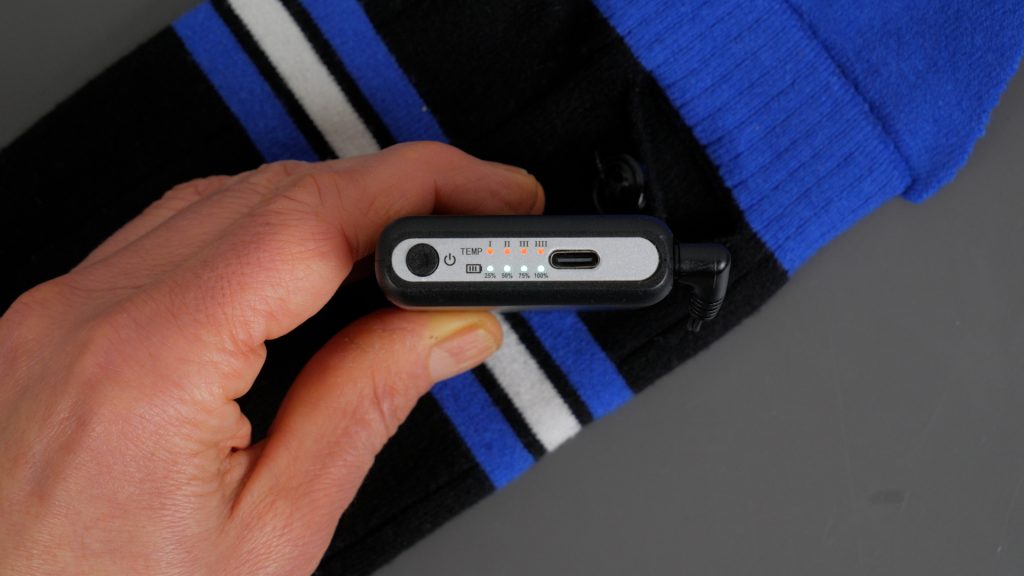
A long press of the power button turns them on in high mode. A single press of the power button cycles down through the 3 lower modes. I’ll test all these levels with my thermal imaging camera later. A long press turns them off again. It’s nice to see their previous level is remembered when you turn them back on. They can also be controlled over Bluetooth with a smartphone app with additional features which I’ll come back to.
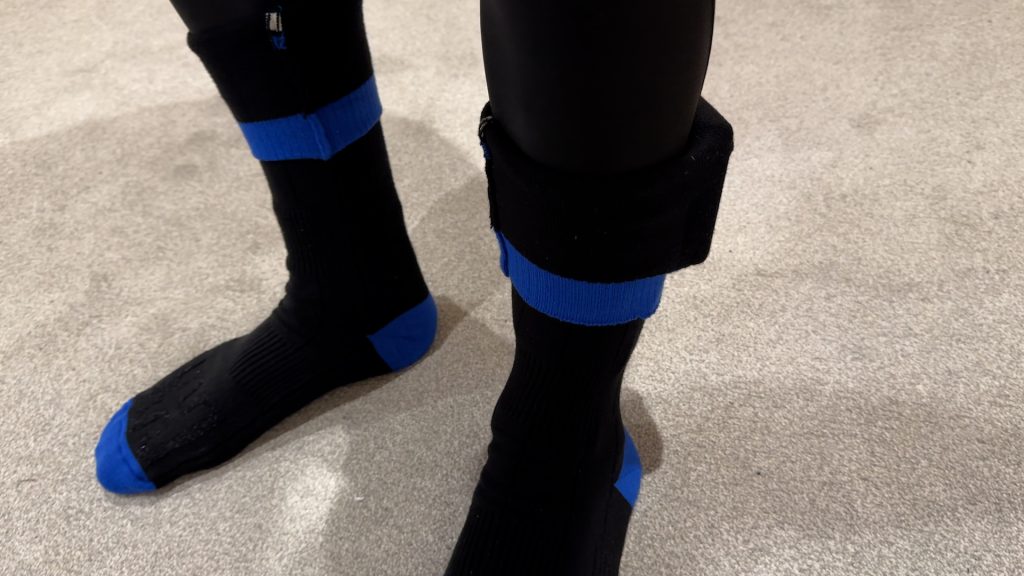
For cycling I fold them down over the battery – they’re too long otherwise, but it also gives the battery a little extra protection in our current grim weather. They don’t come with any IPX waterproof rating so if you’re being extra cautious you could also cover them with a small zip lock bag too.
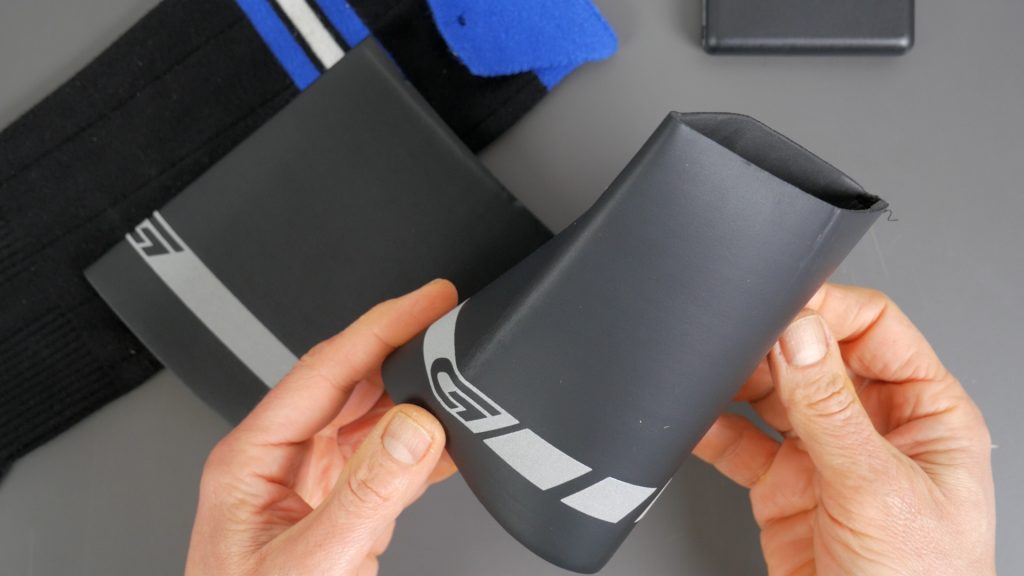
Or use something like these waterproof cuffs.
With your shoe or boot on, even in the lowest setting you immediately notice the extra warmth when you turn them on. The heating elements wrap around the front of your foot which is all you need.
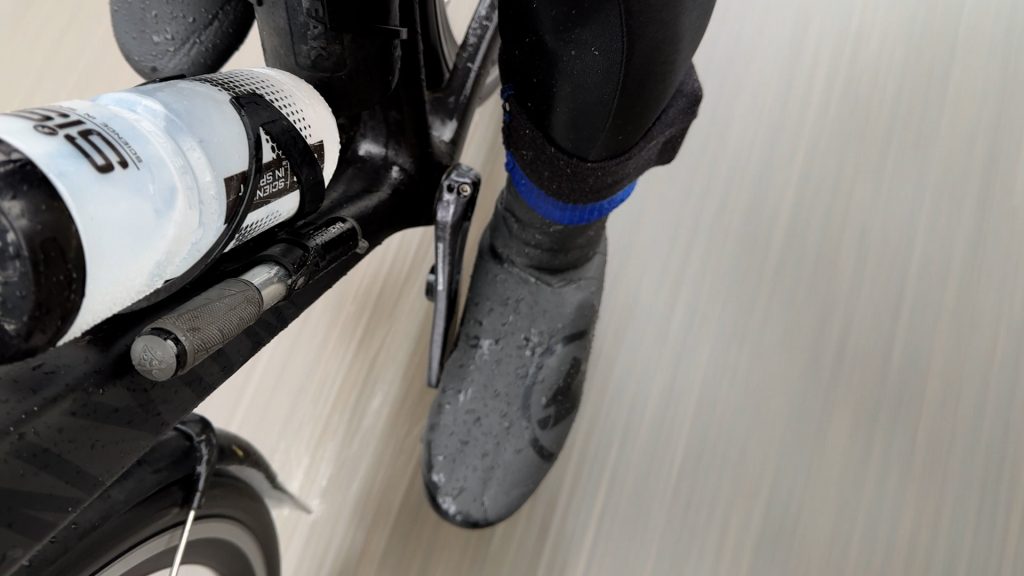
I’ve used them over the last few weeks cycling in some quite horrible weather. I’ve done over 500 miles in them so far, a lot of those miles without any mudguards. And mostly it’s been below 5°C and wet – the sort of conditions where my feet eventually get cold whatever overshoes I use. Even in their lowest setting with the socks soaked through I’ve not had cold feet. And I can get away with lighter weight overshoes too.
In fact the only time my feet sometimes feel a little cold is in the cafe stops when I turn them off! I’ve yet to try them out in sub zero temperatures but imagine they’ll be just fine – I might just have to turn the temperature up a bit.
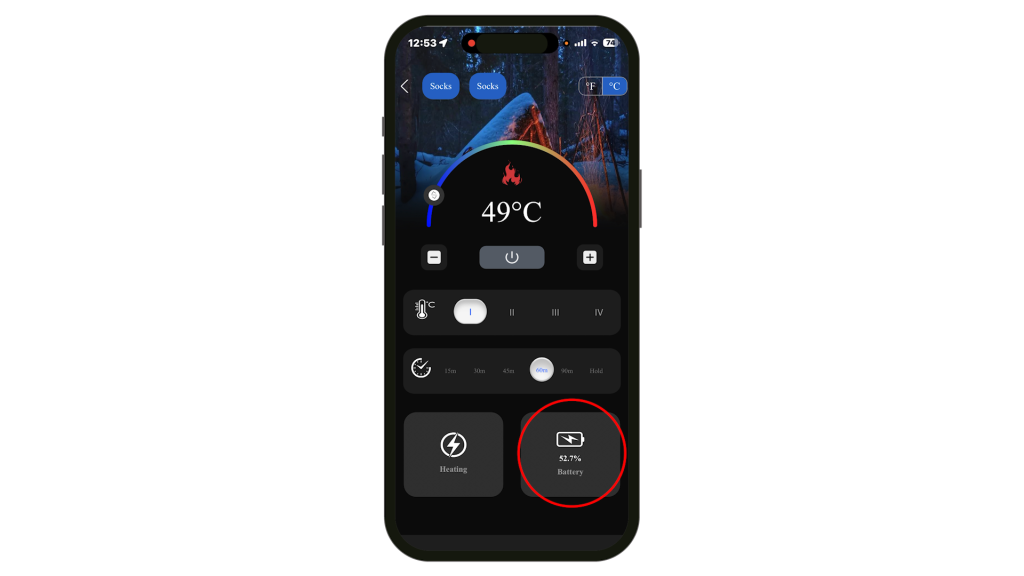
Battery life is impressive in real world use. I’ve come back from a few five hour rides with the socks on low the whole ride and still had over 50% battery remaining. I’ll cover battery life a little more scientifically shortly.
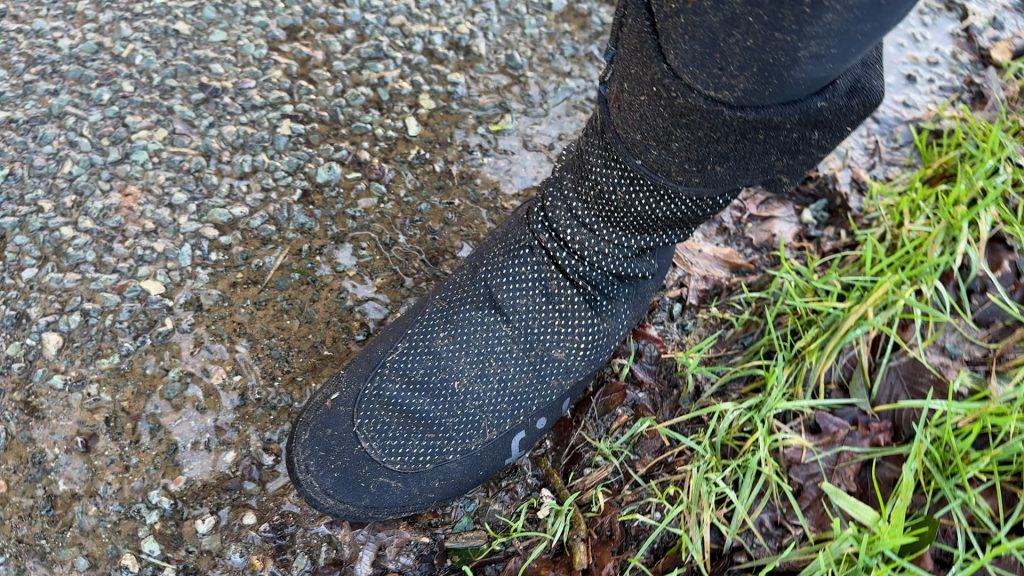
Every ride I’ve done my socks have come back covered in grime from the roads and trails but luckily you can put these socks in the washing machine using the included laundry bag – just remember to remove the battery first.
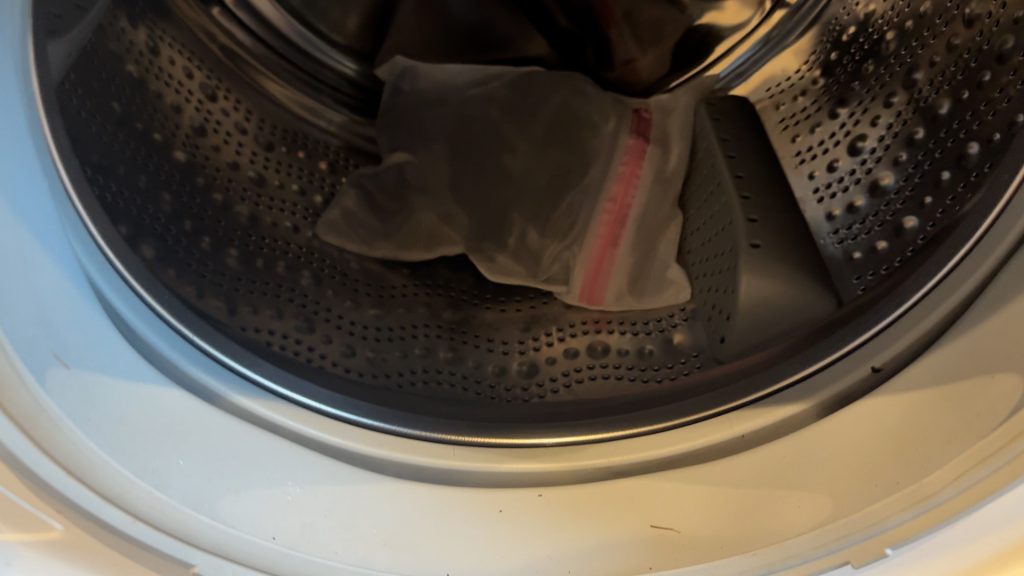
I’ve dried them flat on a heated airer.
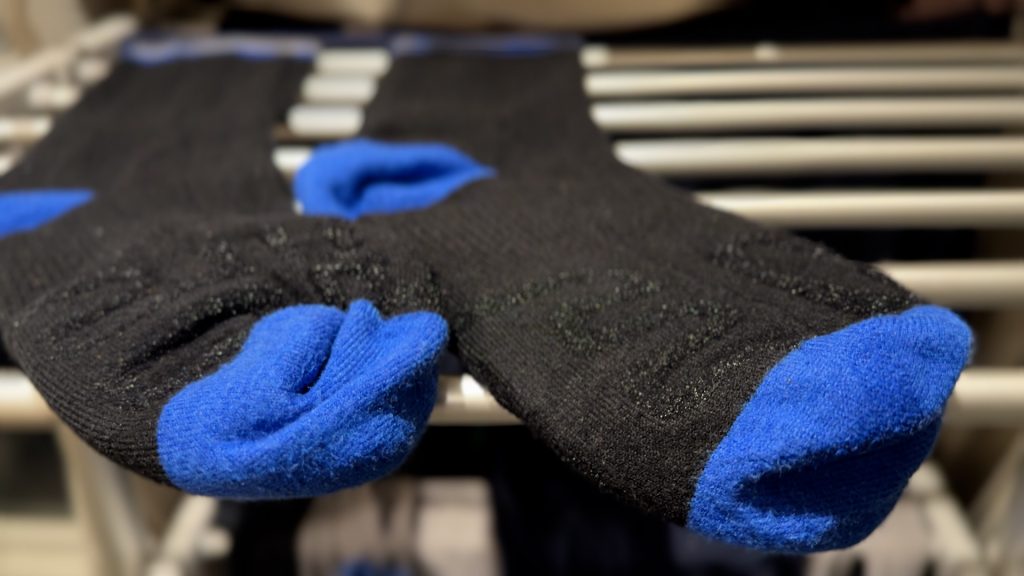
I’m sure if you wanted to get the longest life out of them you’d wash them by hand and dry them naturally but so far with multiple 30°C washes with non-bio detergent they’ve held up fine.
I wanted to test the socks a little more scientifically. If you’re not interested in these tests feel free to skip ahead to the conclusions!
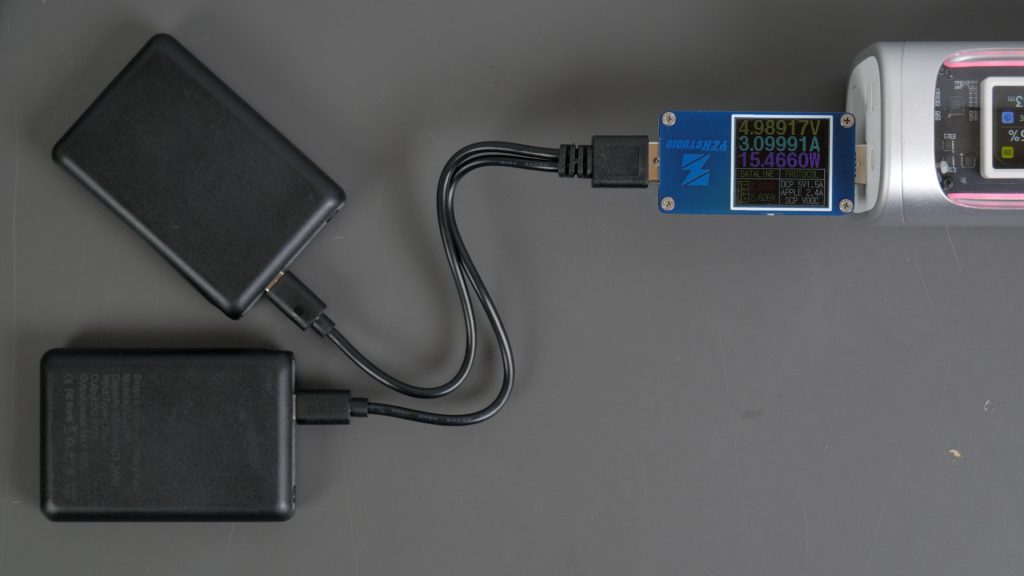
You can charge the batteries with the included split cable, but charging speeds depends on your power adapter. The charger needs a proper 5V 3A output for full speed.
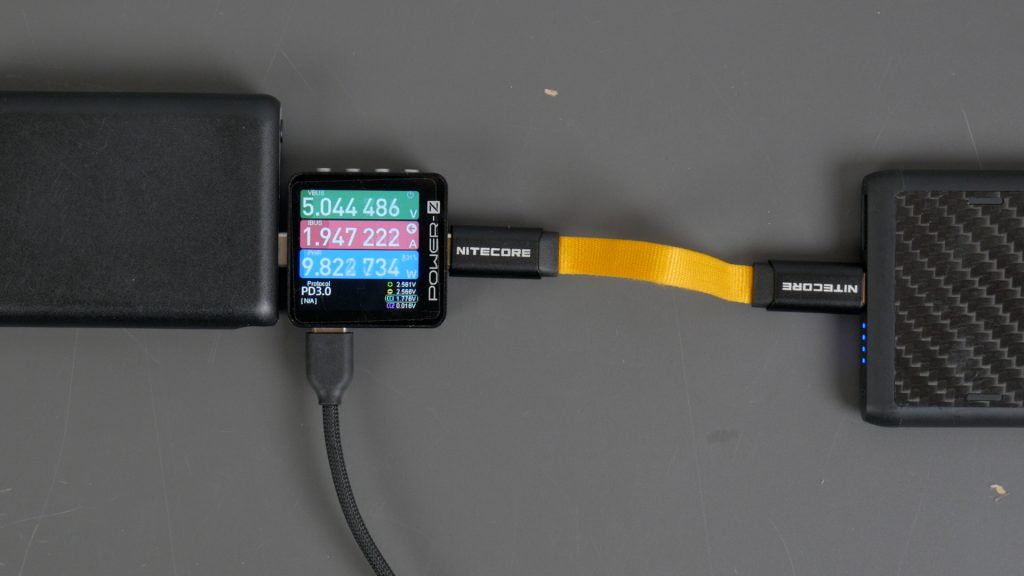
Using a capable charger, I saw around 15W total when charging both batteries together. For the fastest results, I charged each battery separately using a USB-C to USB-C cable at around 10W each. From completely flat, a full charge took just over three hours per battery – which is pretty good.
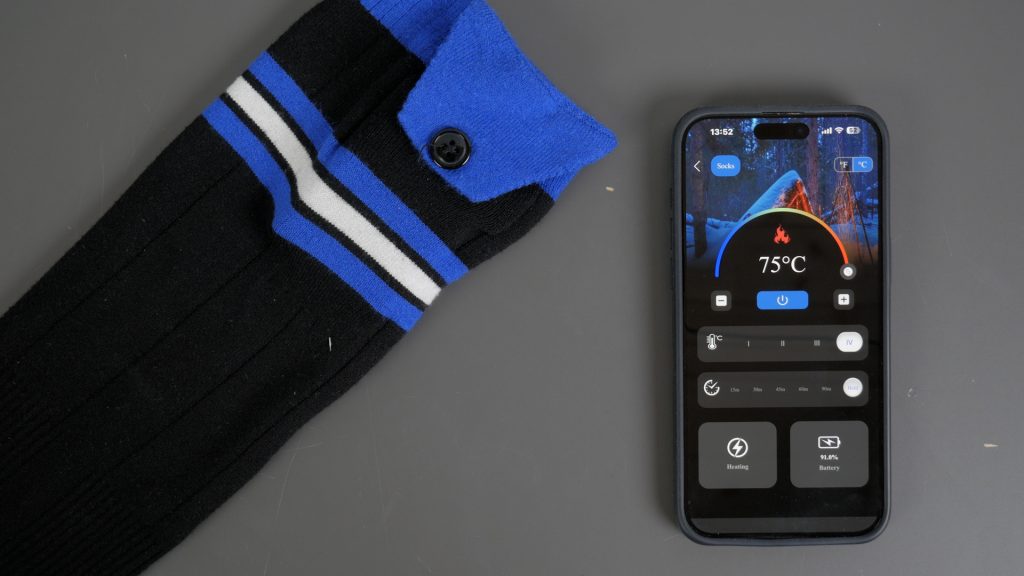
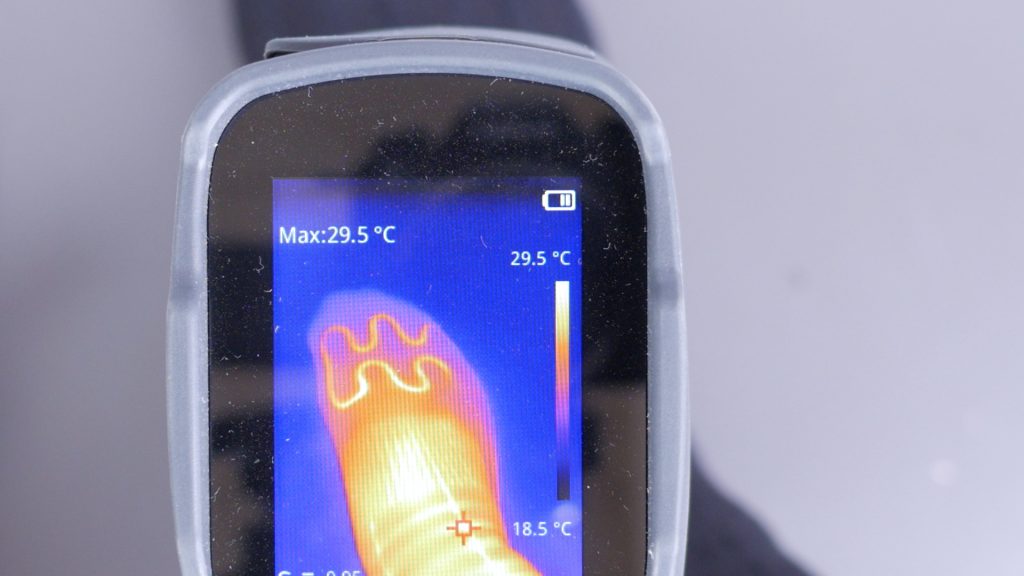
Typically I turn the socks on and set the heat level with the power button on the batteries. But the smartphone app is useful when you’re out and about and the batteries are tucked out the way. It has the same heat output levels but also gives a target temperature from 45°C to 75°C. There’s a battery level indicator as a percentage and you can also set a timer in the app too. I measured the heat output from the socks with my thermal imaging camera. I didn’t quite get the claimed temperatures –
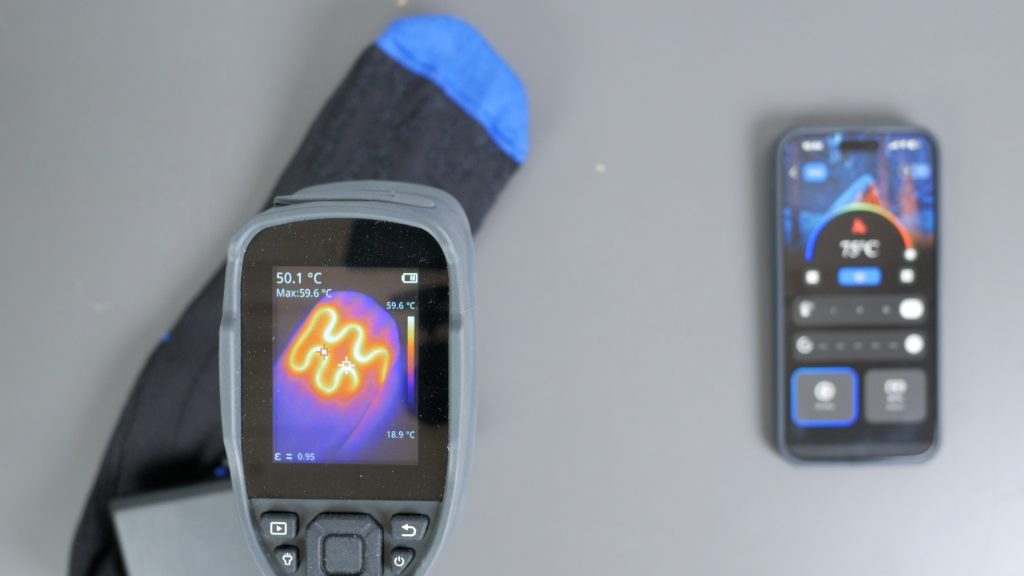
I got between 10 and 15°C lower but a still impressive 60°C in their highest mode – sometimes creeping higher than that. Of course this will depend on ambient temperatures. As a comparison I measured a disposable foot warmer.
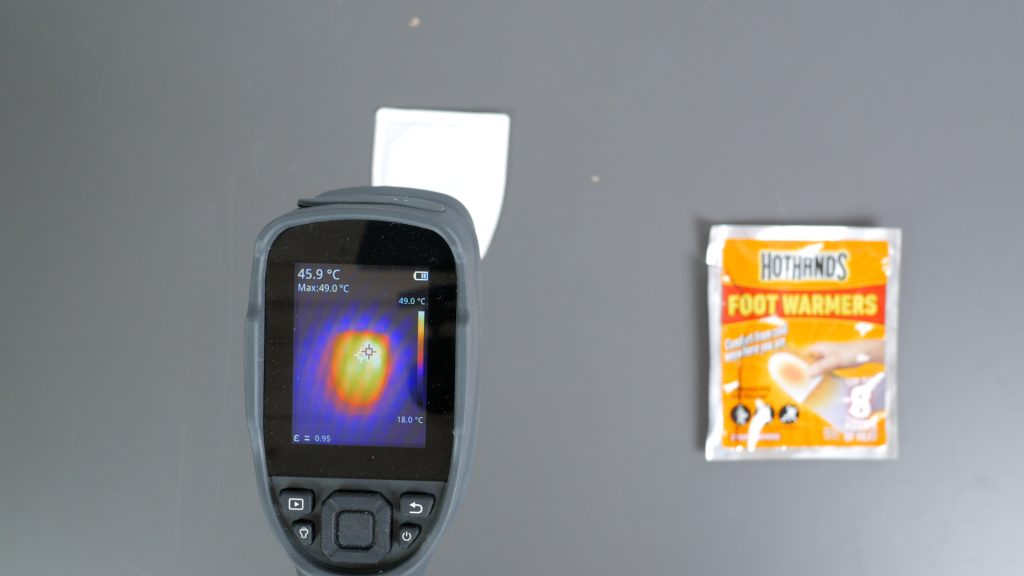
These measured around 50°C initially, but after one hour they’d dropped to just under 40°C. I’ve used these and they work pretty well in dry conditions, but not so much when they get soaked. Additionally they only heat the bottom of your foot – unlike the socks.
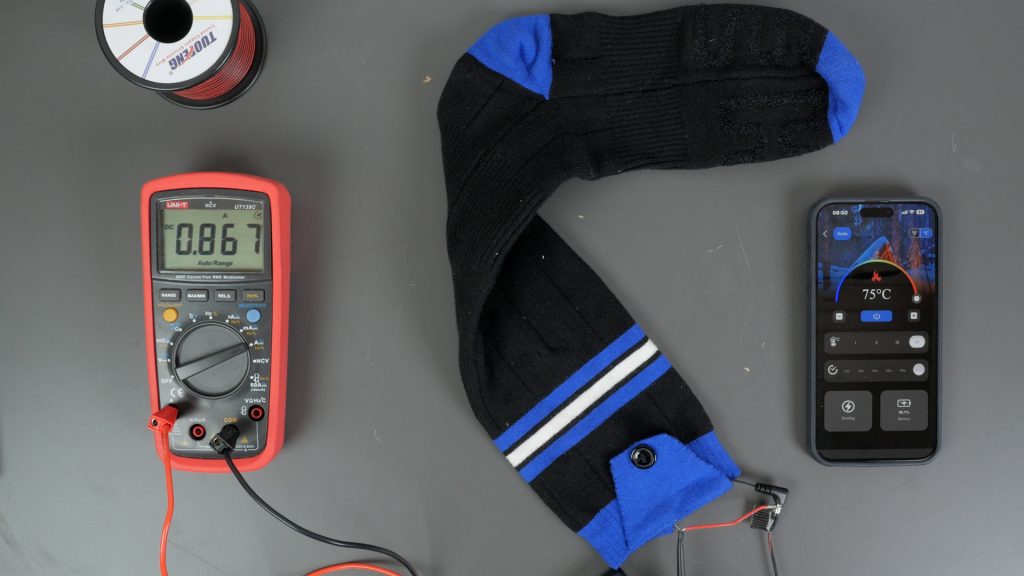
Minthouz claims 3.5 to 7 hours of battery life. To verify their claims I measured the output of each heat mode using my multimeter. I used the smartphone app to switch the output level. I measured 0.41A at level 1, 0.55A at level 2, 0.70A at level 3 and 0.87A in the highest level 4 heat mode.
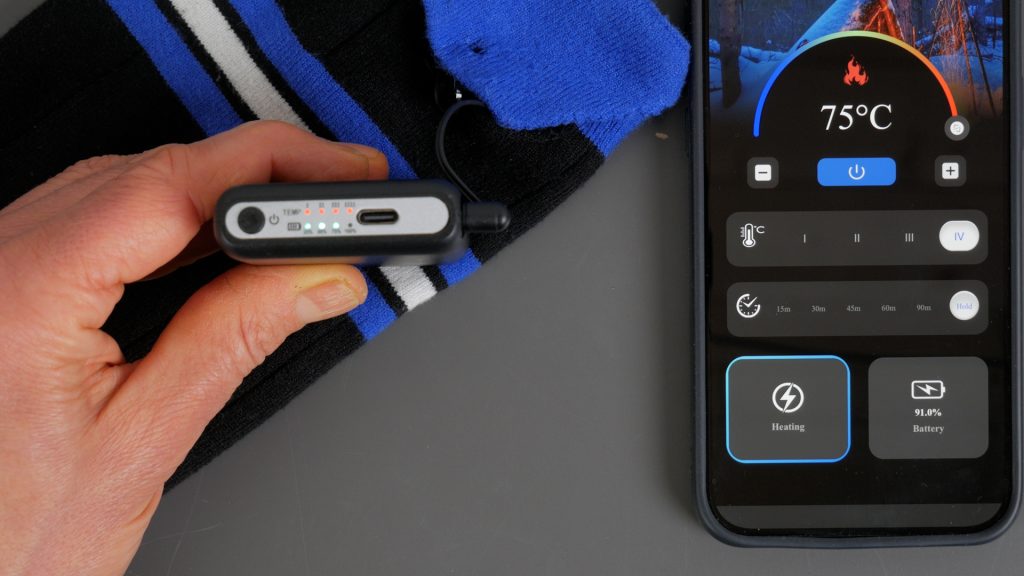
There is also a two-minute rapid heating mode if you tap “Heating” – this simply boosts whatever mode you’re in to the highest output for two minutes. The LEDs on the battery pack flash during this period.
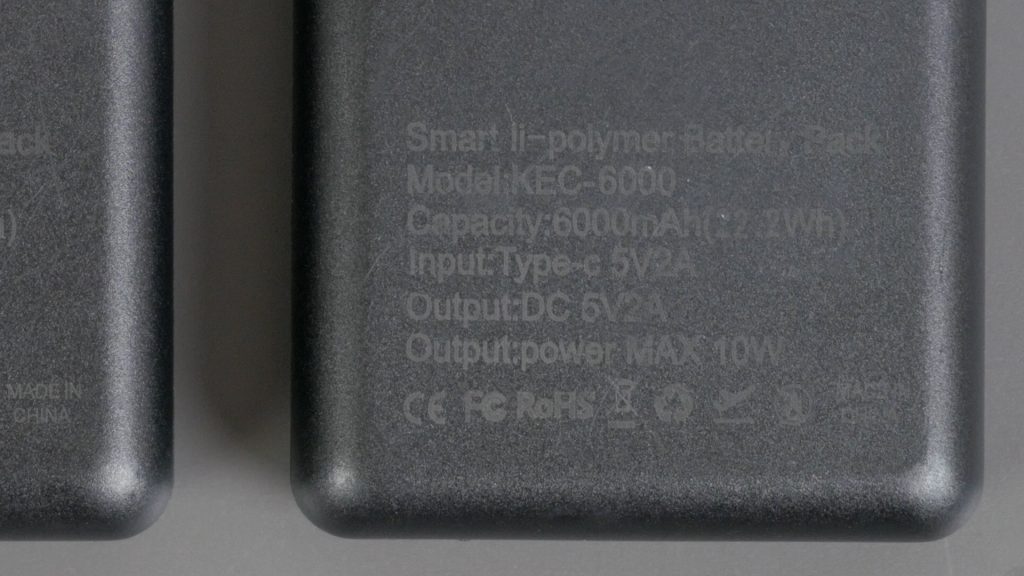
The batteries are rated at 6000 mAh. That figure on its own doesn’t tell you very much, but since these lithium-ion cells have a nominal voltage of 3.7 V, we can convert 6000 mAh into Wh, which gives a far more useful real-world figure of 22.2 Wh.
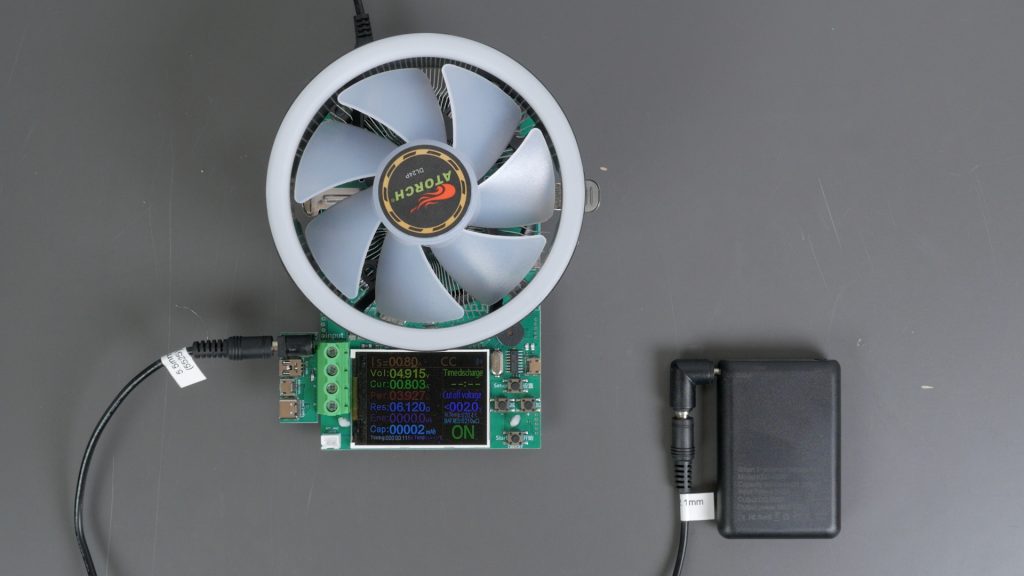
That’s the theoretical capacity inside the battery. What really matters is how much usable energy you can actually get out at the 5 V output that powers the socks.
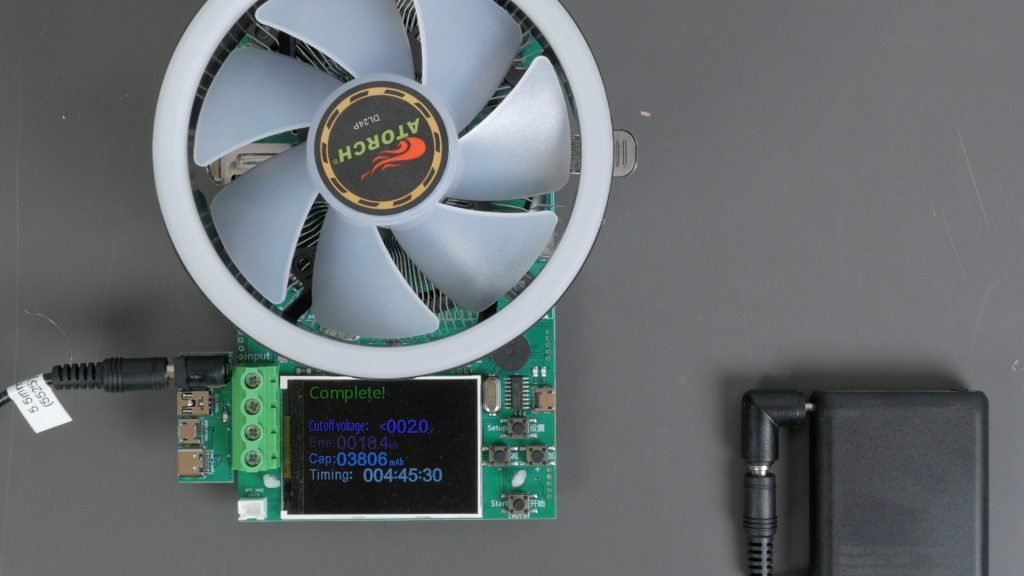
To test that properly, I discharged one battery using a controlled load set to 0.8 A — simulating close to the highest heat setting. The battery ran for 4 hours and 45 minutes before cutting off, and I measured a usable output of 18.4 Wh.
So from a rated 22.2 Wh, we’re getting a usable 18.4 Wh — which works out at about 83% efficiency – a respectable result.
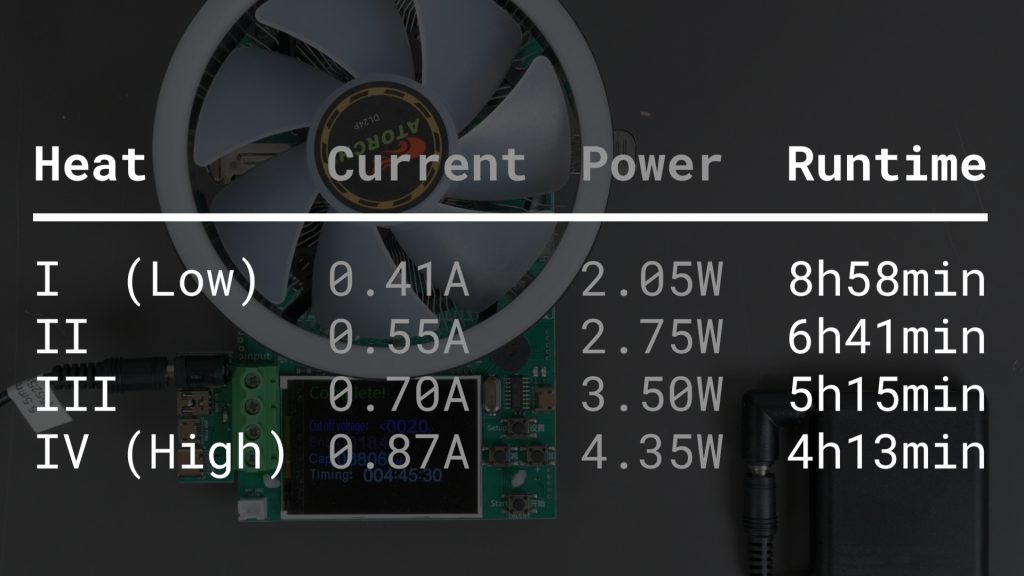
Since the socks run at 5 V and pull between 0.41 A and 0.87 A depending on the heat level, we can now calculate expected runtimes fairly accurately — and in practice, my real-world rides line up very closely with these numbers.
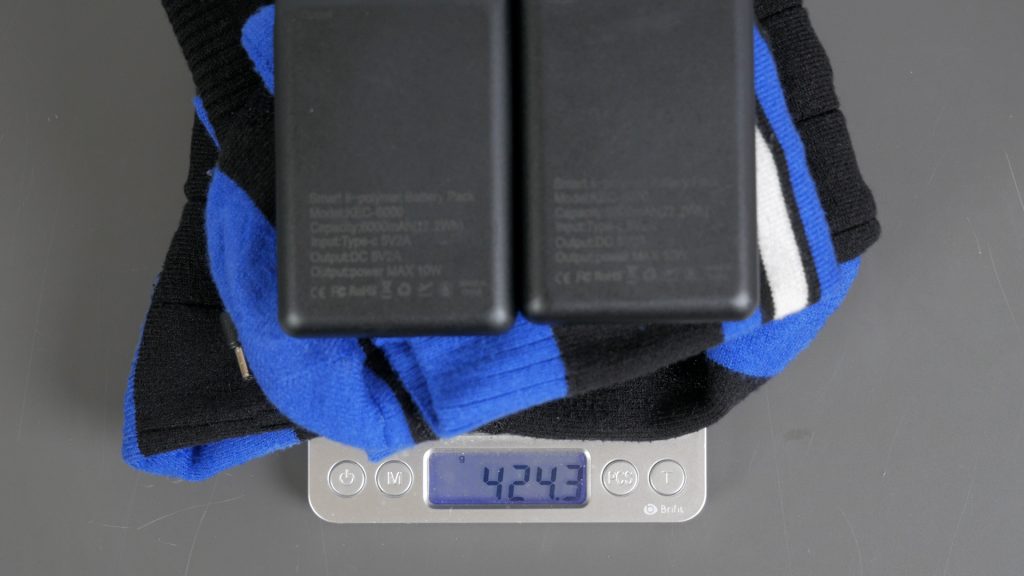
Weight’s probably not a major concern for most people but cyclists will want to know. Each sock weighs 103 g and the batteries weigh 109 g each. So the whole system weighs in at 424 g. I wouldn’t say I’ve noticed this extra weight, but it’s all useful winter training anyway!
Conclusions
I wasn’t expecting much from these socks, but I’ve been very impressed with them so far.
In fact it’s hard to really fault them for the price. They are general purpose socks so they might be a bit thick and long for cycling for some people. That’s not been a real issue for me and for other activities that’s probably a benefit. If they were specifically for cycling I can guarantee they’d be a lot more expensive!
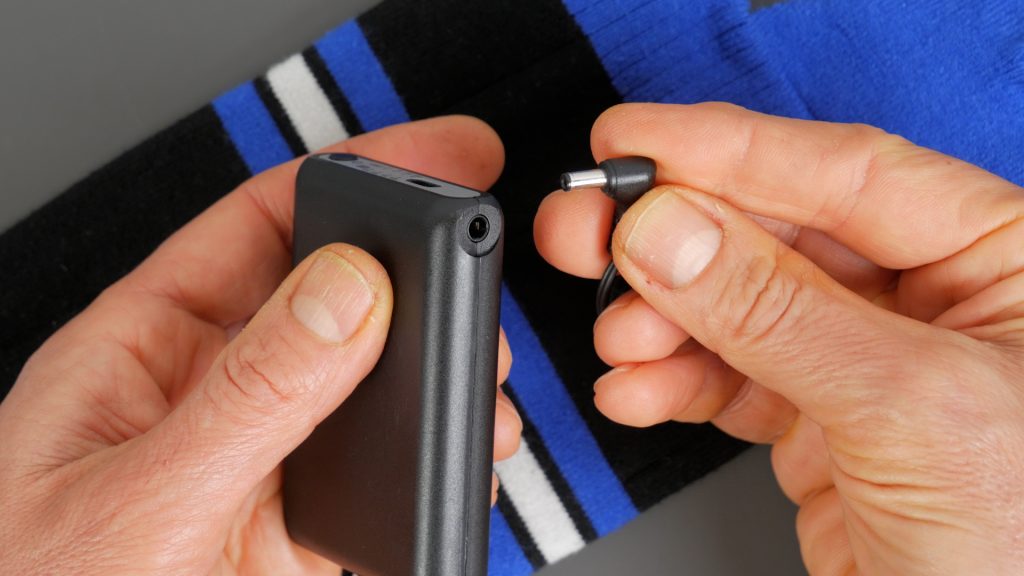
The app has been pretty reliable and better than I was expecting. Just occasionally it doesn’t connect to one sock for some reason, but this can be sorted by just unplugging and replugging the cable back in. I’m not a huge fan of the tiny DC jack – but it does the job. Ideally the USB-C charging port could have been bi-directional so the connector on the sock would be USB-C too – but I guess that’d add cost.
But overall if you get cold feet these socks might be a life saver – and if you can pick them up for the price I paid they’re a bargain. These are the socks I bought, but since these generic Amazon brands come in and out of stock regularly this is a link to a few other options. Try and find some with at least 5000 mAh batteries, USB-C charging and although not vital the smartphone app is quite useful.
Don’t forget to take a look at my YouTube video at the top of the page, and again please subscribe to my YouTube channel where I’m releasing videos every week on the latest technology and how to get the most out of it. If you tap the bell icon when you subscribe you’ll get a notification as soon as I release a video, and there’ll be a link to my site here for the written article. YouTube is also the best place to leave a comment. I read all of them and respond to as many as I can!
Amazon links:
Exact socks I bought: https://geni.us/K8Y4
Other options (if above socks out of stock): https://geni.us/CYHFEf
As an Amazon affiliate, I get a small commission from purchases made via any Amazon links.
Leave a Reply