The Ooni Koda 2 is a portable, gas-powered pizza oven designed for outdoor use. I bought my first pizza oven almost three years ago, and since then we’ve cooked pizzas regularly throughout the year – it’s one of those gadgets that genuinely gets used and that everyone in the family enjoys.
The Koda 2 feels well suited to people getting started with pizza ovens, with a slightly larger cooking area than most entry-level models, a thicker stone for better heat retention, and the promise of more economical gas usage – it might just be the ideal pizza oven to start you off.
Ooni claims it can reach its cooking temperature of over 400 °C in around 20 minutes and cook a restaurant-quality pizza in as little as 60 seconds, so I’ve been testing those claims – along with the oven’s other features – by cooking well over 100 pizzas in a mix of normal and less-than-ideal conditions to see how it performs in real-world use.
So let’s take a closer look.
Overview

The oven comes well packaged and requires almost no assembly. Fold out the hinged legs, insert the AA battery for the ignition and install the replaceable pizza stone. Ooni has helpful video guides if you don’t like user manuals.
The Koda 2 is available in black and the slate blue that I have. The build quality is very good – the legs and base are stainless steel, the main body is a powder coated carbon steel and the back and front is aluminium. The 15 mm stone is made from Cordierite. It weighs 16 kg and you can see its dimensions on screen.
Ooni recommends seasoning the pizza stone by running the oven at full power for 30 minutes, letting it cool down and then wiping the stone with a cloth. Not sure this is really seasoning – rather just burning off any manufacturing residues.
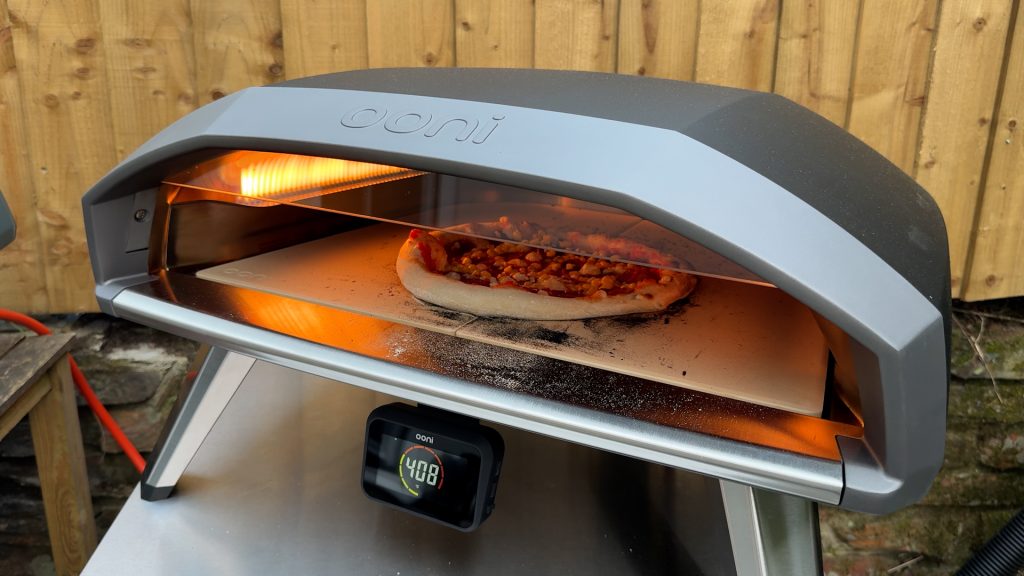
This is the first pizza oven I’ve tested that doesn’t have a built-in temperature gauge, but its predecessor the Koda 12 doesn’t have a gauge either. There is the optional Ooni Connect Digital Temperature Hub but that’s quite pricey. I will be testing it with this oven when I compare this model to the bigger 18” Koda 2 Pro – which comes with the Bluetooth display.

You really need an infrared thermometer to check the stone is up to temperature. I’m using Ooni’s thermometer which has a nice clear colour-coded display, but cheaper models are available that do the same job. I’d still recommend having an infrared thermometer even if you’re using the digital display – built-in gauges aren’t measuring the surface temperature of the stone.
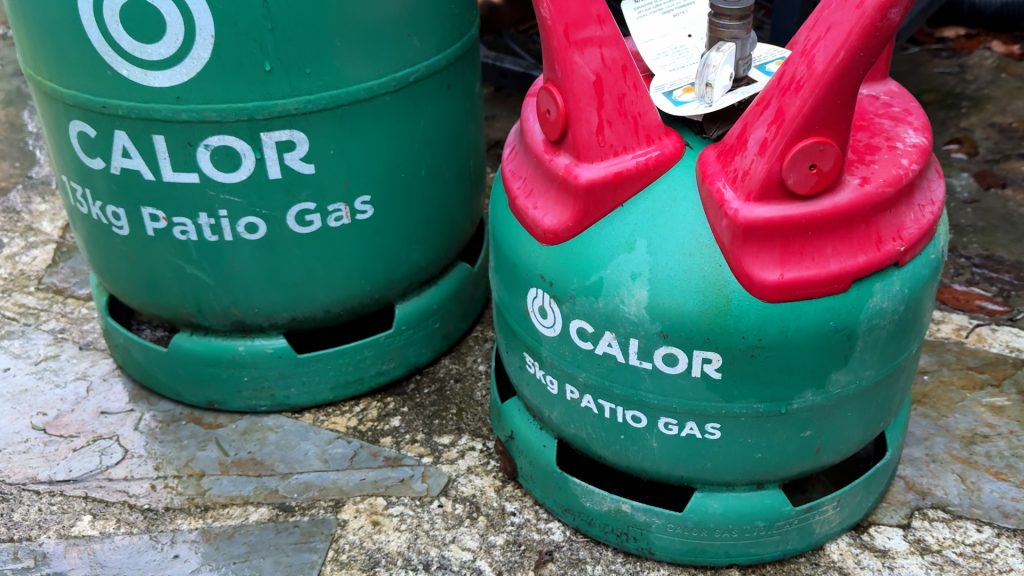
In the UK these gas pizza ovens run off the green Patio gas bottles, available in 5 kg and 13 kg sizes from various places including lots of garages.

I also have a wood-fired pizza oven and it’s great fun. Wood can be cheaper if you have access to very dry hardwood, but pizza cooks so quickly at these temperatures that you don’t really taste much difference — and gas makes it much easier to focus on making the pizza rather than managing the fire.
The regulator is already installed. All you need to do is attach it to the gas bottle and open the regulator’s valve. Push and hold the oven’s temperature dial while slowly rotating anticlockwise to ignite the gas. Once lit, keep the button depressed for 5 seconds to ensure the flame doesn’t go out.

You’ll want to have the gas at maximum flame whilst it’s heating up, but you can adjust the flame depending on what you’re cooking, from 190 – 500 °C according to Ooni. You want the stone at around 400 ºC for a typical Neapolitan-style pizza. Ooni claims 20 minutes to heat up to this temperature but that will depend on ambient temperatures and if the stone has absorbed any moisture.

I did my measurements on a particularly cold day with snow still covering the oven. I measured the middle of the stone with the Ooni digital thermometer after 15 minutes and then every 5 minutes after that for an hour in total. Even in these conditions the stone got to 400 ºC after 25 minutes.

After 35 minutes it reached its peak temperature of around 450 ºC – even after another 25 minutes it didn’t get any hotter. I have seen higher temperatures in warmer weather but considering you only need around 400 ºC for pizza, if I wasn’t running my tests I still could have started cooking after just 25 minutes even with the outside temperature 2 ºC and the oven caked in snow.
When you first get one of these ovens, making and shaping pizza dough can seem a bit intimidating. You can buy ready-made dough balls that arrive frozen from Ooni and other companies, and while they do save some time, making your own dough is straightforward, cheaper, and means you’re not waiting for anything to defrost.
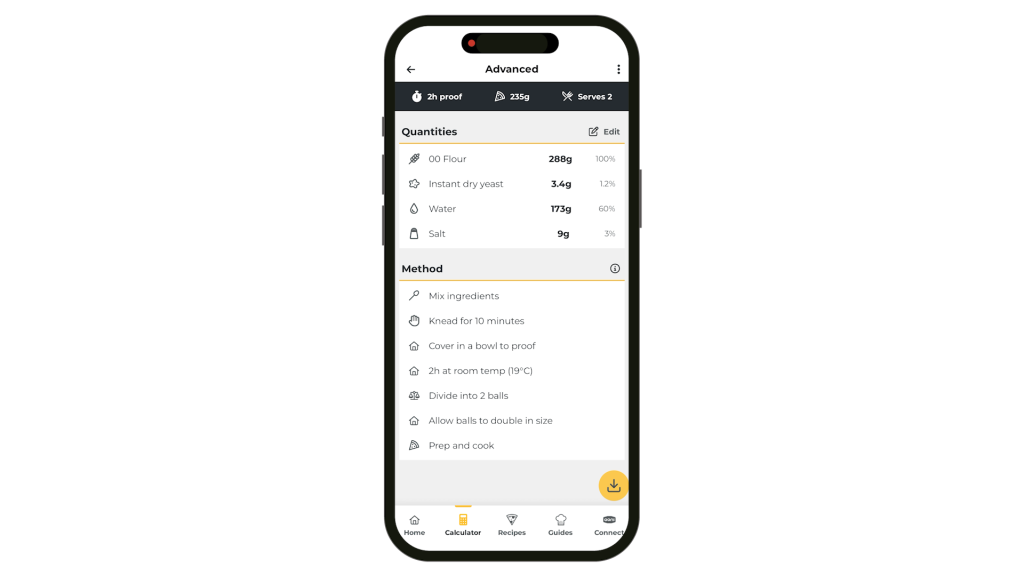
I’ve tried all sorts of recipes that require varying amounts of time, but I usually just open up the Ooni smartphone app and adjust settings based on how many I’m feeding and how much time I have available. Since I’m filming this, I’ve only got two hours and am just making two 235g dough balls which give a good-sized 12” pizza. I’m using instant yeast which makes things much easier and I can’t taste any difference.
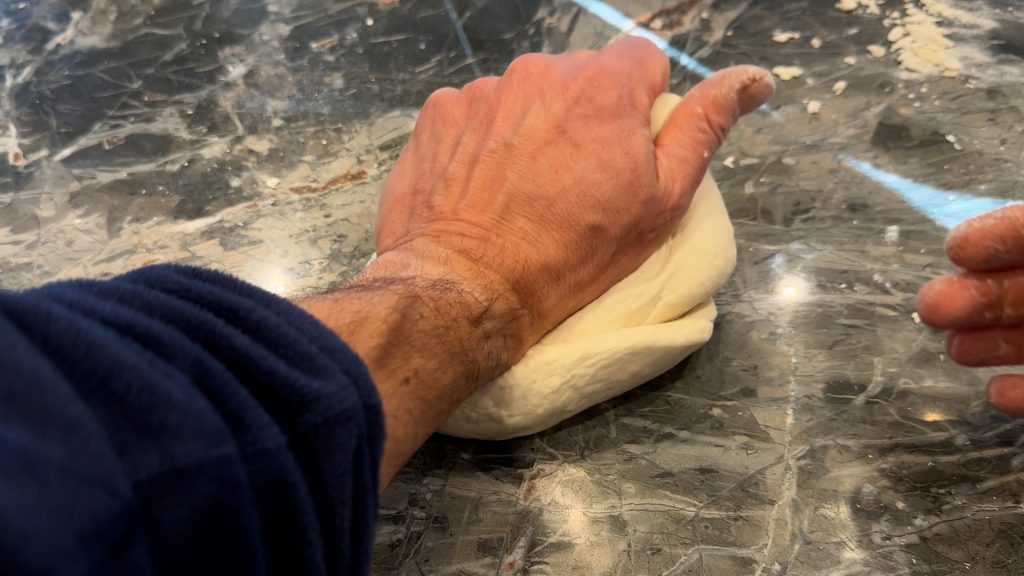
After mixing the flour, water, yeast and salt, knead for 10 minutes, cover and let it rest for 5-10 minutes while you tidy up. This relaxes the dough so you can shape into a smooth large dough ball. Cover and leave for an hour somewhere where the temperature won’t vary too much. After an hour, divide up the dough and shape into smooth balls. If you’re new to pizza dough, I’d recommend this video by Adam Atkins. It’s the clearest explanation I’ve found of the whole process and it’s how I originally got started.

Lightly dust the dough balls with flour and leave covered for the remaining proving time. In this case I left them for around 90 minutes. I’m using Ooni’s stackable dough trays which I’d recommend – especially when you’re making lots of pizza. Typically I make 8 235 g balls to feed my hungry family of 6 – leftover cold pizza tastes good too.

Next you need to shape the dough which takes a bit of practice but isn’t too difficult. Again look at Adam’s video.
For topping I’ve tried various methods, but my local Tesco’s sells these Mutti finely chopped tomatoes. I add a little salt and spread it over pizza. Add some hard cheese, toppings of your choice and some mozzarella and that’s it. Ideally we try to use pizza mozzarella because it’s dryer so doesn’t release much moisture. I couldn’t get any so I am using buffalo mozzarella which I dried for an hour or so.

Dust your pizza peel with flour and slide the pizza on. If you use a perforated pizza peel I find flour is fine – otherwise with a standard peel without any holes you may need to use semolina which helps avoid the pizza sticking to the peel when you try to launch.

Double check the stone is up to temperature and decisively launch the pizza into the centre of the oven. After around 30 seconds remove the pizza, rotate it 90° and put it back in. Do this a few more times every 15 seconds until the pizza is cooked how you like it. If the top is cooking too quickly you might want to turn the flame down a bit whilst cooking and then turn it back again to get ready for the next pizza.
I’ve used 12” ovens, and the larger opening and bigger stone on this 14” oven makes launching and turning your pizza a lot easier – even if you don’t cook bigger pizzas.
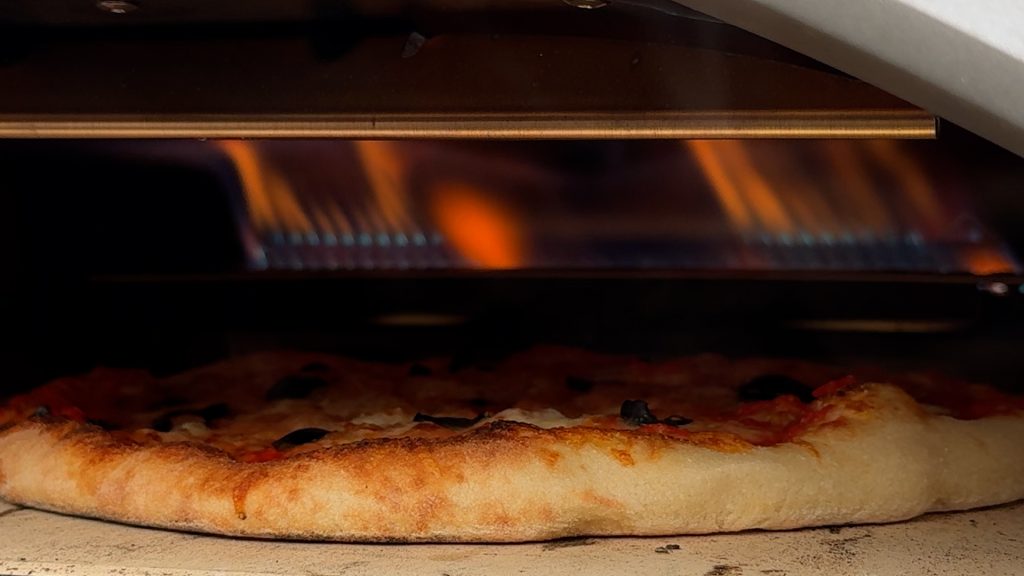
I never quite get a pizza cooked in 60 seconds – even when it’s warmer. In the cold weather this pizza took about twice that time but that’s still pretty fast! The Koda 2 has a thicker 15 mm stone compared to Ooni’s older models like my Ooni Karu 2 which has a 12 mm stone. This helps heat retention so when you’re cooking multiple pizzas you don’t need to wait long for the stone to recharge – basically get back up to temperature. It means you also use less gas.

Even in these cold conditions, by the time I came back out with another pizza – which takes a few minutes, the oven was ready to go again. I did do a more controlled test of the heat retention which I’ll briefly discuss shortly.

The pizza came out very well. There’s only a single rear flame so you do need to turn it a few times as I showed, but that’s pretty standard on smaller ovens like this and I got an evenly cooked crust. The base was well cooked too and most importantly it tasted very good!
Performance
Ooni claims the Koda 2 runs very efficiently. I measured the running costs of the pizza oven. I weighed the patio gas bottle before running the oven at full gas for 2 hours and then reweighed it. This isn’t super accurate but it at least gives you an idea. The oven used just over 400 g of gas in two hours. In the UK 13 kg currently costs £52.50 so that equates to around 80 p per hour.

Typically we can cook 6-8 235 g pizzas in a couple hours including heating up, which does work out close to Ooni’s claims of 0.39 kg of fuel for 10 pizzas.

Checking the pizza stone with my thermal imaging camera, as you’d expect with the single rear flame, you don’t get a completely even stone temperature. It’s hottest right in the middle. But the single flame does do a good job, and again with regular turning which is good practice anyway, the results are very good.

I mentioned the recharge time of the stone which is important when you have lots of pizzas to cook. Ooni quotes 2 minutes 50 seconds and the stone is usually up to temperature by the time the next pizza is ready to load as I already mentioned.
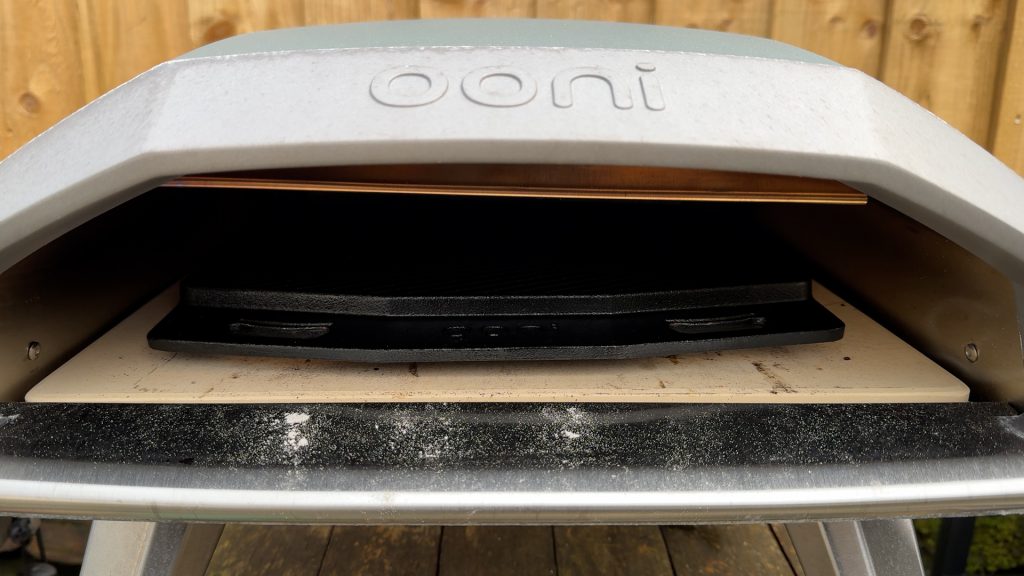
I measured this slightly more scientifically so I can compare it to other ovens in future articles and videos. I got the stone up to 400 ºC and placed Ooni’s griddle in the oven for 2 minutes to soak up the heat. I removed the griddle and then measured how long it took to get back up to temperature. In my tests it was around 2 minutes.

I used the oven in all sorts of weather conditions and it generally coped well – apart from when it was very windy. On a few occasions I’ve come back to the oven with the flame extinguished. I’ve not noticed this issue with other ovens I’ve used – so you do need to keep an eye on it if it’s windy and try and position it so the opening is facing away from the wind.
This does bring me to a popular concern with these outdoor ovens. Ooni says their ovens can be left outside, but should be protected with a cover. These are available as an optional extra. I’ve had several ovens from Gozney and Ooni and have kept them all outside – and we live in a particularly damp part of the world. My Gozney Roccbox was covered but still had its non-replaceable stone crack.

I don’t have covers for my Ooni ovens but they’ve been ok – and the stones are easily replaceable if they do crack. They seem to work fine left outdoors, but I have noticed a little rusting, so I will look to get a cover.
Conclusions

The Koda 2 is an easy recommendation for anyone after their first pizza oven. It is easy to set up and use – especially with its slightly larger size, it heats up quickly, holds its temperature well with its thicker stone, and produces consistently good results. And it doesn’t cost too much to run, especially considering its larger size.
The only minor issue I had with it was in strong winds – you need to be a little careful with positioning. And if I was being picky I would have liked some way of measuring the temperature of the stone included with the oven.

Its main competitor is probably the Gozney Roccbox that comes with a built-in thermometer, a slightly thicker stone and includes a perforated pizza peel – for the same price as the Ooni. But it’s only 12” and the stone is non-replaceable.
I’ll be comparing the Koda 2 to the 18” Koda 2 Pro and other models in Ooni’s range in an upcoming article and video so look out for that.
Don’t forget to take a look at my YouTube video at the top of the page, and again please subscribe to my YouTube channel where I’m releasing videos every week on the latest technology and how to get the most out of it. If you tap the bell icon when you subscribe you’ll get a notification as soon as I release a video, and there’ll be a link to my site here for the written article. YouTube is also the best place to leave a comment. I read all of them and respond to as many as I can!
Purchase directly from Ooni for the best prices – and using my links really helps support my channel at no additional cost to yourself – thank you!
Ooni Koda 2: https://tidd.ly/49fMIte
Ooni Koda 2 Pro: https://tidd.ly/3LjHJyv
Ooni Karu 2: https://tidd.ly/3N56izN
Ooni Digital Infrared thermometer: https://tidd.ly/49zfKTD
Ooni Connect Digital Temperature Hub: https://tidd.ly/49fkn6n
Or you can purchase from Amazon if you prefer:
Ooni Koda 2: https://geni.us/5ivbBu
Ooni Koda 2 Pro: https://geni.us/7BAzwPi
Ooni Karu 2: https://geni.us/1jATJyF
As an Amazon affiliate, I get a small commission from purchases made via any Amazon links.
Leave a Reply